
2026 World Cup: How Europe Thrashed Africa, America, Others
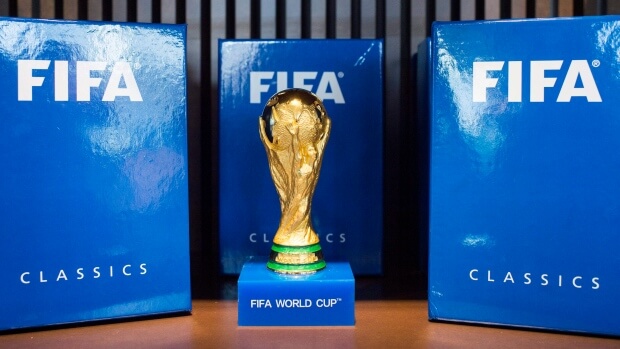
Long before any World Cup event happens, Europe has outplayed the rest of the world in the financial field of play.
An analysis conducted by THE WHISTLER shows that the 2026 World Cup which concluded in the United States of America on Sunday was not different.
Historical positioning, large financial war chest, and first-rate infrastructure give Europe the option of first refusal to capture the World Cup before the opportunity dangles to South America with perhaps the largest pool of talents.
Using the estimated market value of the squads presented in the 2026 showpiece, Europe dominated the world. The market value of a player reflects the transfer value which often takes into consideration factors such as age, potential, performance and club status.
Of the top 10 countries with the highest valued players, Europe has eight, leaving only two to the South Americans. On top of the list are semi-finalists, France, England, and Spain.
While the French squad has a market value of 1.52bn Euros, the English team came second with a market value of 1.36bn Euros. Another semifinalist, finalist and eventual winner, Spain, followed with a squad value of 1.22bn Euros.
Advertisement
Portugal comes fourth with a squad value of 1.01bn Euros followed by Germany with a squad value of 947m Euros.
Two South American nations, Brazil and finalist and defending champions, Argentina, grab the sixth and seventh positions with squad values of 928m Euros and 808m Euros respectively.
Netherlands, Norway, and Belgium complete the European rampage with squad values of 590m Euros, 548m, and 448m Euros respectively.
Thus, of the top 10 squads in the world, UEFA presented eight squads with the best financial market value of 7.64bn Euros while CONMEBOL (South American Confederation) presented two teams with a financial market value of 1.74bn Euros.
Of the last top three European squads, only Netherlands suffered early elimination in the Round of 32, falling to Africa’s super power, Morocco, 3 – 2, in a penalty shootout after a 1 – 1 draw.
Advertisement
Incidentally, Morocco ranks high in financial squad market value. Morocco presented a team with a market value of 448m Euros, ranking 11th in the world, just after Belgium.
Norway beat Ivory Coast, 2 -1, in the Round of 32 and Brazil, 2 – 1, in the Round 16. It was eliminated in the quarter finals by England, 2 – 1.
Belgium, on the other hand, beat African champions, Senegal, 3 – 2, in the round of 32. It beat host nation, the United States of America, 4 – 1, in the round of 16. It eventually lost to Spain, 1 – 2, in the quarter finals.
Thus, of all the 10 countries with the highest squad market values, only Germany, Netherlands, and Brazil did not reach the quarter finals or the Round of Eight.
The most valuable individual players in the terms of market value are also from the nations that paraded the costliest teams. The sensational teenager, Lamine Yamal, Spain, Barcelona, with a market valuation of 200m Euros leads the pack.
He is followed by Kylian Mbappe, France, Real Madrid, with a market valuation of 180m Euros; and Jude Bellingham, England, Real Madrid, with a market valuation of 130m Euros.
Advertisement
Other leading stars in terms of market valuation include Vinicius Junior, Brazil, Real Madrid, 120m Euros; Nigerian born Bukayo Saka, England, Arsenal, 110m Euros; Florian Wirtz, Germany, Liverpool, 100m Euros; and Jamal Musiala, Germany, Bayern Munich, 100m Euros.
Of the eight countries that have ever won the World Cup, five are from Europe while three are from South America. Only two are not in our current list of countries that paraded the most valuable players – Uruguay and Italy.
Italy may have also made the list but it was not at the 2026 World Cup. Technically, only Uruguay did not make it to the top 10 with the highest market value squads.
Brazil remains the most successful nation in the World Cup with five trophies to show for it (1958, 1962, 1970, 1994, and 2002). Fellow South American nation, Argentina, has three trophies (1978, 1986, and 2022).
First World Cup champions, Uruguay, has climbed to the podium two times to receive the ovation (1930 and 1950).
UEFA nations have won the World Cup for most of the times. Germany has tested the glory for four times (1954, 1974, 1990, and 2014. Italy is on the same level of victory (1934, 1938, 1982, and 2006).
Modern football powerhouse, France, has also tasted the glory two times (1998 and 2018). Unpredictably, Spain ended France’s attempt to be at the third consecutive World Cup final. Until its elimination, France was predicted by experts to be the winner of the 2026 showpiece.
England and Spain, with the most attractive and expensive domestic football leagues in the world, had before now won the league once each. While England took the stage in 1966, Spain achieved the feat in 2010 on African soil – South Africa.
In terms of the most probable Starting Eleven, again Europe with the usual South American suspects have the richest squads.
France tops the list with an estimated market value of Starting XI put at between 850m Euros and 950 Euros.
The team is made up of Goal Keeper Mike Maignan (AC Milan), 25 – 35m Euros; Right Back Jules Kounde (Barcelona), 50 – 60m Euros; William Saliba (Arsenal), 80 – 100m Euros; and Ibrahim Konate (Liverpool), 50 – 70m Euros.
Others are Theo Hernandez (Al Hilal), 30 – 70m Euros; Aurelien Tchouameni (Real Madrid), 80 – 100m; Michael Olise (Bayern Munich), 100m – 120m; Ousmane Dembele (PSG), 80 – 100m Euros; Kylian Mbappe (Real Madrid), 170 – 200m Euros; and Randal Kolo (PSG), 30 – 50m Euros.
England followed France with a Starting X1 estimated at 850m – 950m Euros. Others include Spain, 800m – 950m Euros; Brazil, 700m – 850m Euros; Portugal, 650m – 800m Euros; Germany, 600m – 750m Euros; Argentina, 550m – 700m Euros; and Netherlands, 500m – 650m Euros.
In terms of estimated payroll, Europe expectedly paraded the riches squad. The list of top 10 nations in terms of payroll is made of seven UEFA members, two from CONMEBOL, and one from the Asian Football Confederation.
Again, France tops the list with a squad estimated payroll of 350m – 430m Euros. England followed with an estimated payroll of 300m – 360m Euros.
Others are Portugal, influenced by the huge earnings of Christiana Ronaldo, 300m – 360m Euros; Germany; 300m – 360m Euros; Spain, 220 – 300m Euros; Brazil, 180m – 250m Euros; Netherlands, 180m – 230m Euros; Argentina, 150m – 220m Euros; Belgium, 130 – 155m Euros; and South Korea (Asia), 100m – 150m Euros.
Key drivers of the huge payroll include Ronaldo, Portugal, Al Nassr, over 180m Euros; Mbappe, France, Madrid, 70m Euros; Erling Haaland, Norway, Manchester City, 35m Euros; Bellingham, England, 30m Euros; and Harry Kane, England, Bayern Munich, 25m Euros.
Others are Vinicius Junior, Brazil, Real Madrid, 30m Euros; Mohammed Salah, Egypt, Liverpool, 25m Euros; Son Heung-min, South Korea, LAFC, 25m Euros; Kevin De Bruyne, Belgium, Napoli, 20m Euros; and Achraf Hakimi, Morocco, PSG, 15m Euros.
Continental total earnings of players paraded at the 2026 World Cup put Europe (UEFA) on top with an estimated value of 2.35bn Euros. South American (CONMEBOL) paraded squads with total estimated earning of 750m Euros.
Asia (AFC) paraded squads that earn 680m Euros followed by Africa (CAF) with 450m Euros in estimated earnings and North, Central America and the Caribbean (CONCACAF) with estimated earning of 350 Euros.
Thus, out of an estimated squad earnings of 4.6m Euros (lower values used), Europe produced 2.35bn Euros, more than 50 per cent of the total squad earnings.
Apart from parading high-value players, Europe’s performance on this index is influenced by the fact that out of the 48 countries that participated in the 2026 World Cup, the continent accounted for 16 or 33.33 per cent of federation count.
However, Africa which produced the next biggest number of participants, 10, or 20.83 per cent of the federation count could not match the proportion in squad earnings.
Although some of the continent’s bests play in the best leagues in Europe, their earnings do not always match their counterparts from Europe and the Americas because of lower valuations.
Africa also presented a considerable number of players who ply their trade in less rewarding leagues. Nonetheless, the continent paraded some well-known global players who earn like their peers across the other continents.
These include Algeria’s Riyad Mahrez, Amine Gouiri, Houssem Aouar, Ismael Benacer, and Mohammed Amoura; Egypt’s Mohammed Salah and Omar Marmoush; and Senegal’s Kalidou Koulibaly, Nicholas Jackson, Edouard Mendy, and Ismaila Sarr.
Others are Morocco’s Achraf Hakimi, Brahim Diaz, Noussair Mazraoui, and Bilal El Khannouss; and Ghana’s Thomas Partey, Mohamed Salisu, and Antoine Semenyo.
Europe also harnessed the strength of its migration attraction to boost the strength of their national teams and presented the most diversified teams to the 2026 World Cup.
While some of the players were eligible to play for several countries, Europe is more attractive for majority of players with multiple nationalities with the exception of Morocco which must be doing something different from other African countries.
France and Switzerland presented the most diversified teams to the World Cup. France captain, Mbappe, is of Cameroonian and Algerian origins. One of the best performance, Michael Olise, has Nigerian and Algerian origins although he was born in England.
Ousmane Dembele has Malian and Senegal origins. Aurelien Tchoumeni has Cameroonian origin. William Saliba, Cameroon and Lebanon; Dayot Upamecano, Guinea Bissau; Ibrahim Konate, Mali; Jules Kounde, Benin Republic; Randal Muani, Congo DRC; N’Golo Kante, Mali; Youssouf Fofana, Mali; Eduardo Camavinga, Angola; and Bradley Barcola, Togo.
The Swiss team included two players, Manuel Akanji and Noah Okafor, with Nigerian origins. The squad included players with nationalities ranging from Kosovo, Albania, North Macedonia, Croatia, Cameroon to Cape Verde.
The Moroccan squad is made up of mostly citizens born outside the country. However, the African nation which has put up superior performance at the World Cup than the rest of the continent has learnt to integrate its diaspora players into the national team.
Although majority of the players have multiple nationalities, they prefer to play for Morocco. It is worthy of note that the country shares geographical proximity with Europe.
The first World Cup held in 1930 was hosted and won by Uruguay in South America. The participants included six other South American countries – Argentina, Bolivia, Brazil, Chile, Paraguay and Chile – four European nations – Belgium, France, Romania, and Yugoslavia – and two North American countries – Mexico and the United States.
However, with superior leagues, financial power, academies, strategic immigration policies, numbers, and the politics of the game, Europe has become the dominant powerhouse of global football.
It is not surprising that the continent shares the spoils of global football including the World Cup with South America, which arguably has the largest pool of talents in the world. And this may continue for a long time to come.