BBC Vows Strong Defence Against Trump’s $5bn Defamation Lawsuit
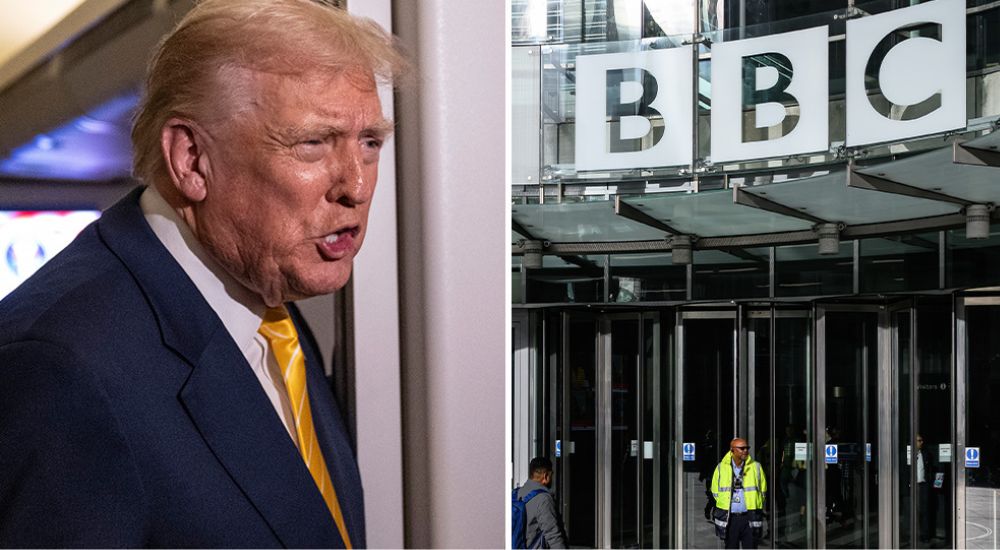
The British Broadcasting Corporation (BBC) said it will defend a $5bn (£3.7bn) defamation lawsuit filed by United States President Donald Trump over the editing of his 6 January 2021 speech in a Panorama documentary.
Court documents filed in U.S.state, Florida show that Trump accused the BBC of defamation and breach of a trade practices law, alleging that the broadcaster deliberately altered his words to portray him as inciting violence ahead of the US Capitol riot.
Although the BBC issued an apology last month over the edit, it rejected Trump’s demand for compensation and insisted there was no legal basis for a defamation claim. Trump’s legal team alleged that the broadcaster had “intentionally, maliciously, and deceptively” edited his speech.
In a brief statement, a BBC spokesperson said the corporation had made its position clear and would be defending the case, adding that it would not comment further on ongoing legal proceedings.
Trump had previously signalled his intention to sue following the broadcast of the documentary in the UK ahead of the 2024 US election, accusing the BBC of changing the meaning of his remarks.
During his speech on 6 January 2021, Trump told supporters they would walk down to the Capitol to “cheer on” senators and members of Congress. Nearly an hour later, he used the phrase “we fight like hell.”
Advertisement
The Panorama programme edited the two remarks together, creating the impression that they were said consecutively.
The BBC later acknowledged that the edit gave a “mistaken impression” that Trump had made a direct call for violent action, but maintained that this did not amount to defamation.
In November, a leaked internal BBC memo criticised the editing of the speech, leading to the resignations of Director-General Tim Davie and the corporation’s head of news, Deborah Turness.
Before the lawsuit was filed, BBC lawyers argued that the edit was not made with malice and that Trump suffered no harm, noting that he was re-elected shortly after the programme aired. They also said the documentary was not broadcast on BBC platforms in the United States and was restricted to UK viewers on BBC iPlayer.
Trump’s lawsuit, however, claims the programme may have been accessed in Florida through third-party licensing arrangements, VPN usage, or via the streaming service BritBox.
Advertisement
The BBC has not yet responded publicly to these specific allegations, nor has the company said to hold the alleged overseas distribution rights.
Reacting to the case, UK Health Minister Stephen Kinnock said the BBC was right to stand firm, while stressing that the broadcaster had already acknowledged errors in the programme. He added that the Labour Party would continue to support the BBC as an important public institution.