FEATURE: Inside AGILE’s Push To Redefine Girls’ Education In Sokoto
When the Sokoto State chapter of the Adolescent Girls Initiative for Learning and Empowerment (AGILE) disclosed the amount that was spent on girls’ education in 2025 alone, the figure raised eyebrows.
But beyond the numbers lies a deeper story about access, inequality, and whether massive investment is finally translating into lasting change for adolescent girls in one of Nigeria’s most educationally disadvantaged states.
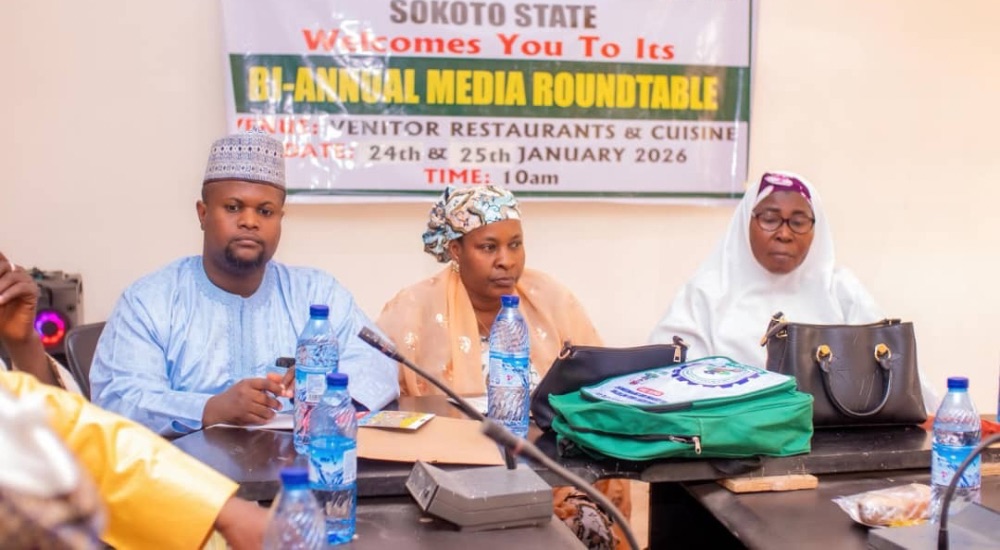
At a media roundtable in Sokoto, AGILE State Project Coordinator Dr. Mansur Buhari revealed that the project had implemented 94 out of 161 planned activities, representing 53 per cent execution for the year.
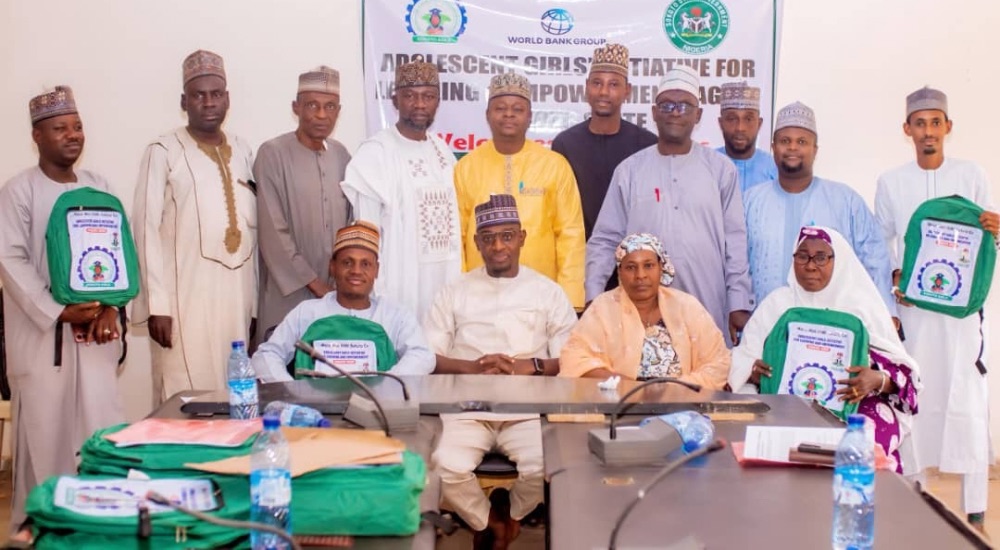
The disclosure was more than a progress update, it is a window into how a global education intervention is attempting to correct decades of systemic neglect of girls’ education in Sokoto.
Sokoto State has over 2,000 primary schools but fewer than 600 secondary schools, a disparity that has long forced thousands of girls to drop out after primary education. According to AGILE officials, this structural imbalance is one of the key drivers of low female enrolment at the secondary level.
Advertisement
“To keep girls in school, AGILE has prioritised secondary education infrastructure, including plans to establish 58 smart secondary schools across the state.
In 2025 alone, the project renovated 749 classrooms and constructed 1,652 disability-friendly toilet units across all 23 local government areas of the state. These facilities according to education experts directly influence retention, especially for adolescent girls dealing with puberty and menstrual hygiene.
WATER, POWER AND DIGNITY
Beyond classrooms, AGILE invested heavily in basic school amenities often taken for granted elsewhere.
The project constructed 214 solar-powered boreholes in 240 secondary schools, ensuring access to clean water in communities where scarcity has historically disrupted learning.
Advertisement
For many girls, the absence of water and sanitation has been a silent but powerful barrier to education. Separate toilets, reliable water supply, and improved school environments have helped reduce absenteeism, a link Suleiman Musa, AGILE Assistant System Strengthening Manager,says is already becoming evident in enrolment figures.
In addition, 4,480 trees were planted in 224 schools, a move framed not only as environmental protection but as part of climate resilience and improved learning conditions.
While physical improvements are visible, AGILE’s most direct intervention in household decision-making has come through its Conditional Cash Transfer (CCT) scheme. In 2025, 41,821 beneficiaries received financial support tied to school attendance and retention.
For families facing poverty, early marriage pressures, or competing survival needs, the stipends have shifted priorities.
“Once a girl’s education becomes an economic benefit rather than a burden, parents listen,” said an education advocate who attended the roundtable.
AGILE officials confirmed that the cash transfers were deliberately designed to reach vulnerable households, especially in rural communities where girls’ schooling is most at risk.
Advertisement
Learning Beyond the Classroom
The initiative approach extends beyond bricks and mortar. According to Hajiya Rabi Gwadabawa, a communication lead on the project, the initiative places strong emphasis on life-skills and gender-based violence (GBV) prevention through a “safe space” model.
These sessions provide adolescent girls with training on communication, reproductive health, menstrual hygiene management, nutrition, decision-making, climate change awareness, and prevention of sexually transmitted infections.
“In many communities, girls lack safe platforms to ask questions or learn about their bodies and rights, safe spaces are filling that gap”
This aspect of the project is particularly significant in Sokoto, where cultural norms often limit open discussion of adolescent health issues.
To strengthen local ownership, AGILE trained 2,240 School-Based Management Committee (SBMC) members on school environment management and social compliance. The project also distributed 97,446 teaching and learning materials and supplied 11,221 desks to secondary schools across the state.
While officials described the pace as “steady,” the figures also highlight execution gaps, a reminder that spending alone does not guarantee outcomes.
The Media As Watchdog, Not Cheerleader
AGILE is unanimous in one point: the media’s role is central, not as a publicity arm, but as a watchdog.
“The media help us clear misinformation and also hold us accountable, describing journalists as “critical partners in ensuring transparency and community trust” Gwadabawa said,
For a project handling billions of naira and operating in socially sensitive terrain, that scrutiny may be just as important as funding.
With 16,528 girls enrolled out of a 17,000 target for 2025, the project appears to be approaching its short-term goals. Yet, education experts warn that sustainability remains the real test.
Will renovated classrooms be maintained after donor funding wanes?
Will cash transfers translate into long-term educational attainment?
And will newly enrolled girls complete secondary education without being pulled back by poverty, early marriage, or insecurity?
These questions loom as AGILE moves into subsequent phases.