
FEATURE: Lagos Has One Toilet Per 14,000 Residents — Yet Jails People For Open Defecation
Defecating or urinating is often referred to as answering the call of nature. But if you must answer the call in public in Lagos, you will pay for it.
You either pay to use a toilet or risk going to prison for open defecation or urination.
In recent months, the Lagos State Government has intensified enforcement against open defecation and urination.
On February 19, 17 offenders apprehended by operatives of the Lagos Waste Management Authority (LAWMA) were arraigned before a Magistrate Court sitting in Bolade, Oshodi, for urinating and defecating in public places.
The court found the defendants guilty and sentenced each offender to either pay a fine of N40,000 or serve one month in prison.
Advertisement
Speaking on the judgment, the Lagos State Commissioner for Environment and Water Resources, Mr. Tokunbo Wahab, said the ruling served as a reminder that defecating and urinating in public is an offence.
“Let this serve as a clear reminder that open urination and defecation are environmental offences and serious public health risks. Lagos State will continue to enforce sanitation laws firmly to protect public health, preserve human dignity and maintain order in our communities,” he wrote on X.
“We urge residents to make use of available public sanitation facilities and comply with environmental regulations. Cleanliness is a shared responsibility.”
In the early hours of February 27, seven individuals were apprehended in different parts of Lagos Island for similar offences.
Also, on March 7, five individuals were apprehended at different locations across Lagos Island by the anti–open defecation enforcement team. Similarly, on March 12, five defaulters were apprehended by the anti–open defecation squad on Lagos Island.
Advertisement
Between June and July 2025, at least 21 individuals were jailed for open defecation and urination. The jail term ranged from one to three months.
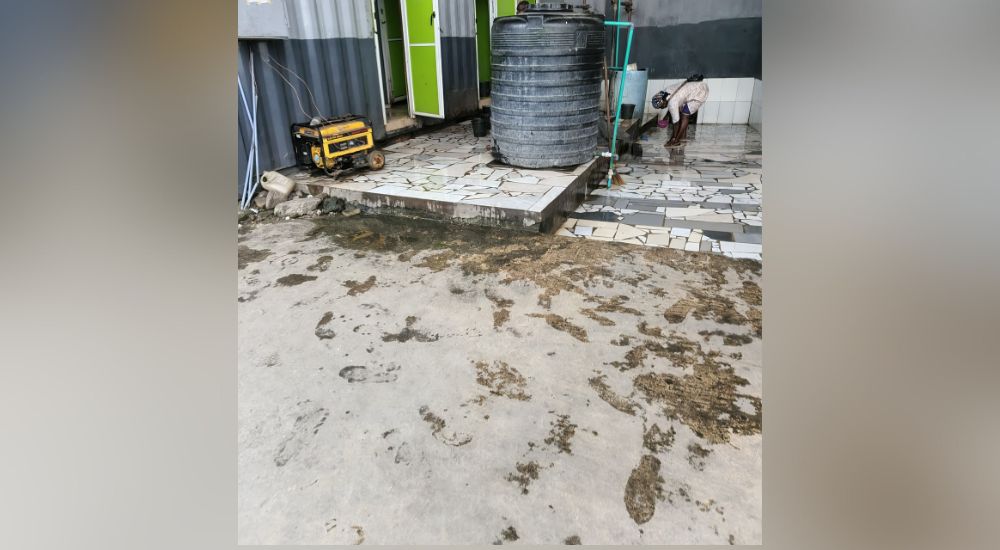
While the state is focused on punishing offenders, public toilets across the state—most of which are run by private individuals—are in highly unhygienic conditions, and users are required to pay to use them.
THE WHISTLER investigation revealed that these operators charge users N200 per use. This means that if a person uses the toilet five times in a day, they will pay N1,000.

At Obalende, within the BRT terminal, there is a public toilet on the premises. It is a busy facility, with people constantly going in and out. Standing a short distance opposite the toilet is a woman whose job is to ask users whether they want to defecate or urinate. After use, payment is made to her.
Advertisement
“This is supposed to be a government facility. Why are you charging us?” our correspondent asked her.
She was seated at the time. She looked at our correspondent with visible anger, glanced down and continued counting the money in her hand without uttering a word.
According to a man who directed our correspondent to the facility, it is run by a private operator.
Although there is a running tap outside the toilet, users must fetch water with buckets to flush after use because the toilet system is not functional.
In Oshodi, the public toilet visited by our correspondent appeared filthy and in deplorable condition. At the entrance were about three young men in their 20s, who appeared to be of northern extraction judging by their accents. Users pay N200 per visit.
It was a similar experience at Agege and Iyana-Ipaja, with the same price charged.
At Agege, the toilet located around the bridge is the only one within sight. When THE WHISTLER correspondent asked the attendant whether he would still have to pay if he returned later to use the toilet again, the attendant replied: “Why won’t you pay? Of course you’ll pay.”
At Iyana-Ipaja, our correspondent visited two public toilets—one located inside a motor park and another outside the garage.
The one inside the park has an inscription indicating that it was built by the state Ministry of Women Affairs and Poverty Alleviation.

Both facilities were dirty, particularly the one at the motor park.
“The money we charge people is for maintenance. We spend N50,000 every week on soakaway evacuation and cleaning,” the woman at the garage toilet told THE WHISTLER when asked why users were charged despite the facility being built by the state government.
One thing common to all the toilets visited by THE WHISTLER is that they were dirty, some in deplorable condition, and all charged users N200 per use.
They are run by private individuals and are also few in number. A state like Lagos likely needs thousands of well-maintained public toilets to discourage open defecation and urination.
As of May 2025, the Lagos State Ministry of Women Affairs and Poverty Alleviation had just 23 functional public toilets supporting the state government’s zero-tolerance policy on open defecation. Operators manage them as a means of empowerment under the ministry’s poverty alleviation scheme.
With a significant number of beggars and homeless people in the state, discouraging open defecation among this group may remain difficult, as many cannot afford to pay to use toilets.
In February 2025, the Lagos State House of Assembly called for stricter measures to curb open defecation and improve sanitation across the state.
During plenary, lawmakers urged the Ministry of Environment and Water Resources to fully enforce environmental laws prohibiting open defecation and ensure the availability of free public toilets statewide.
They also stressed the need for sustained public awareness campaigns to educate residents on the dangers. However, public toilets in Lagos are not free.
Collaboration With WaterAid To Build 350 Public Toilets
In 2025, it emerged that the Lagos State Government, in collaboration with WaterAid and private operators, planned to build 350 additional public toilets across the state to curb open defecation.
Speaking at a roundtable, the Special Adviser to the governor on Environment, Engr. Olakunle Rotimi-Akodu, said work had started on some of the toilets, including identifying locations for them.
He stated that the government would adopt a three-pronged approach to tackling open defecation: providing infrastructure, carrying out massive public advocacy, and enforcing sanitation laws.
However, during this investigation, our correspondent did not observe any ongoing toilet construction projects in the areas visited. There is also no publicly available information on the exact locations of the proposed facilities or the status of the project.
N2.63bn Budgeted For Public Toilets In 2025
The Lagos State Ministry of Environment received N300m for the construction of public toilets and bathrooms across the state as of the third quarter of 2025, representing 11.4 per cent of the N2.63bn budgeted for the project that year.
This is according to the Lagos State Government Budget Implementation Report for the third quarter of 2025, which was obtained by THE WHISTLER.
The report shows that the project, titled “Construction of 57 Nos Modified Public Toilets and Bathrooms in Strategic Locations,” was allocated N2.63bn in the 2025 original budget.
However, by the end of the third quarter, only N300m had been spent on the project.
The amount represents total spending recorded between the first and third quarters of 2025, indicating that no additional expenditure was recorded beyond the N300m within the nine-month period.
According to the report, the year-to-date spending of N300m accounts for 11.4 per cent of the total budget, leaving an unspent balance of N2.33bn.
The project is aimed at providing 57 modified public toilets and bathrooms in strategic locations across the state to improve sanitation and reduce open defecation.
The implementation report did not specify the number of facilities completed or the locations where the executed projects are situated as of the third quarter.

Implications Of Open Defecation – Expert
According to UNICEF, Nigeria became the leading country for open defecation after overtaking India in 2019 and is considered the open-defecation capital of the world.
A public health expert and Executive Secretary of the Health Reform Foundation of Nigeria, Dr. Celestine Okorie, said it is estimated that about 18 per cent of Nigeria’s population — about 48 million people — currently defecate in open spaces such as bushes, gutters and rivers.
He noted that open defecation is not just a nuisance but also poses serious public health risks, contaminating food and water and contributing to increased infant mortality and morbidity.
“Open defecation contaminates food items in markets and pollutes groundwater, creating a high risk for enteric diseases. This often leads to infectious disease outbreaks causing diarrhoeal diseases, cholera, and hepatitis, particularly during the rainy season when waste enters water sources,” Okorie told THE WHISTLER.
“Contaminated water and food from open defecation are directly linked to high prevalence of diarrhoeal diseases in children leading to infant malnutrition and increased vulnerability to infections due to low immunity.”
He also listed Neglected Tropical Diseases (NTDs), reduced economic productivity and lower quality of life as other consequences.
NTDs are a group of diseases common in tropical regions, some of which are transmitted through soil, water or food contaminated with human faeces, including hookworm, ascariasis and schistosomiasis.
“In both urban and rural areas, this practice is a major contributor to reduced economic development, productivity loss due to illness, and a heavy burden on the healthcare system which could have been otherwise prevented by proper disposal of human feces. Human wastes from open defecation are unsightly, offensive and cause significant mental stress, anxiety and reduced quality of life in our society,” he added.
One Public Toilet Per 14,000 People
Lagos is the most populous state in Nigeria, with an estimated population exceeding 23 million people. For a state with such a large population, the question remains: how many public toilets are needed to discourage open defecation and urination?
Okorie said that while exact metrics vary, public health experts generally recommend one public toilet facility for every 2,000 people.
“Some public health experts suggest a public toilet facility per 2,000 people to be situated in strategic public areas such as markets, motor parks, and busy streets,” he said.
He noted that as of 2016, reports indicated that only 570 public toilets were serving roughly 20 million people in Lagos, highlighting a huge deficit.
“There are reports that the Lagos State Government is already planning to construct 10,000 new public toilets to address the huge deficit and stop open defecation by 2030. This means that approximately 500 public toilets per million people are indeed needed to be constructed in the state where current facilities are heavily overwhelmed and largely inadequate to improve access to toilet facilities,” he said.
Okorie acknowledged that the Public-Private Partnership model could help address the shortage of public toilet infrastructure but warned that privately operated pay-per-use toilets must maintain high hygiene standards and be properly supervised.
He also noted that such a model may face sustainability challenges in high-poverty areas where users cannot afford the fees, suggesting that government subsidies are necessary.
“Government support, regulation, supervision and oversight over such facilities is therefore important,” he said.
In addition to inadequate toilet facilities, he identified behavioural and cultural factors as contributors to open defecation.
“This means that even if toilet facilities are provided, people may be reluctant to use them. Strong government policy and enforcement would be therefore necessary to make people adopt a behavioral change,” Okorie added.
However, the Lagos State Commissioner for Environment and Water Resources, Mr. Tokunbo Wahab, disclosed in 2025 that a total of 1,710 public toilets exist in the state, amounting to roughly one toilet per 14,000 residents.
Wahab added that 150 more were under construction and that every petrol filling station and eatery was compelled to allow members of the public to use their toilet facilities.

Government Response
Efforts by THE WHISTLER to speak with officials of the Lagos State Ministry of Environment and Water Resources proved abortive, as the ministry’s phone number was not going through.
Also, a WhatsApp message sent by our correspondent had yet to be delivered as of the time of filing this report.
However, THE WHISTLER was able to reach the Commissioner for Information and Strategy, Mr. Gbenga Omotoso, on Saturday. After listening to the questions raised by our correspondent, he promised to call back.
The questions bordered on how many public toilets currently exist in Lagos, how many more the state plans to provide in order to make the state open-defecation-free by 2030, and whether public toilets in Lagos are free for public use or if residents are required to pay before using them.
“I’ll get back to you. I’m just coming back from a function where we had the symbolic flag off of environmental sanitation. So, I’m on the bus. When I get down, I’ll call you,” Omotoso told THE WHISTLER.
However, as of the time of filing this report on Sunday, he had yet to call back or respond to the text and WhatsApp messages sent to him.
While the Lagos State Government continues to intensify enforcement against open defecation and urination, the available public toilets are limited in number, most of them unhygienic, and in some cases, in deplorable condition. In addition, residents are required to pay to use them — a situation that could pose a challenge to the state’s goal of becoming open defecation-free by 2030.