
FX Market Now Liquid Enough For Minimal CBN Intervention – Cardoso
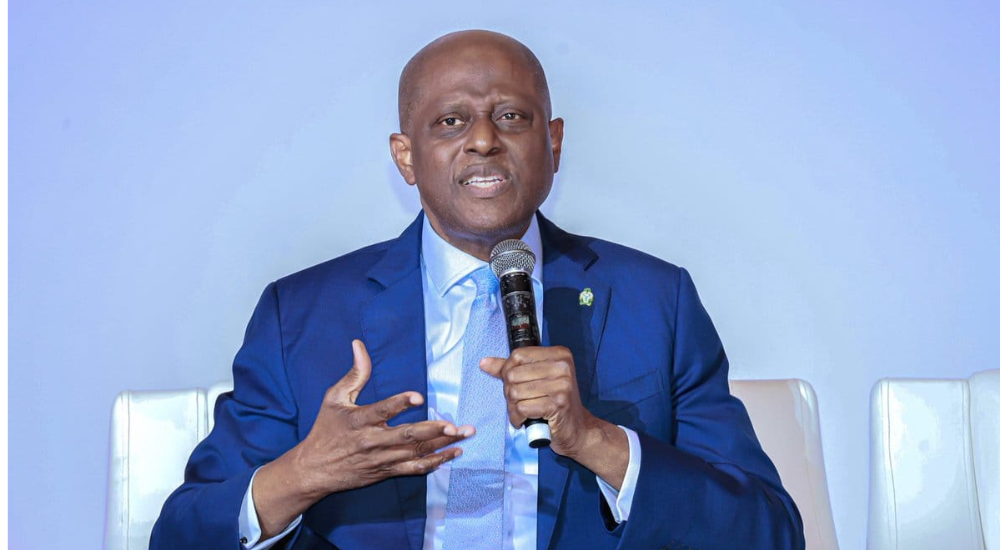
Governor of the Central Bank of Nigeria (CBN), Mr Olayemi Cardoso, has said Nigeria’s foreign exchange market has attained sufficient liquidity to operate with only minimal intervention from the apex bank, describing the development as one of the key outcomes of the monetary and exchange rate reforms introduced under his leadership.
Cardoso made the remarks during a fireside chat at the BusinessDay CEO Forum 2026, where he outlined the progress made in restoring macroeconomic stability and rebuilding investor confidence.
According to him, the foreign exchange market has become more efficient and resilient, allowing market forces to play a greater role in price discovery while reducing the need for frequent interventions by the CBN.
He disclosed that Nigeria’s gross external reserves have grown organically to $52bn, providing approximately 10 months of import cover, while net foreign reserves have risen to about $40bn, significantly strengthening the country’s external buffers.
The CBN governor said the improved reserve position has enhanced Nigeria’s ability to withstand external shocks and increased the confidence of foreign investors in the economy.
Cardoso attributed the progress to the bank’s reforms in exchange rate management, monetary policy and efforts to strengthen the financial system.
Advertisement
He stressed that the gains recorded were the result of difficult but necessary policy decisions aimed at restoring confidence in the economy.
“You cannot be a nice guy in taking the difficult decisions to save the country. You have got to be disciplined and armed with integrity. Ultimately, in our business, it is about trust,” he said.
Cardoso noted that rebuilding trust remained central to the CBN’s mandate, adding that consistency and transparency in policy implementation had helped improve market confidence.
He also reiterated the apex bank’s determination to increase diaspora remittances, saying the CBN was working towards achieving $1bn in monthly diaspora inflows by the end of 2026.
According to him, stronger remittance inflows will further improve foreign exchange liquidity, support exchange rate stability and provide additional financing for economic activities.
Advertisement
The governor said the banking sector had also become more resilient following the ongoing recapitalisation exercise, which has attracted about N4.65tn in fresh capital.
He explained that stronger capital buffers would enable banks to finance larger projects, absorb economic shocks and support sustainable economic growth.
Cardoso said the recapitalisation programme was not a one-off exercise but part of a continuous regulatory framework designed to strengthen the banking industry and align it with international best practices.
He further highlighted the restoration of confidence in Nigeria’s payment system as another major achievement of the reforms.
According to him, Nigerians can now use their bank debit cards seamlessly for transactions abroad, reflecting improved confidence in the country’s financial system.
The CBN governor expressed optimism that moderating inflation and a gradual decline in interest rates would create a more favourable environment for lending, enabling banks to extend more credit to productive sectors of the economy, particularly small and medium-sized enterprises.
Advertisement
He, however, stressed that banks must continue to strengthen their risk management frameworks to ensure sustainable credit expansion.
Cardoso also said the CBN would continue to work closely with financial institutions to build capacity and develop skills that would enable Nigerian banks compete effectively with their global counterparts.
Addressing business leaders at the forum, he urged Nigerian companies to take advantage of the improving macroeconomic environment instead of waiting on the sidelines while foreign investors position themselves for emerging opportunities.
“Where we are now, we have achieved hard-earned stability. With stability comes the potential for investment, and with investment comes growth. All our local CEOs should be part and parcel of that train that is moving,” he said.
He expressed confidence that the combination of sustained reforms, stronger external reserves, a more liquid foreign exchange market and a resilient banking sector would continue to support Nigeria’s economic recovery and attract increased domestic and foreign investment.