
‘Hand Of God,’ Falkland Crisis: England, Argentina Seek National Pride
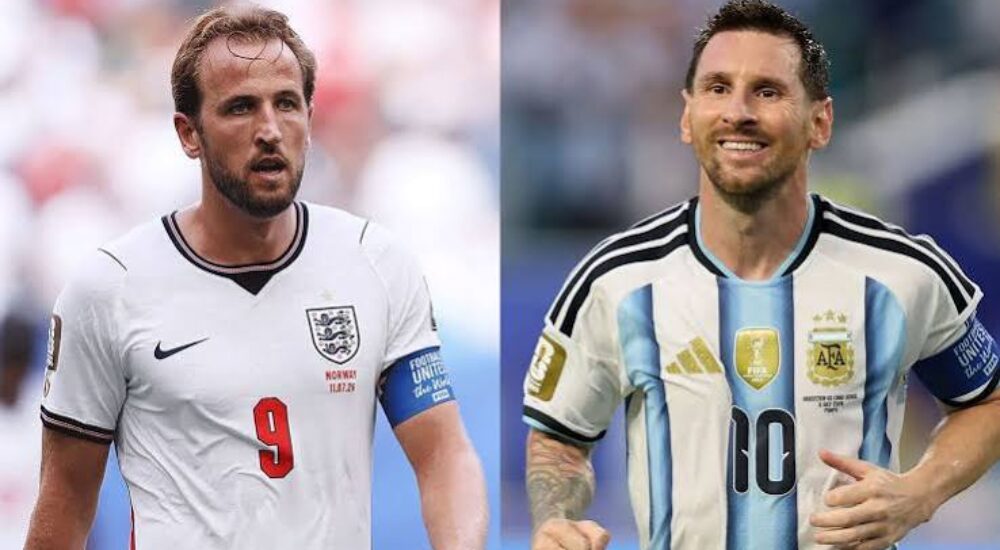
England and Argentina will meet in the semifinals of the 2026 FIFA World Cup at Atlanta Stadium on Wednesday night, reigniting a rivalry forged in the “Hand of God” and shadowed by the Falklands crisis.
Both nations chase a measure of national pride on football’s biggest stage, bearing the two factors in mind.
The rivalry dates back to 1962, when England beat Argentina 3-1 in the group stage in Rancagua, Chile. Goals from Ron Flowers, Bobby Charlton and Jimmy Greaves gave England the win, and they advanced over Argentina on goal difference before losing to Brazil in the quarterfinals.
Tensions deepened in 1966 at Wembley, where England won a bad-tempered quarterfinal 1-0. Argentina still maintains that Geoff Hurst’s winning goal was offside, and captain Antonio Rattin was sent off after 33 minutes, delaying play for nearly eight minutes by refusing to leave the field.
England defender George Cohen later said Argentina turned to spitting and hair-pulling once things weren’t going their way, calling it some of the worst conduct he’d seen on a pitch.
Manager Alf Ramsey called the Argentine side “animals” afterwards.
Advertisement
The rivalry’s most infamous chapter unfolded in 1986 in Mexico City, just four years after the Falklands War, when Argentina won 2-1 in the quarterfinals.
Diego Maradona punched in the opening goal – the “Hand of God” – before scoring what’s widely regarded as the greatest goal in World Cup history, weaving past several England defenders to finish.
In 1998 at St Etienne, the two sides drew 2-2 after David Beckham was sent off for kicking out at Diego Simeone, with Argentina winning the shootout 4-3.
Michael Owen scored a widely praised solo goal, Javier Zanetti equalised before halftime, and a Sol Campbell header was disallowed for a push.
Simeone later conceded that his reaction to the challenge may have turned a yellow card into a red, though he insisted a yellow would have been the fairer outcome.
Advertisement
England responded in 2002 in Sapporo, winning 1-0 through a Beckham penalty after Owen was fouled by Mauricio Pochettino.
BBC chief football reporter Phil McNulty described the match as charged with lingering resentment from Beckham’s earlier red card and England’s penalty exit four years prior while reminiscing about the match ahead of Wednesday’s blockbuster.
England advanced to the last 16, while Argentina were eliminated at the group stage for the first time since 1962.
The two nations haven’t crossed paths at a World Cup since. This time, Lionel Messi will face England for the first time in his career, with defending champions Argentina looking to stop Thomas Tuchel’s side from ending 60 years without a final appearance.
Argentina reached this semifinal with a 3-1 extra-time win over Switzerland, Alexis Mac Allister opening the scoring before Julian Alvarez and Lautaro Martinez struck late.
England beat Norway 2-1, powered by a Jude Bellingham brace that included a 93rd-minute winner.
Advertisement
Bellingham has scored six goals in six matches at this tournament. Tuchel said his approach is simple: pair Kane and Bellingham and let them decide the game, while still working to sharpen England’s attack and involve more players in the buildup.
Tuchel believes the formula for beating Argentina is straightforward, built around pairing Kane and Bellingham.
“We need to get better in attacking,” Tuchel said ahead of the Argentina match, adding, “to also bring other players into position, but of course they are decisive players.”
“Put Harry and Jude together, they will do the rest,” he said.
Alvarez, one of the players to watch, sprang to life against Switzerland and entered the semifinal with renewed confidence, remaining a threat whether starting or coming off the bench.
Bellingham, meanwhile, has been England’s standout performer in the Americas, his six goals in six matches backed by a tireless ability to arrive in the box at the right moment.
Overall, England leads the head-to-head record 6-3 across 14 meetings, with five draws – though Argentina has had the better of the encounters that have mattered most.
Whichever side prevails on Wednesday will carry their nation’s pride forward, in a match expected to bring its share of yellow cards, and possibly a red.