Sachet Alcohol Ban May Hurt Local Industry, Group Warn
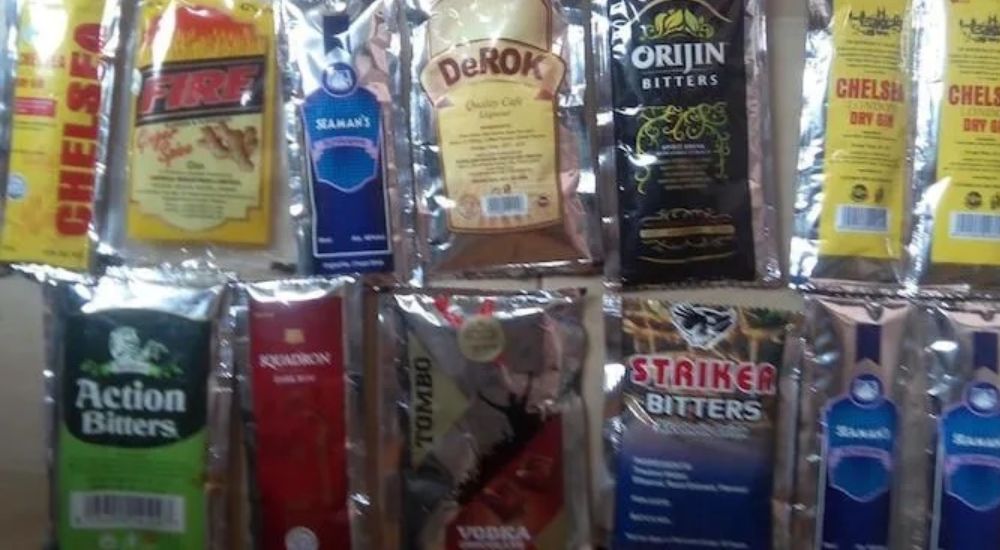
The Food, Beverages and Tobacco Senior Staff Association (FBTSSA) has warned that the ongoing enforcement of the ban on alcohol sold in sachets and PET bottles below 200 millilitres could lead to job losses, disrupt local manufacturing, and discourage investment in Nigeria’s consumer goods sector.
The union’s Executive Secretary, Mr. Solomon Adebosin, made the call during an interview on ARISE News on Tuesday, urging the National Agency for Food and Drug Administration and Control (NAFDAC) to engage industry stakeholders in dialogue rather than relying solely on prohibition.
NAFDAC commenced enforcement of the ban on January 21, 2026, following a directive from the Senate.
The agency had earlier announced, on November 11, 2025, plans to implement a total ban on sachet alcohol and small-sized PET bottles by December 2025, citing public health concerns. Implementation was temporarily suspended after the Federal Government directed that further consultations be held, but NAFDAC has since resumed enforcement after receiving fresh instructions from the Senate.
NAFDAC’s Director-General, Prof. Mojisola Adeyeye, has said the policy is aimed at safeguarding public health and protecting vulnerable groups, including children, adolescents and young adults, from harmful alcohol consumption.
Advertisement
However, Adebosin argued that the ban fails to adequately consider prevailing economic realities and the role sachet alcohol plays in affordability and consumption moderation.
He noted that sachet packaging emerged largely in response to declining purchasing power and the need to provide low-income consumers with access to regulated products.
According to him, smaller packaging sizes can encourage moderation, as consumers are less likely to overconsume compared to larger-volume bottles.
He stressed that responsible drinking campaigns often emphasise moderation, which sachet products, in his view, can support.
Beyond consumer behaviour, Adebosin expressed concern over the potential impact on employment and indigenous manufacturing.
Advertisement
He said many sachet alcohol products are produced by Nigerian-owned companies that have invested heavily in production facilities and supply chains, providing direct and indirect jobs across the country.
“By shutting these products down, you are going to be affecting employment,” he said, adding that the policy could weaken confidence among local entrepreneurs and signal regulatory uncertainty to prospective foreign investors.
He warned that foreign direct investors closely observe how local businesses are treated, noting that abrupt bans without broad consultation could deter new investments into Nigeria’s manufacturing sector.
While acknowledging the importance of public health objectives, the FBTSSA executive secretary called for a more inclusive approach.
He urged NAFDAC and other relevant authorities to explore alternative regulatory measures, such as stricter age enforcement, improved labelling, controlled distribution channels, and sustained public education, rather than an outright ban.
“We can have a dialogue on this. The issue should not just be ban,” Adebosin said, stressing that stakeholder engagement could yield solutions that balance public health protection with economic sustainability.
Advertisement
The sachet alcohol ban has continued to generate debate among regulators, industry operators and labour groups, highlighting the broader challenge of aligning health policy goals with economic and employment considerations in Nigeria’s current economic climate.