South Korean Court Jails Ex-President For Five Years
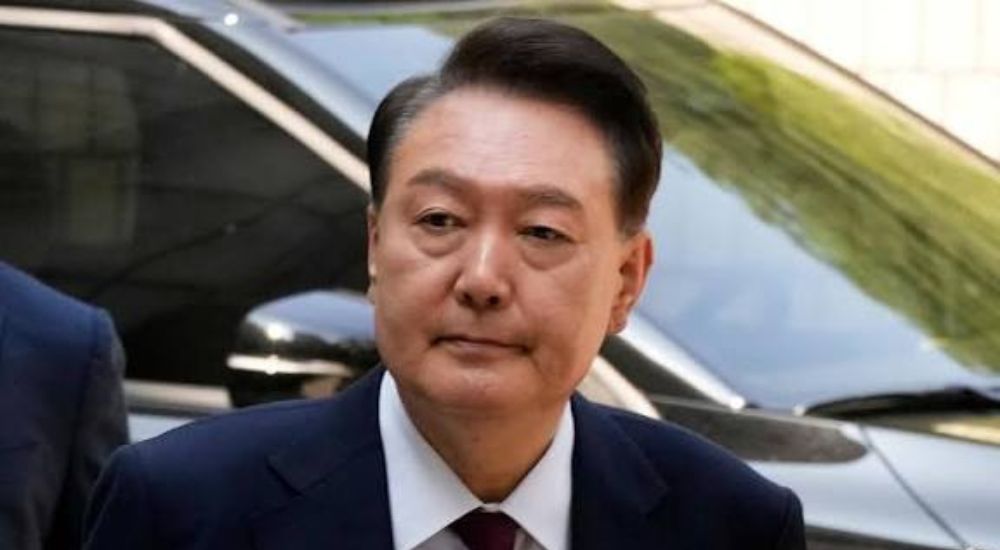
A South Korean court on Friday sentenced former President Yoon Suk Yeol to five years in prison for obstructing justice and related offences tied to his controversial declaration of martial law and the political turmoil that followed.
The ruling is the first in a series of judgments against the former leader, whose brief suspension of civilian rule on December 3, 2024, triggered nationwide protests and a dramatic confrontation in parliament.
Since being removed from office, Yoon has been facing multiple prosecutions over decisions taken during the crisis and its aftermath.
Delivering the verdict at the Seoul Central District Court, Judge Baek Dae-hyun said Yoon was guilty of obstructing justice for preventing investigators from carrying out his detention.
The court also found him culpable of sidelining key cabinet members from meetings where the martial law plan was discussed.
“Despite having a duty, above all others, to uphold the Constitution and the rule of law as president, the defendant instead showed a disregard for the constitutional order,” Judge Baek said, adding that Yoon’s responsibility in the case was “extremely grave”.
Advertisement
However, the court acquitted the former president of forging official documents, citing insufficient evidence. Yoon has seven days to file an appeal.
Prosecutors had earlier sought a 10-year prison sentence, but Yoon maintained throughout the trial that he had broken no law.
In a separate case, prosecutors recently asked the court to impose the death penalty, describing Yoon as the “ringleader of an insurrection” over his role in the martial law declaration.
They argued that his actions threatened South Korea’s democratic system and constitutional order, and that he had shown no remorse.
Even if convicted in that case, it remains unlikely the sentence would be carried out, as South Korea has observed an unofficial moratorium on executions since 1997.
Advertisement
Yoon appeared defiant in court, at times smiling as prosecutors pressed for the harshest punishment.
A former top prosecutor himself, he has continued to insist that his declaration of martial law was a lawful exercise of presidential authority.
In his closing remarks earlier this week, Yoon argued that invoking emergency powers to “protect the nation and uphold constitutional order” could not be classified as insurrection.
He accused the then-opposition-controlled legislature of running an “unconstitutional dictatorship”, claiming his actions were meant to awaken the public.
“There was no other option but to awaken the people, who are the sovereign,” he said.
The court is expected to rule on the insurrection charges on February 19.
Advertisement
Yoon is also standing trial in another case over allegations that he ordered drone flights over North Korea to justify the imposition of martial law, a charge prosecutors say amounts to aiding the enemy.