When Headlines Become Weapons: Why Ndi Igbo Will Not Be Silent Again
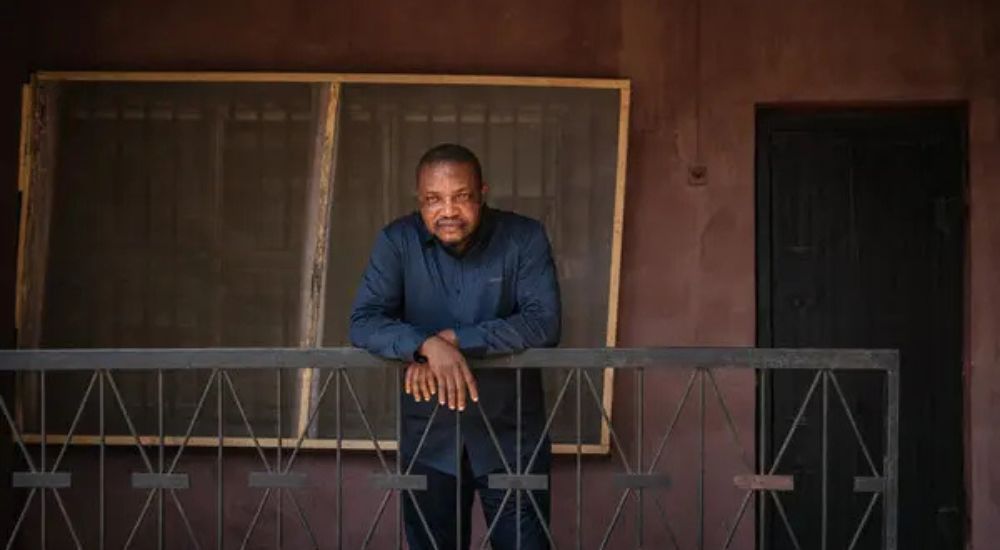
There is a reason some of us went cold the moment we saw the New York Times headline suggesting that a “screwdriver trader in Onitsha” influenced a US missile strike in Nigeria. It was not a shock. It was a memory.
We have seen this movie before.
In the mid-1960s, we have not forgotten how the BBC notoriously framed Nigeria’s first coup as an “Igbo coup.” It was a lazy label, but it stuck. That single act of narrative simplification did not remain on radio waves or newspaper pages. It travelled into barracks, markets and motor parks. It hardened into hatred. It licensed pogroms. By the time the guns fell silent, over three million Ndi Igbo were dead.
So no, this is not paranoia. It is historical literacy.
What the New York Times has done with this article is not merely poor judgment. It is the revival of a dangerous template: reduce a complex national crisis to an ethnic signpost, then wash your hands of the consequences.
Let us start with the most obvious question. Why did the headline need to mention Onitsha? Why did it need to describe a man as a trader and place him in a city whose ethnic identity is instantly recognizable inside Nigeria? What explanatory value does that add to US foreign policy or intelligence analysis? None.
Advertisement
What it does add is signal. In a country where millions will never read past the headline, where ethnic suspicion travels faster than facts, the framing does the work before the story is even opened. The editors at the New York Times know this. They understand headlines. They have built an empire on them.
And they also know something else. Most Nigerians cannot read the full article even if they wanted to. The paywall guarantees that. So, the headline is not an entry point; it is the story. Everything else is academic decoration. This is where the malice lies.
If the New York Times wanted to explain how US policymakers rely on fragmented, sometimes unreliable information in foreign theatres, it could have done so without putting a target on an ethnic group. If it wanted to expose the weaknesses of American intelligence culture under Trump, it could have focused on Washington, not Onitsha. Power flows upward, not downward. Instead, responsibility was ethnically outsourced.
What makes this framing even more dishonest is that the people who actually took the risk of speaking truth to power in the United States are not Igbo. They are not secessionists. They are not members of IPOB. They are clergy, public servants and community leaders from Nigeria’s Middle Belt, men whose villages were burned and whose people were buried.
Bishop Wilfred Anagbe of the Makurdi Diocese testified before the US Congress. He is from Benue State. Rev. Fr. George Dogo of Holy Family Parish, Takum, spoke to CBS News about the destruction of his community in Taraba State. Franc Utoo, former principal assistant to the Benue State governor, testified openly. Rev. Ezekiel Dachomo from Plateau State has spoken internationally about what his people have endured.
Advertisement
None of them is Igbo. None of them is a separatist. Yet the New York Times chose to ethnically frame its headline as if this crisis somehow originates in the imagination of an Onitsha trader.
There is an Igbo proverb that says: onye na atu eze aka, ya dikwa nkwadebe iji mkpisi aka ya ebuli eze – loosely translated to “when you point at the king, make sure your finger can bear the weight.” You cannot smuggle an ethnic group into a global security story and pretend it is accidental.
The genocide of communities in the Middle Belt is not a rumour circulating on WhatsApp. It has been named and condemned by men who once commanded Nigeria’s armed forces and presided over its legislature. T.Y. Danjuma, David Mark, Yakubu Dogara, Jonah Jang, Samuel Ortom and others have spoken plainly. These are not radicals. They are the Nigerian establishment.
So, what exactly is the New York Times doing?
At best, it is practicing a form of journalism that is historically illiterate and locally reckless. At worst, it is laundering domestic Nigerian political interests through a respected foreign platform. Either way, the outcome is the same. Ndi Igbo are framed as instigators in a conflict where they are not the primary actors.
This is how narratives kill, not immediately, but gradually. They mark a people as suspects. They simplify them into villains. They make future violence sound reasonable.
Advertisement
We are not in 1966 anymore. Ndi Igbo read. We remember. We connect dots. We will not allow any media house, no matter how prestigious, to casually place a mark on our backs and call it storytelling.
If the New York Times wants to report on Nigeria, it must learn that headlines here do not merely inform. They inflame. And when you know that and proceed anyway, innocence is no longer a defence.
History is watching. And this time, we are too.
Young Ozogwu writes from Abuja