Why Malami’s Bail Was Revoked – EFCC
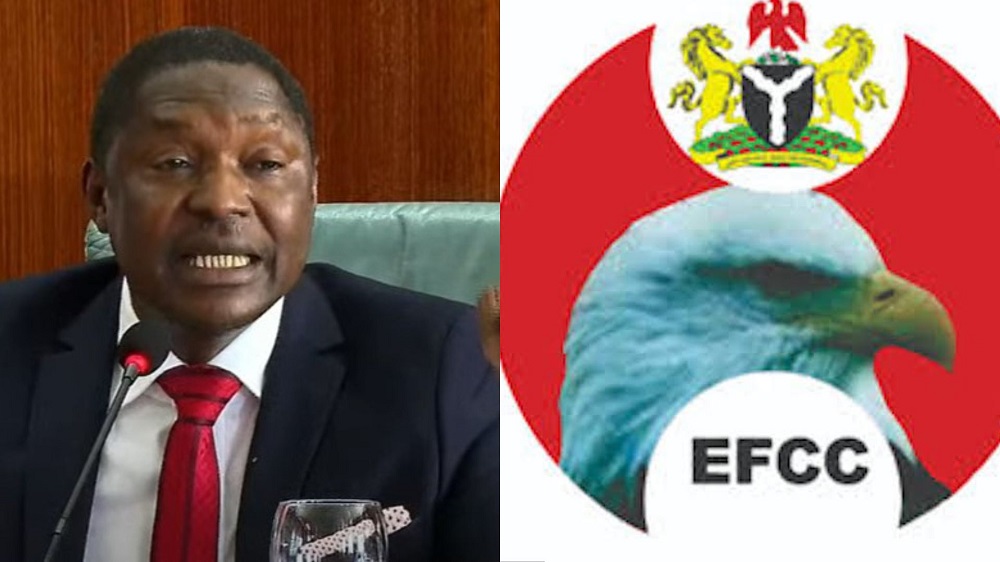
The Economic and Financial Crimes Commission (EFCC) has explained why the bail granted to Abubakar Malami, former Attorney-General of the Federation, was withdrawn.
According to the anti-graft agency, the former AGF failed to meet the conditions attached to it.
The anti-graft agency was responding to claims by Malami that his bail was revoked due to his attendance at a political gathering in Kebbi State. Malami is currently under investigation for 18 alleged offences, including money laundering, abuse of office and terrorism financing.
In a statement issued on Friday, Malami’s Special Assistant on Media, Mohammed Bello Doka, had insisted that the former AGF did not breach any bail terms, arguing that the EFCC acted against him for political reasons.
However, the EFCC, in a statement released on Saturday, dismissed the allegation as false, stressing that Malami never fulfilled the requirements for his administrative bail.
The commission explained that after a brief interrogation on November 28, Malami was granted provisional administrative bail subject to five conditions, none of which he has met or shown readiness to comply with.
Advertisement
According to the EFCC, Malami was expected to return for further interrogation on December 1, but instead wrote to the commission on December 4, requesting permission to excuse himself on the grounds of ill health.
The agency said it granted the request on compassionate grounds, despite the fact that the bail conditions were still outstanding.
The EFCC added that Malami neither submitted a medical report nor provided any credible evidence to support his claim of ill health.
The commission said it subsequently invited him again on December 8, for further interrogation and detained him pending the fulfillment of the bail conditions.
Rejecting claims that Malami’s bail was revoked over political activities or media engagements, the EFCC described such assertions as baseless, noting that the agency has no interest in the political affiliations of suspects and remains apolitical in its operations.
Advertisement
The EFCC advised the former minister to focus on meeting the bail requirements he acknowledged and signed, and to cooperate fully with investigators rather than making what it described as misleading claims in the media.