ADC Says 2026 Budget A Debt Trap, Built On Quicksand
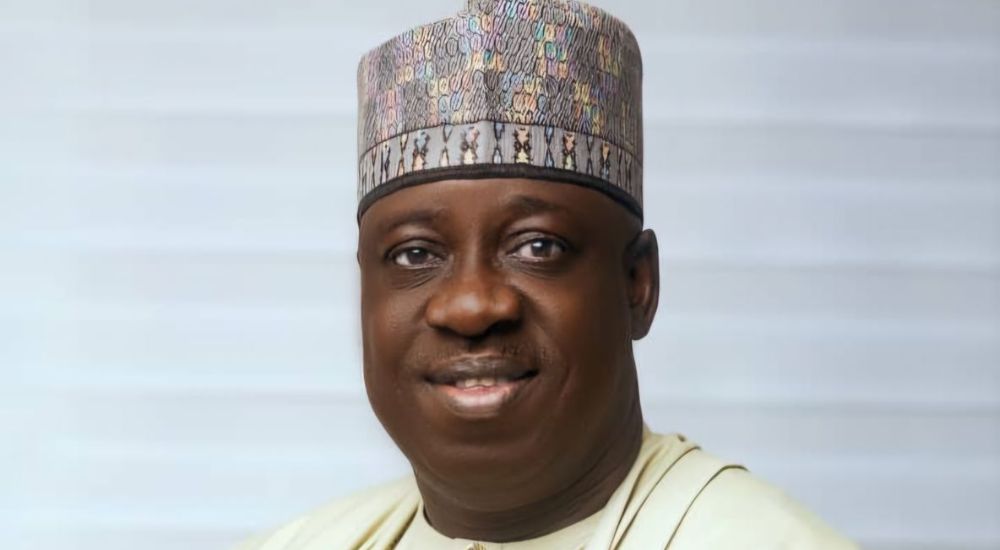
The African Democratic Congress (ADC) has punctured the Federal Government’s 2026 budget proposal, saying it’s a debt trap and built on quicksand.
Dismissing the budget proposal as “wishful thinking”, the party said the document reeked of fiscal recklessness and likely to end up unimplemented, like the 2024 and 2025 budgets.
The ADC, in a statement on Monday by its spokesman, Bolaji Abdullahi, said if approved by the National Assembly, the only thing the 2026 budget is capable of sharing, is more debts and greater misery in the years ahead.
According to the opposition party, a review of the budget proposal by its team of economists, exposed a consolidation of fiscal recklessness, which it said, has become the hallmark of the administration.
Sharing a verdict of its team of economists, the ADC observed that the 2026 budget proposal copied the same templates of the failed 2024 and 2025 budgets, adding, “It will most likely end up in the same way, with the bulk of its implementation pushed to another year.”
The party pooh-poohed the document further, “We are witnessing a government that attempts to build a house on quicksand, presenting a new fiscal framework at a time when the 2025 budget has only just been repealed and reenacted in a display of unprecedented fiscal chaos and administrative incompetence.
Advertisement
“Truth is Nigeria is caught in a fiscal mess. But rather than confront the problems, the Tinubu administration has continued to kick the can down the streets, believing that they can continue to hide the yawning cracks under mountains of unsustainable debts that mortgages the future generation, while they continue to indulge in financial profligacy.
“This administration fails to grasp a fundamental economic truth: no amount of monetary tinkering or central bank intervention can rescue an economy if the government refuses to embrace fiscal discipline and budget credibility.
“What we have seen under this Tinubu APC administration is a chaotic attempt to implement more than four budgets simultaneously because it lacks the basic competence to close out previous cycles and adhere to its own timelines.
“Governments may extend budget implementation period or manage multiple supplementary budgets, but operating three or more national budgets simultaneously, is President Tinubu’s original contribution to fiscal chaos.
“It has never happened before in this country. Overall, what is most evident is the administration’s penchant for turning fiscal planning into a hollow ritual and political ceremonies that mock the suffering of the Nigerian people.
Advertisement
“While revenues were pushed to N20tn in 2024—a figure driven more by the pains of currency devaluation than by genuine economic productivity—the government had the audacity to double its projections to N40tn for 2025 and even raising it to N58.57tn in 2026. This is not vision; it is fantasy.”
The party noted that the 2026 budget proposal is dangerously scant on detail, and embarks on yet another unsustainable expansion built on a foundation of quicksand.
Knocking the administration for what the ADC considered its short-sightedness, the party said, “In an era where oil projections are weakening and global prices are dipping as tensions in Europe show signs of cooling, the Federal Government has inexplicably set a benchmark of $64 per barrel.
“Instead of adopting a conservative posture to shield the nation from global volatility, they chase a N34tn revenue target that is totally disconnected from reality, especially now that the artificial ‘bounce’ provided by the devaluation of the Naira has fully evaporated.
“We wonder if this government ever considers alternative scenarios, other than the one that favours their mindset.
Perhaps most terrifying is the sheer scale of the deficit and what it reveals about this government’s lack of concern for the next generation.
“This administration behaves as if after them, there would be no Nigeria anymore. A budget that plans to generate N34tn in revenue while borrowing N24tn is an admission of fiscal insolvency. In no sane or functional fiscal system would a deficit-to-revenue ratio of 70% be considered acceptable or even be contemplated at all.
Advertisement
“The document presented before the National Assembly on December 19 is a debt trap masquerading as a budget. The government claims it will spend N25.68tn on capital expenditure, yet with a projected deficit of N23.85tn, it is clear that almost every single bridge, road, or project is being funded by high-interest debts.
“Even with a transparent capital plan in place, this on its own calls for concern. But it is even more alarming when government borrows mindlessly to fund opaque and often frivolous expenditures.
“It is one thing to squander current revenues on the excesses of the state, but it is unpardonable sin to raise massive debts to fund reckless spending, effectively burying our children under a mountain of debt obligations before they even enter the workforce.
“The fundamentals of this 2026 budget document betray a total abandonment of revenue credibility and deficit management. The consequences of this incompetence are already staring us in the face.
“Driven by the twin engines of devaluation and surging borrowing, Nigeria’s debt servicing costs have exploded from N12.63tn in 2024 to a projected and staggering N15.52tn in 2026.
“There is no fiscal doctrine on earth that justifies a path of high deficits paired with such astronomical servicing costs.
“This administration has hit a wall, and it is clear that they are blinded by their own propaganda. The Federal Government of Nigeria is in desperate need of a new pair of eyes and a radical departure from this path of ruin to rebuild a fiscal structure that serves the people rather than just the creditors.”
President Tinubu had, on Friday, presented a 2026 budget proposal of N58.18 trillion to the National Assembly for consideration and approval.
The proposal projected a total revenue of ₦34.33 trillion, with capital expenditure of ₦26.08 trillion. It also projected a budget deficit of ₦23.85 trillion, representing 4.28 percent of GDP. ₦15.52 trillion was projected for debt servicing.