Amid Power Sector Crisis, NISO Becomes Member Of WAPP
…Experts Seek Decentralisation Of Power Infrastructure
The West African Power Pool (WAPP) has formally admitted the Nigerian Independent System Operator (NISO) as its member, just as the grid instability worsens in the country.
THE WHISTLER had previously reported that the country’s electricity grid collapsed on Tuesday, making it the second time in five days this year.
Nigeria experienced its first grid collapse on Friday, January 23, 2026.
The incident also plunged Abuja, the country’s seat of power and major cities into darkness.
Advertisement
A few hours later, the Nigerian Independent System Operator (NISO) announced that the national grid had been fully restored and electricity supply across the affected areas returned to normal.
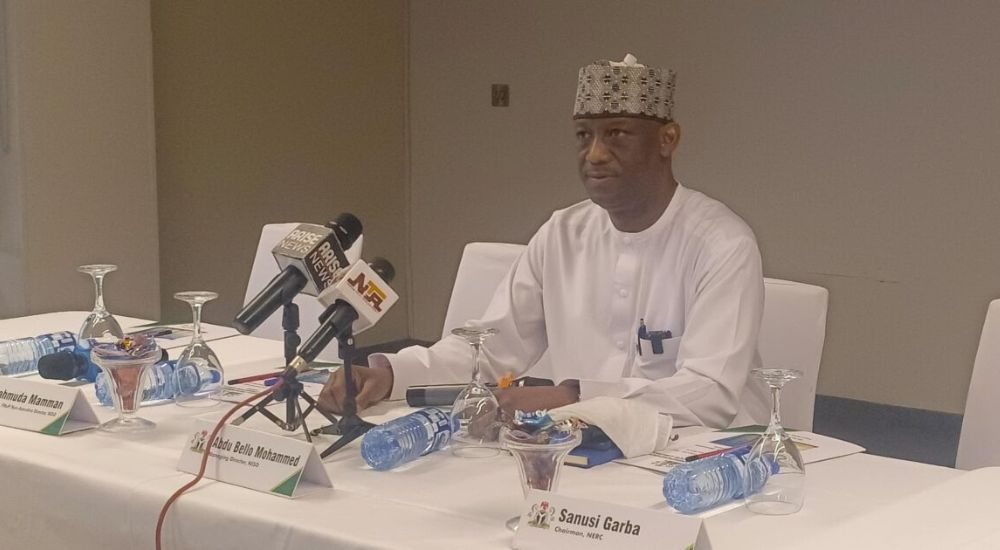
However, barely 24 hours after the latest grid collapse, NISO announced its admission into WAPP, whose headquarters is in Cotonou, Benin Republic.
THE WHISTLER reports that WAPP is a specialised agency of ECOWAS, and it covers 14 of the 15 countries of the regional economic community, namely, Benin, Côte d’Ivoire, Burkina Faso, Ghana, Gambia, Guinea, Guinea-Bissau, Liberia, Mali, Niger, Nigeria, Senegal, and Sierra Leone.
Its mission, among others, is to integrate the national power systems into a unified regional electricity market with the ultimate goal of providing, in the medium and long term, a regular and reliable energy at a competitive cost to the citizenry of the ECOWAS region.
NISO, in a statement released by its management in Abuja on Wednesday, said that it was admitted at the 20th Session of the WAPP General Assembly.
Advertisement
“The decision to admit NISO reflects recognition of its mandate as Nigeria’s independent system and market operator, responsible for ensuring reliability, transparency and efficiency in the operation of the national electricity grid and electricity market.
“As a WAPP member, NISO will contribute to regional grid coordination, information sharing, system planning and the development of a competitive regional electricity market.
“The admission advances WAPP’s objective of integrating national power systems across the ECOWAS sub-region and strengthens Nigeria’s role in promoting grid stability, cross-border electricity trade and sustainable energy development in West Africa’’, the statement stated.
Meanwhile, some power sector experts have expressed concern over the recurring collapse of the national electricity grid and urged the Federal Government to decentralise the country’s power infrastructure to improve reliability and efficiency.
An energy expert, Dr Olukayode Akinrolabu, said the power sector requires urgent structural reforms, including grid decentralisation, renewable energy integration and market restructuring.
According to him, decentralising the grid will empower states to regulate their electricity markets, attract private investment and promote renewable energy solutions, such as solar mini-grids, thereby reducing dependence on fossil fuels.
Advertisement
Akinrolabu noted that ongoing market reforms, including the establishment of NISO, were intended to improve operational efficiency and restore investor confidence, but stressed that more needed to be done.
“To stabilise the grid, the power sector should be segmented by states to allow for manageable power volumes and more effective system control,” he said.
Akinrolabu, who also chairs the Customer Consultative Forum for Festac and Satellite Towns, Lagos State, called for the immediate upgrade of Supervisory Control and Data Acquisition (SCADA) systems for real-time monitoring, expansion of transmission lines and rehabilitation of ageing infrastructure.
He added that the Bola Tinubu administration could improve grid performance by investing in modern transmission infrastructure.
Akinrolabu advocated the adoption of a state-centric coordination model among power operators and the strengthening of regulatory enforcement at the sub-national level to attract investment.
Also, a Communications Consultant, Geometric Power Company, Mr Cdon Adinuba, said Nigeria’s transmission network required massive investment, describing it as obsolete and poorly maintained.
Adinuba observed that the grid frequently collapses whenever power generation exceeds 5,000 megawatts, leaving much of the country’s estimated 13,000 megawatts installed generation capacity grossly underutilised.
He welcomed the Federal Government’s renewed interest in developing a second national grid, an idea originally proposed by a former Minister of Power, Prof. Barth Nnaji, and approved by the Federal Executive Council in 2012.
According to him, the plan includes the construction of a 765-kilovolt super grid capable of transmitting significantly more power than the existing 330-kilovolt and 132-kilovolt transmission lines.
“The proposed grid will be regionalised, not along political or geopolitical lines, but as an operational necessity,” he said.
“It will function in segments, so that faults can be isolated and resolved without shutting down the entire country, unlike the current system, where a minor fault triggers a nationwide blackout,” he added.