
Denmark Moves To Ban Islamic Call To Prayer Nationwide
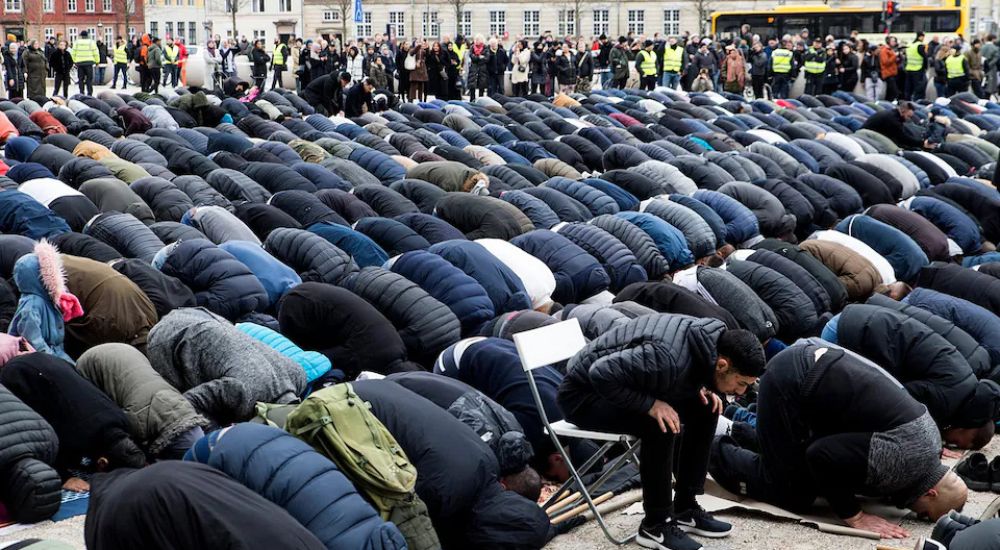
Denmark’s government has announced plans to investigate a nationwide ban on the Islamic call to prayer, with the country’s immigration minister declaring that the “adhan” (call to prayer) has no place in the Scandinavian nation and that parts of Denmark were beginning to feel like a suburb of Pakistan’s capital.
Immigration Minister Morten Bødskov said the government would reopen an investigation into whether the public broadcast of the adhan could be legally prohibited across the country.
“The call to prayer should not be heard over Danish rooftops,” Bødskov told Danish news agency Ritzau. “It has no place in Denmark, and you shouldn’t be in any doubt whether you’ve ended up in a suburb of Islamabad when you walk around Denmark.”
Bødskov also argued that a creeping Islamisation in Denmark was taking up too much of the public space.
His remarks drew particular attention because he is a member of the centre-left Social Democrats rather than Denmark’s nationalist right, underscoring how immigration and religious integration remain politically sensitive issues across the political spectrum.
The proposal marks the third attempt by a Danish immigration minister to find a legal route for banning public calls to prayer, following earlier efforts in 2020 and 2025.
Advertisement
The new investigation will examine whether a national ban can be introduced without violating Denmark’s constitutional protections for religious worship.
Denmark’s constitution protects public worship, though the country already has restrictions on anti-democratic preaching and support for banned organisations.
Only a small number of mosques in Denmark are believed to publicly broadcast the adhan, making critics question whether the proposed ban addresses a widespread issue or a largely symbolic concern.
In parts of the country, including Copenhagen, local bylaws already prevent the call to prayer from being broadcast via loudspeakers mounted on minarets because of strict noise restrictions.
The Grand Mosque of Copenhagen does not broadcast the call to prayer outdoors under an existing agreement with local authorities.
Advertisement
Supporters of a national ban argue that existing municipal rules create inconsistencies and that a nationwide law would provide clarity. Critics, however, say the proposal targets one faith disproportionately.
The announcement comes as Prime Minister Mette Frederiksen begins her third term in office following March’s snap election.
Her government has enacted some of Europe’s most stringent migration policies and is widely seen as a model for low-immigration left-leaning governance.
Around 270,000 Muslims live in Denmark, which has a total population of roughly six million.
The country has approximately 100 mosques.
The proposed ban has triggered fierce debate over religious freedom, secularism, and constitutional rights, with critics warning it risks marginalising Denmark’s Muslim minority and exposing the government to legal challenges from Islamic organisations.
Advertisement