How CBN Is Rebuilding Nigeria’s Banking Sector Through Recapitalisation
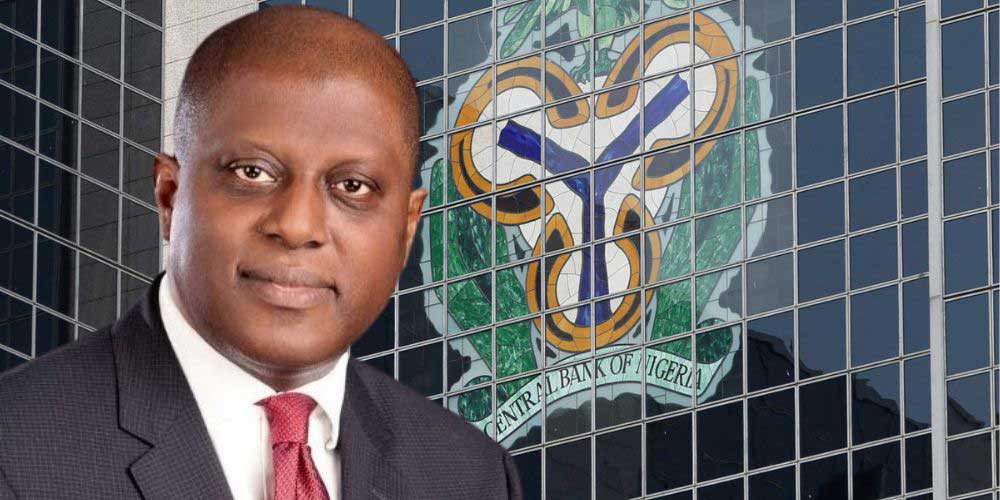
Nigeria’s banking system remains fundamentally stable, sound, and resilient, a cornerstone of financial stability. At the same time, the Central Bank of Nigeria (CBN) Governor, Olayemi Cardoso, says it remains vigilant to emerging risks, including cyber threats, credit concentration pressures, and operational vulnerabilities. These are being addressed through strengthened risk-based supervision and ongoing transition to Basel III, which will further bolster resilience, improve capital quality, and strengthen liquidity monitoring as banking sector recapitalisation gathers momentum.
Nigerian banks are facing one of their most interesting moments in history. Very significantly, they have been acknowledged by the Central Bank Nigeria (CBN)-led Monetary Policy Committee (MPC) members to be safe and sound.
At the 303rd MPC meeting in Abuja, it was noted with satisfaction, the sustained resilience of the banking system, with most financial soundness indicators remaining within regulatory thresholds.
The committee members also acknowledged the substantial progress in the ongoing recapitalization programme, with 16 banks achieving full compliance with the revised capital requirements.
They further urged the CBN to ensure a successful implementation and conclusion of the recapitalisation programme.
Advertisement
With nearly four months to the conclusion of the recapitalisation exercise, the CBN Governor, Olayemi Cardoso has reported that the process is firmly on track.
Speaking at the recently held Bankers’ Dinner in Lagos, he reiterated that several banks have already met the new capital thresholds, while others are advancing steadily and are well positioned to comfortably meet the March 31, 2026 deadline.
“To date, 27 banks have raised capital through public offers and rights issues, and sixteen have already met or exceeded the new requirements, a clear testament to the depth, resilience, and capacity of Nigeria’s banking sector,” he said.
“As we strengthen the capacity of our banks, stress-testing this year confirms that Nigeria’s banking sector remains fundamentally robust. Key financial soundness indicators overwhelmingly satisfied prudential benchmarks during the year,” he added.
The banks are also recording giant strides in the pursuit of their recapitalisation, with 16 already met the requirement ahead of the March 31, 2026 deadline.
Advertisement
The CBN is redesigning banking sector’s credit‑risk framework to protect approximately N4.14 trillion new capital being raised in the ongoing bank recapitalisation programme.
Cardoso, said the apex bank will be enforcing stronger governance, greater transparency, and firmer accountability to protect raised funds.
The CBN, he said, has equally established a dedicated Compliance Department, now fully operational, with mandates covering financial crime supervision, market conduct, enterprise security, corporate governance, and Environmental, social, and governance (ESG).
According to the CBN boss, the process enforcing stronger controls on raised funds is ongoing with the redesigning of the credit‑risk framework expected to ensure that raised funds are well managed by financial institutions.
Cardoso stated, “As recapitalisation progresses, we are redesigning the credit‑risk framework to enforce stronger governance, greater transparency, and firmer accountability across the sector. We are determined to break the boom‑and‑bust cycle that has accompanied past recapitalisation efforts”.
Already, the CBN Credit Risk Management System (CRMS) is web-enabled, allowing banks and other stakeholders to dial directly into the CRMS database to render statutory returns or conduct status enquiry on borrowers. Also, the CBN is in the process of integrating the CRMS with other systems operating in the banks to make it more efficient.
Advertisement
In a report titled: “Nigeria’s macro headwinds trigger bank recapitalisation” Deloitte, a global accounting and audit firm, put the total funds to be raised in the recapitalisation exercise which ends on March 31, 2026 at N4.14bn.
It said the upward review of banks’ capital base from N50 billion to N500bn depending on the type of licence held by the bank, remains an essential action required to boost capital adequacy needs of the Nigerian financial industry.
Nigeria banks’ capital adequacy, the report says, has been significantly impacted by macroeconomic challenges such as high inflation and interest rates, currency volatility and forex illiquidity.
“The upward revision will ensure that Nigerian banks have the capacity to take on bigger risks and stay afloat amid both domestic and external shocks. It also means increased liquidity position of banks, which will help broaden their loss-bearing capabilities,” the report said.
Continuing, Cardoso said Nigeria’s banking system remains fundamentally sound and resilient, a cornerstone of our financial stability.
“At the same time, we remain vigilant to emerging risks, including cyber threats, credit-concentration pressures, and operational vulnerabilities. These are being addressed through strengthened risk-based supervision and our ongoing transition to Basel III, which will further bolster resilience, improve capital quality, and strengthen liquidity monitoring,” he said.
The CBN boss disclosed that with just four months to the conclusion of the recapitalisation exercise, the process remains firmly on track.
“As we strengthen the capacity of our banks, stress-testing this year confirms that Nigeria’s banking sector remains fundamentally robust. Key financial soundness indicators overwhelmingly satisfied prudential benchmarks during the year,” Cardoso added.
He said the apex bank is reinforcing operational discipline to ensure the financial system serves all Nigerians reliably.
“Our starting point was a comprehensive, end‑to‑end review of the entire cash lifecycle: from production, to transportation, to distribution, and eventual access by consumers. This holistic assessment enabled us to address root causes rather than symptoms”.
“As a result, we recalibrated our cash‑printing models, issued guidelines on the optimal ATM‑to‑card ratio, strengthened requirements for CBN approval before ATM or branch closures, enforced sanctions on banks whose ATMs fail to dispense cash, and intensified supervision of payment agents and POS operators nationwide,” he said.
These developments point to sound regulatory oversight, and determination of the Oleyemi Cardoso-led CBN to support government in achieving $1tn Gross Domestic Product (GDP) target by 2030.
The Policy Advisory Council report on the national economy, had set an ambitious goal of achieving a GDP of $1tn, with clearly defined priority areas and strategies.
It is believed that a well-recapitalised banking sector is undeniably crucial in achieving the GDP growth plan. Hence, Cardoso, advised banks to prepare for a new round of recapitalisation to ensure they have the necessary capital to support the economic growth.
Cardoso asked, “Will Nigerian banks have sufficient capital relative to the financial system’s needs in servicing a $1tn economy in the near future? In my opinion, the answer is “No!” unless we take action. That action was the ongoing recapitalisation of banks, meant to prepare them for expansion and attract big ticket transactions to support economic growth”.
While the recapitalisation exercise continues, the apex bank categorically reassured the public, depositors, and stakeholders that the Nigerian banking sector remains resilient, safe, and sound.
“The CBN affirms that it continues to monitor all financial institutions under its regulatory purview and maintains robust frameworks for early warning signals and risk-based supervision. These mechanisms ensure that any emerging issues are promptly addressed to protect the integrity of the financial system,” it said.
The CBN had, on March 28, 2024 announced a two-year bank recapitalisation exercise which commenced on April 1, 2024.
The recapitalisation plan requires minimum capital of N500bn, N200bn and N50bn for commercial banks with international, national and regional licenses respectively.
Others included merchant banks N50bn; non-interest banks with national license N20bn and non-interest banks with regional license will now have N10bn minimum capital. The 24-month timeline for compliance ends on March 31, 2026.
Cardoso said the recapitalisation policy not only strengthens financial stability but also serves as a catalyst for inclusive growth.
“By enabling banks to extend more credit to MSMEs, we enhance job creation and productivity. Furthermore, with increased capital, banks can invest in technology and innovation, crucial for driving digital financial services such as mobile money and agent banking. These technologies are important to breaking down geographic and economic barriers, bringing financial services to even the most remote areas,” he stated
Under the ongoing recapitalisation programme, the apex bank adopted a distinctive definition of minimum capital base, in addition of paid up share capital and share premium, excluding other reserves and retained profits.
The distinctive definition implied that nearly all banks have to raise new capital, despite the fact that most banks have shareholders’ funds in excess of the minimum capital base.
Cardoso explained that the banking sector remains robust, with key indicators reflecting a resilient system.
“The non-performing loan ratio remains within the prudential benchmark of five per cent, showcasing strong credit risk management. The banking sector liquidity ratio comfortably exceeds the regulatory floor of 30 per cent, a level which ensures banks are maintaining adequate cash flow to meet the needs of customers and their operations. The recent stress test conducted also reaffirmed the continued strength of our banking system,” he said.
The CBN Deputy Governor, Corporate Services, Ms. Emem Usoro, said the journey to a $1tn economy requires structured planning, clearly defined policies, unwavering implementation, and an inclusive approach that aligns public and private sector interests.
Usoro said that one of the key components of the $1tn ambition is the recapitalisation of Nigerian banks.
She noted that banks must be sufficiently capitalised to meet the financial demands of a larger and more dynamic economy.
“As we work towards building a $1tn dollar economy, we must consider the recapitalisation of our banks to be able to fund, finance and power the economy, and to favourably compete globally,” Usoro said during a media engagement in Abuja.
The Group Managing Director of United Bank for Africa (UBA), Oliver Alawuba described the ongoing CBN bank recapitalisation policy as both timely and essential in positioning the financial system to meet the demands of a growing and globally competitive economy.
According to Alawuba, the initiative is expected to boost the resilience of the banking sector by strengthening its capacity to withstand economic shocks such as inflation, currency volatility and global geopolitical disruptions. He noted that the policy will also place Nigerian banks on a stronger footing to finance the country’s long-term economic transformation, including funding of large-scale infrastructure and industrial projects.
The 2007 Central Bank of Nigeria (CBN) Act mandates the apex bank as one of its objectives to promote financial system stability.
The CBN ensures the safety and soundness of the financial system in Nigeria through banking sector reforms, improved access to finance, adequate institutional capacity building and implementation of good corporate governance practices.
Analysts said ensuring financial and banking system stability is important because the failure of financial institutions, particularly banks, is capable of undermining public confidence, precipitate unanticipated contraction in money supply, reduce savings and investments, and induce payment system collapse with adverse effects on the real economy.
More so, the stability of the financial system is very imperative since its achievement ensures effective monetary policy transmission mechanism. As such, ensuring financial system stability will help monetary authorities in achieving the primary objective of price stability.
To achieve financial and banking system stability, the CBN at different times had instituted various reforms aimed at ensuring effective performance of the banking sector.