How Kano’s Street ‘Doctors’ Endanger Lives Through Repackaged Drugs
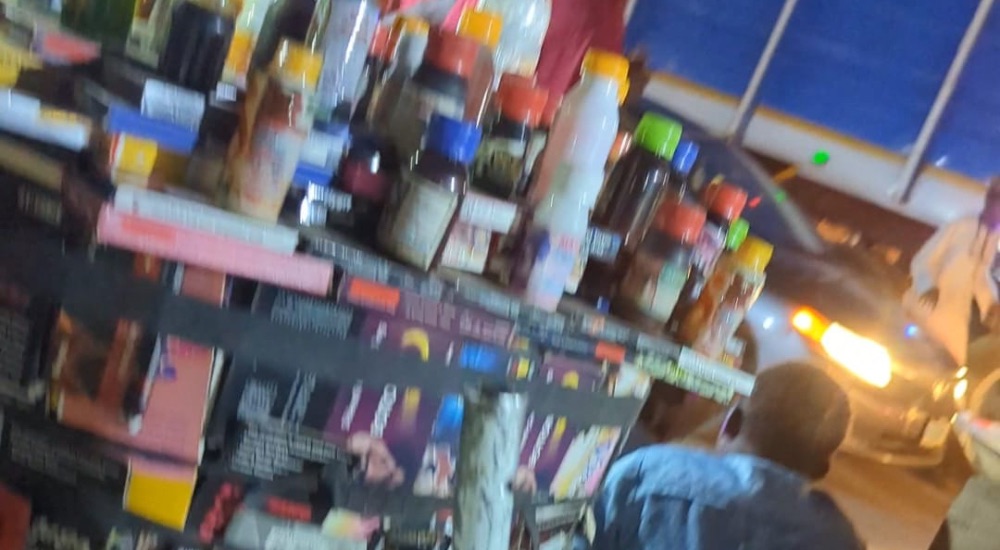
By day, the city’s main arteries hum with commerce and prayer. By night, another economy comes alive, quiet, nimble, and dangerous.
At about 8 p.m. on Tuesday night on a busy roadside of Sabon Titi, Kumbotso LGA, a young man (Abdullahi Sadiq), in a faded hoodie pauses beside a parked tricycle.
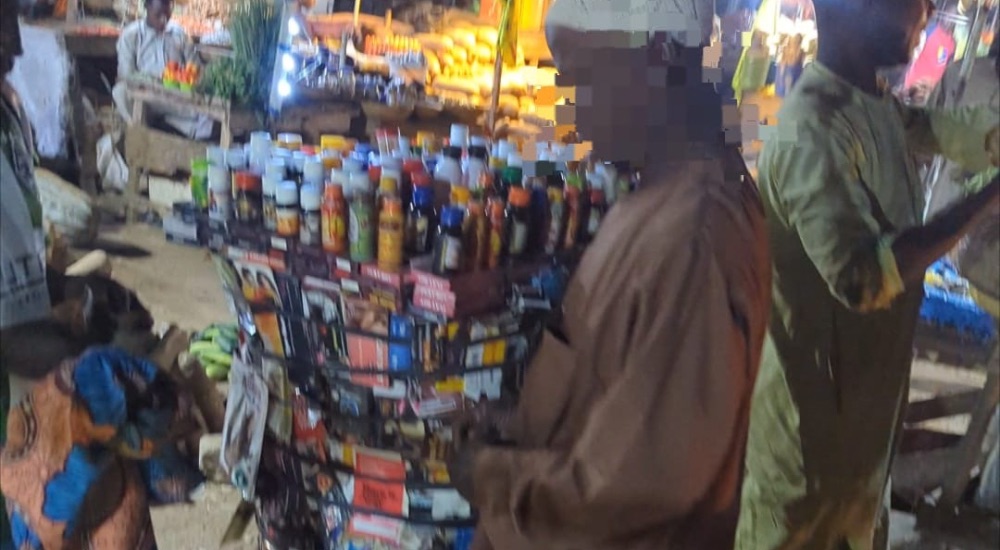
He opens his palm briefly, revealing a scatter of unlabelled tablets wrapped in cellophane, then closes it again.
A customer leans in, whispers a complaint “ciwon baya,” meaning (back pain) and a price is agreed without bargaining. The exchange takes seconds. No prescription.
No receipt. No warning. By the time a patrol vehicle’s headlights sweep the junction, the hawker has melted into the dark, leaving behind a market that refuses to disappear.
Advertisement
Despite Kano State’s ban on the street sale of controlled medicines, among them Tramadol, Cocodamol, Pregablin capsule and Diazepam, these drugs are still reaching consumers nightly, repackaged to evade detection and sold under the cover of darkness.
THE WHISTLER finds that the ban has pushed the trade underground rather than ending it, exposing residents to serious health risks while revealing gaps in enforcement, awareness, and access to safe, affordable care.
A City That Sleeps, A Market That Doesn’t
The ban, introduced amid rising concerns about drug abuse and related health emergencies, was meant to curb open hawking that had become a familiar sight at bus stops and markets.
Daytime enforcement has been visible: seizures, warnings, occasional arrests. But the night tells a different story.
Advertisement
Hawkers have adapted. Instead of blister packs with recognizable branding, pills are stripped and mixed, sold in sachets or folded paper.
Labels are replaced with nicknames such as “pain killer,” “sleeping drug,” and “strong one.”
Doses are estimated by eye. Expiry dates vanish. What remains is trust often misplaced between seller and buyer.
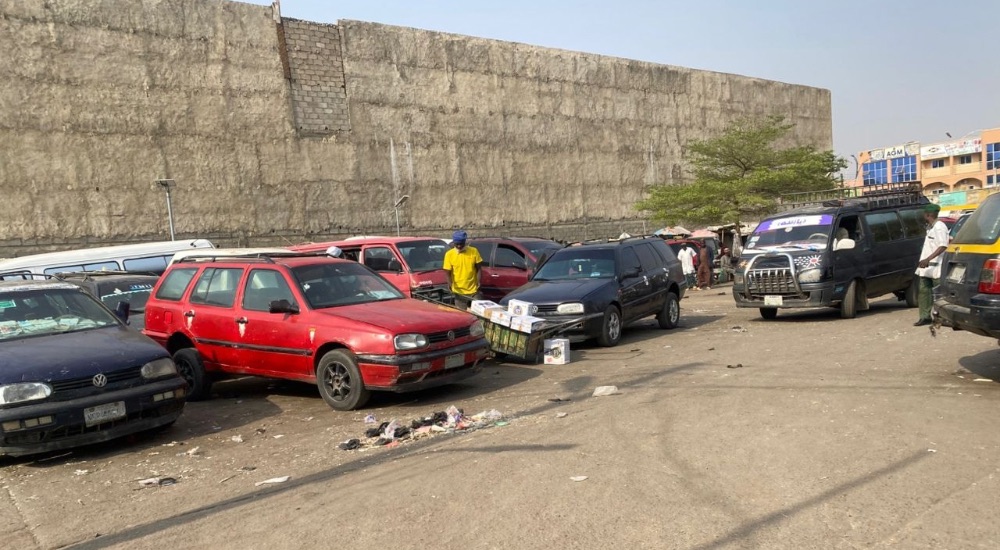
On several nights over two weeks, in the month of January, 2026, this reporter observed sales between 9 p.m. and 12:am in parts of Sabon Gari, Dorayi, Sabon Titi and Hotoro.
Transactions clustered near transport hubs, late-night eateries, and quiet residential lanes.
Sellers moved in pairs or small groups, one watching for security, another handling cash.
Advertisement
Some used code words; such as “akwai fara, red devil, and cetamol” while others relied on regular customers who knew where to find them.
One hawker, Usman Musa (not his real name), agreed to speak briefly under anonymity and said the ban changed how he sells, not what he sells.
He revealed that the controlled drugs are being disguised in other packets. “For instance, cocodamol, we can disguise it in Panadol packets, while tramadol can be in Ibuprofen or Mexagrip packet.
“The rotation is not constant, any controlled drugs can be in any packet, while sometimes we rebrand it inside traditional herbs packets,” he said.
Responding to arrest Musa alleged that not only random people patronize them, even security officials buy controlled drugs from them.
He added that whenever they get arrested, they bail themselves with either drugs or fine amounting to N20,000 and above.
“So, if you come in the day, the police will see you, while at night, people need medicine. We help them.
“On a daily basis I make between N50,000 to over N100,000. Hawker in the business we cash out hugely.”
He claimed to source drugs from “middlemen” who supply pharmacies and informal vendors alike.”
THE WHISTLER discovered that the street doctors majorly purchase their controlled drugs in Sabon Gari, and Bata where mostly wholesale trade takes place.
One of the major hotspots for the illicit trade is Mallam Kato, an area bordering Bata, where several shops, operating under the guise of selling soft drinks and other provisions, distribute controlled drugs to street doctors.
Abdullahi Hamma, a wholesale dealer, disclosed that all controlled drugs could be procured in large pharmacy stores or even people who had the proper authorization to import drugs.
“Once they manage to get the drugs, they will call us to inform us that such drugs are in stock,” he said.
Hamma revealed that he occasionally buys drugs at amounts of N5 million, but would not name his business associates as his activity was a secret business.
“The business is confidential, I’m well aware of the fact that the sale of controlled drugs is illegal.”
He also confessed that the reason he is in the business the tremendous profits it brings.
However, the National Drug Law Enforcement Agency (NDLEA) Act, Cap N30, Laws of the Federation of Nigeria (LFN) 2004, provided that the possession, manufacture, trafficking, sale, importation or exportation of narcotic drugs and psychotropic substances without lawful authority is a criminal offence.
The Act empowers the NDLEA to arrest suspects, search persons and premises, seize illicit drugs and prosecute offenders, while also providing for the forfeiture of assets and properties used in the commission of drug-related crimes.
Despite this provision, controlled drugs are sold on Kano streets just like paracetamol.
It Helped Me Sleep, Then I Couldn’t Wake Up
For many buyers, the street market fills a gap created by poverty, distance, and long waits at public hospitals.
Aisha Umar, a 32-year-old mother of three in Gwale, said in November, 2024 she bought pills from a night hawker known as Tamilo (nickname) when her husband, Kabiru Lawal, a tailor, had a serious back pain and the clinic was closed.
“The street doctor prescribed that I should give him two pills.
“It helped him sleep deeply, in the morning he was dizzy and vomiting. We were scared, and rushed him to hospital.
“At Murtala Muhammad Specialist Hospital, doctors struggled to identify what he had taken.
“Where it was discovered that it was tramadol the street doctor prescribed to my husband,” She recalled.
Lawal survived and his hospital bill consumed nearly his monthly income.
However, doctors warn that such stories are common.
Dr. Sadiya Bello, an internal medicine physician, Aminu Kano Teaching Hospital, says cases linked to street drugs are rising though underreported.
“Selling of controlled and banned drugs which are repackaged remove safeguards designed to protect patients: clear dosing instructions, contraindications, and quality assurance.
“Without them, consumers risk overdose, dangerous interactions, dependency, and organ damage.” She said.
Inside the Repackaging Deception
Physical samples obtained from residents during this investigation reveal how dangerous the repackaging is.
In one sachet, examined by Pharmacist Ibrahim Nasir, were three different tablet types.
He explained that Tramadol and Diazepam, in particular, depress the central nervous system.
“Combined or misused, they can slow breathing and heart rate.
“When people take unknown strengths, the margin for error disappears.
Cocodamol is often a mix of paracetamol and codeine which poses additional risks.
“Excess paracetamol damages the liver. Codeine can cause dependency. On the street, you don’t know which is which.
Enforcement At Night
The Kano State National Drug Law Enforcement Agency (NDLEA), PRO, Sadiq Muhammad-Maigatari acknowledged the street-level trade in the controlled drugs like tramadol, diazepam and codeine-based medicine is still a major challenge in Kano and other big cities especially at night.
“The Agency has intelligence reports that drug hawking has continued in the known hotspots such as motor parks, markets and densely populated neighbourhoods.
“At NDLEA we use intelligence-based surveillance, night patrols and collaborating with the Nigeria Police, NAFDAC and local task forces to interfere with the sale of controlled drugs on the street and destroy the supply network.
Maigatari noted that the agency determined that the source of diverted pharmaceutical outlets, smuggled pharmaceuticals and the organised local distribution sources were major sources of controlled drugs in the streets.
“NDLEA also raised concern over the repackaging of drugs into unlabelled sachets, warning that the practice poses serious health risks, including overdose and long-term damage.
“We don’t only arrest hawkers, but go further to nab the suppliers and trafficking syndicates by conducting intensive investigations and massive seizures.
“We are still hardening our sensitisation campaigns through the War Against Drug Abuse (WADA) campaign to deter drug abuse and caution the citizens against buying medications by unlicensed peddlers on the streets.”
In spite of the long-time enforcement, NDLEA has reported that the illicit trade has remained because of the high demand, economic strains, and flexible criminal networks.
The Agency reported in 2026 that it is reinforcing intelligence collection, inter-agency cooperation and community interactions to substantially cut on the provision of controlled drugs over the streets in Kano.
Repackaging has made regulation a game of chance, lives being the stake.
This report was done with support from Civic Media Lab