
Lack Of Clean Water Fuelling Ebola Spread In DRC — Oxfam
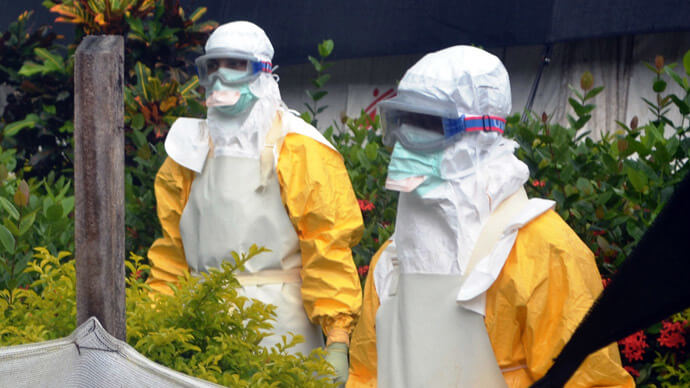
Humanitarian organisation Oxfam has warned that the Ebola outbreak in the Democratic Republic of Congo (DRC) is likely far greater than official figures suggest, as access to clean water, described as the first line of defence against the virus, has virtually collapsed in the worst-affected areas.
Only one in five health facilities in Ituri province, one of the main epicentres of the outbreak, has access to sufficient clean water, according to new Oxfam field data.
In the town of Mongbwalu, home to nearly 140,000 people, only 20 per cent of residents have access to clean water, while just 25 per cent have functional sanitation and hygiene infrastructure.
Oxfam’s Field Response Coordinator in Ituri, Manel Rebordosa, highlighted the difficulties in safely disposing of infectious waste and the sharp decline in contact tracing.
According to the World Health Organisation (WHO) and the DRC’s Ministry of Public Health, the contact tracing rate stood at just 43.2 per cent on 8 June 2026, compared with 79 per cent at the same stage of the country’s 2018 Ebola outbreak.
Dr Manenji Mangudu, Oxfam Country Director in the DRC, said: “This outbreak is hitting a country already stretched to breaking point.
Advertisement
“Ongoing conflict and years of aid cuts have deepened a humanitarian crisis of staggering scale. Those same aid cuts left DRC effectively blind to Ebola, weakening the surveillance systems that should have detected this outbreak weeks earlier.”
A doctor in the Mongbwalu Health Zone in Ituri told Oxfam: “There are already deaths in the community. When people die at home, it means there are many more undetected cases. Yesterday alone, we had 15 suspected cases in isolation.”
The DRC Ministry of Health reported 782 confirmed cases and 181 deaths as of 13 June.
The current Bundibugyo outbreak is the largest of its kind and the third-largest Ebola outbreak on record, according to the U.S. Centers for Disease Control and Prevention, behind only the 2018–2020 Kivu epidemic in the DRC and the 2014–2016 West African epidemic.
There is currently no approved vaccine or specific treatment for the Bundibugyo strain.
Advertisement
Oxfam has scaled up its response, launching an initial $11.6m six-month intervention to provide clean water and hygiene kits to 200,000 people in Ituri province and support community-led awareness campaigns.
However, the organisation said the intervention falls far short of what is needed and called for urgent international support to restore water, sanitation and hygiene services in the affected regions.
The crisis is unfolding in conflict-affected eastern provinces, where insecurity, displacement and weak healthcare systems continue to complicate response efforts.