
Nigeria Cannot Defeat Corruption With Prosecution Alone, Says ICPC
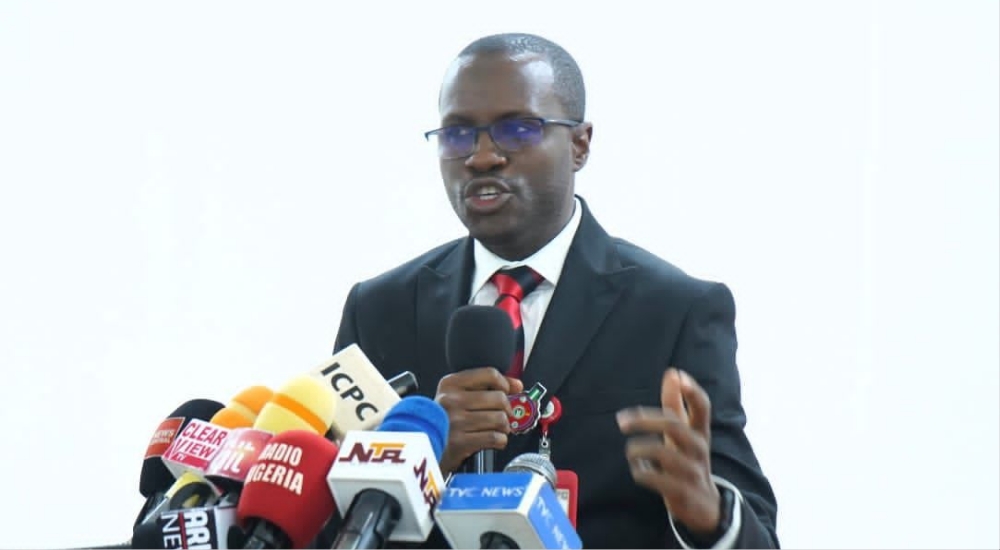
The Independent Corrupt Practices and Other Related Offences Commission (ICPC) has commenced the final validation of a proposed curriculum to integrate anti-corruption education into legal training in Nigerian universities and the Nigerian Law School.
ICPC Chairman made this known on Monday, at the ICPC–Nigerian Law School (NLS) Final Validation Workshop on Integrating the Teaching of Anti-Corruption in Nigerian Legal Education held in Abuja.
The Commission said the initiative is aimed at producing lawyers equipped with the integrity, ethical judgment and courage required to resist corruption and promote justice.
The ICPC chairman said corruption remains one of the most persistent obstacles to Nigeria’s development, warning that investigation, prosecution and punishment alone cannot solve the problem.
According to him, sustainable progress in the fight against corruption requires prevention, education, institutional reforms and deliberate efforts to cultivate integrity.
He said, “We cannot arrest or prosecute our way out of corruption. We must also invest in knowledge, values, systems, and institutions that prevent corruption from taking root in the first place.”
Advertisement
The ICPC chairman said the legal profession has a unique role in shaping Nigeria’s governance and justice system because lawyers advise governments and businesses, represent citizens, influence public policy and often occupy positions of significant responsibility.
He argued that anti-corruption values must therefore be established during legal training to ensure that future lawyers are not only professionally competent but also capable of resisting corrupt practices.
“By introducing anti-corruption principles and values into legal education, we are not merely adding another subject to an academic programme.
“We are investing in the character and professional orientation of the people who will, in the years ahead, interpret our laws, administer justice, advise institutions, influence public policy, and occupy positions of leadership,” he said.
The chairman noted that the ICPC, established under the Corrupt Practices and Other Related Offences Act, 2000, has a mandate covering enforcement, prevention and public education.
Advertisement
He said the Commission investigates and prosecutes corruption-related offences while also examining systems and procedures in public institutions to identify vulnerabilities that could facilitate corruption.
The chairman said the curriculum development initiative followed a series of stakeholder engagements involving Deans of Faculties of Law, law lecturers and representatives of the Nigerian Law School.
He said the first engagement was held on May 19–20, 2026, in Abuja, followed by another in Kano on June 25–26 and a further engagement in Abuja on July 16–17.
He said the consultations enabled stakeholders to examine existing practices and develop curriculum content, structures, learning outcomes and delivery approaches for anti-corruption education.
The chairman said the final validation workshop was crucial to securing broad stakeholder ownership and national acceptance of the proposed framework.
He added that, subject to regulatory processes, including consideration and ratification by the National Universities Commission (NUC), the curriculum could provide a common foundation for anti-corruption education across Nigerian universities and the Nigerian Law School.
He also cited Hong Kong as an example of a jurisdiction where anti-corruption education has been incorporated into the school system and universities as part of a broader strategy to promote integrity.
Advertisement
The ICPC chairman urged participants at the workshop to critically examine the proposed curriculum and make recommendations to improve its relevance, delivery and sustainability.
He said the Commission expected the exercise to produce a practical and nationally acceptable framework capable of strengthening anti-corruption education in Nigeria’s legal training system.
He said the ultimate objective was to build a legal education system that produces lawyers who would uphold justice, resist corruption, strengthen the rule of law and contribute to Nigeria’s development.