
OPINION: Season Of Propaganda, Blackmail And Manipulation
There is something every Nigerian should understand as we move closer to another election cycle. We are now in the season of propaganda, blackmail and political manipulation.
This is not just a political statement. It is a social reality. It is the period when information becomes a weapon, when narratives become tools of influence, when reputations become targets, and when truth often has to fight harder to be heard.
This is the season when every event, every statement, every government action and every national challenge will be interpreted through political lenses. It is the season when facts compete with opinions and very often opinions travel faster, louder and farther than facts.
Everywhere you turn television, radio, social media platforms, WhatsApp groups, buses, offices, churches, mosques and marketplaces, you will notice the same pattern. People are no longer just sharing information. They are pushing narratives. Everyone has an explanation. Everyone has a version. Everyone is trying to convince someone.
This is where the danger begins.
Advertisement
Propaganda is not always an outright lie. In fact, it is often more subtle than that. Sometimes it is a half truth. Sometimes it is a fact presented without context. Sometimes it is carefully selected information designed to trigger emotion, anger, fear, sympathy or loyalty. And sometimes it is simply the strategic omission of facts that would allow people to see the complete picture.
Alongside propaganda comes another powerful tool that frequently emerges during election seasons blackmail.
Political blackmail does not always involve money or secret negotiations. Sometimes it appears in the form of character assassination, selective leaks, distorted allegations, coordinated smear campaigns and calculated attempts to destroy reputations for political advantage.
As elections approach, individuals, public officials, candidates, activists, journalists and even ordinary citizens may suddenly find themselves at the center of allegations and controversies. Some accusations may be legitimate and deserve serious investigation. Others may be exaggerated, manipulated or deliberately manufactured to shape public perception.
The challenge for citizens is to avoid becoming judges before facts are established.
Advertisement
In the age of social media, reputations can be damaged within hours. A video clip taken out of context, an edited document, an anonymous accusation or an unverified story can spread across the country before the truth has a chance to respond. By the time facts emerge, the damage may already have been done.
This is why blackmail remains such a dangerous political weapon. Its objective is not always to prove wrongdoing. Often, its purpose is simply to create suspicion, generate doubt and weaken public confidence in an individual or institution.
That is why Nigerians must be careful.
As elections approach, political actors understand something very important. Perception is power. If a narrative becomes widely accepted, it can influence decisions, shape public opinion and ultimately affect political outcomes. This is why significant resources are invested not only in governance and campaigning but also in controlling narratives and shaping what people believe.
We see this pattern in every election cycle. Governments highlight achievements and defend their records. Opposition parties magnify failures and highlight weaknesses. Supporters on all sides amplify content that supports their position while dismissing anything that challenges it. Social media becomes flooded with videos, statistics, posters, allegations and emotional commentary designed more to persuade than to inform.
The result is predictable. Citizens become overwhelmed, not informed.
Advertisement
Unfortunately, many people no longer pause to ask questions. If a piece of information aligns with what they already believe, they accept it immediately. If it challenges their worldview, they reject it instantly. In the process, truth becomes secondary to loyalty and evidence becomes less important than emotion.
This is one of the most dangerous realities of our time.
We are no longer suffering from a lack of information. We are suffering from an excess of it. Information is everywhere, constantly competing for attention. The real challenge today is not access to information but the ability to filter, verify and interpret it correctly.
Take insecurity for example.
Whenever there is a kidnapping, terrorist attack, bandit invasion or violent crime, the immediate tragedy is often followed by another battle, this time in the public space. Online platforms and media discussions quickly become arenas of interpretation.
Different groups begin to assign meaning based on political alignment. Some blame government incompetence. Others blame political opponents. Some claim it is evidence of state collapse. Others insist it is exaggerated or politically amplified. In many cases, the incident itself becomes secondary. The narrative battle becomes the main focus.
In fact, there are already voices that confidently suggest that insecurity will intensify before elections and then suddenly reduce afterward. Whether such claims are accurate or not is not even the central issue. The more important point is what such beliefs reveal a deep and growing lack of trust in institutions, leaders and even information itself.
When trust breaks down, societies become vulnerable. Not just to insecurity but also to manipulation, propaganda and blackmail. When citizens no longer know what to believe, they begin to believe whatever fits their fears, expectations or political preferences.
This is the perfect environment for propaganda to thrive and for blackmail to flourish.
In such an environment, even genuine national tragedies risk being misinterpreted. Real human suffering can be reduced to political arguments. Real victims, families, children, students, workers and communities risk becoming statistics in online debates or tools in political conversations.
This is dangerous.
Security challenges are not abstract talking points. They are lived realities. They affect human beings with names, identities, dreams and families. No society should ever allow such suffering to become a tool for political advantage, propaganda warfare or political blackmail.
At the same time, citizens must not fall into silence or blind acceptance. Asking questions is not propaganda. Demanding accountability is not propaganda. Criticising leadership is not propaganda. Exposing genuine wrongdoing is not blackmail.
These are essential parts of a functioning democracy.
The danger arises when facts are abandoned and replaced with narratives designed solely to provoke emotion, create division, destroy reputations or manipulate public opinion.
This is why critical thinking is no longer optional. It is essential.
Before forwarding that message, pause and ask:
Who is the source?
What evidence supports this claim?
Has it been independently verified?
What details may be missing?
Who stands to benefit from this narrative?
These questions may seem simple, but they are powerful tools against manipulation. They slow down the spread of misinformation and allow space for truth to emerge.
Social media has intensified this challenge. In earlier times, information passed through editorial filters, professional standards and institutional checks. Today, those barriers are largely gone. Anyone with a smartphone can publish content capable of reaching millions within minutes.
While this democratization has benefits, it also creates a system where falsehood can spread faster than truth. A misleading video can go viral before fact checking begins. A false claim can dominate public discussion before corrections are issued. And even when corrections arrive, they rarely travel as far as the original misinformation.
This imbalance is one of the defining challenges of the digital age.
Democracy depends on informed citizens. It cannot function properly when citizens are easily manipulated by emotion, speed and repetition. A society that stops verifying information becomes divided, confused and vulnerable to control.
This does not mean citizens should blindly trust government, opposition, journalists, activists or influencers. It means every claim, regardless of source, must be subjected to scrutiny. Truth must be more important than loyalty. Evidence must matter more than emotion. Facts must outweigh narratives.
As George Orwell famously warned, “The most effective way to destroy people is to deny and obliterate their understanding of reality.”
That warning is even more relevant today than when it was first written.
The months ahead will bring a flood of information, promises, accusations, scandals, political attacks, endorsements and competing interpretations of national events. Some of these will be true. Some will be misleading. Some will be deliberately constructed to influence emotions rather than inform judgment.
The responsibility of citizens is not to believe everything. It is to think critically, verify carefully, question consistently and resist manipulation.
We are now in the season of propaganda, blackmail and political manipulation.
And in such a season, the strength of any democracy depends not only on its leaders but on the awareness, discipline and clarity of its citizens. An informed citizen is not just a participant in democracy. They are one of its strongest defenses.
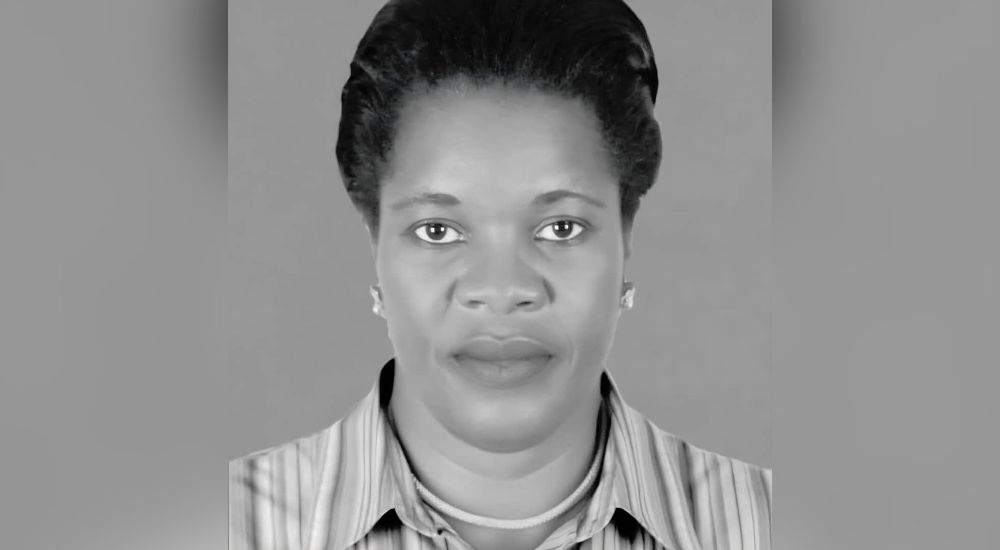
Sola Adeola is a researcher based in Abuja
Bluelinescom@gmail.com
08071313200