
Repeated Debt Refinancing Deepening Nigeria’s Fiscal Challenges — Alaje
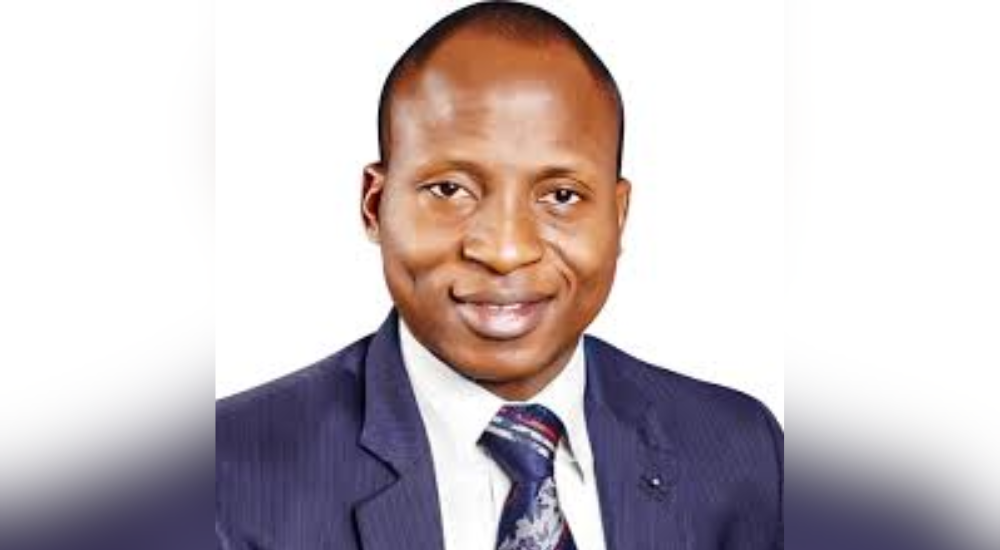
Chief Economist at SPM Professionals, Dr. Paul Alaje, has warned that Nigeria’s growing reliance on debt refinancing is compounding the country’s fiscal challenges, arguing that the rising public debt profile is being driven not only by fresh borrowing but also by exchange rate depreciation and the continuous rollover of existing obligations.
Speaking on ARISE NEWS on Wednesday, Alaje said public discourse on Nigeria’s debt has focused excessively on the volume of new loans, while overlooking the significant impact of naira depreciation on the accounting value of the country’s external debt.
According to him, although the Federal Government has continued to borrow to finance its operations, the amount of fresh loans contracted is lower than claims that about ₦80tn has been borrowed under the current administration.
“If you are looking at going to the market fresh to ask for new money, the Federal Government borrowed, but it may not be up to ₦80tn. Here is the real fact: we borrow money over the years, and when we borrow in our currency, exchange rate becomes a major factor,” he said.
Alaje explained that every depreciation of the naira automatically increases the naira value of Nigeria’s outstanding foreign debt because the obligations are converted at prevailing exchange rates.
He noted that while the country’s debt stock appears to have risen sharply in nominal terms, much of the increase reflects accounting adjustments rather than equivalent levels of fresh borrowing.
“Did Nigeria borrow up to that amount? Yes, because we are also adjusting our exchange rates. But if you are speaking nominally, if you are speaking accounting, I will tell you no, we did not borrow up to the money. At the end of the day, it’s not about Nigeria accounting; it’s about Nigeria economics,” he said.
Advertisement
Beyond the exchange rate effect, Alaje identified debt refinancing as a more fundamental concern, warning that successive governments have relied on borrowing to refinance maturing obligations instead of addressing the structural weaknesses behind the country’s fiscal pressures.
“The real conversation for me is using debt to refinance. We have been doing short-term solutions. We fix the problem today, raise new money in the market and find another quick fix. But the long-term real solution is that the naira has always been susceptible to devaluation,” he stated.
He stressed that borrowing itself is not inherently problematic if the funds are deployed productively and debt servicing costs remain manageable. However, he noted that Nigeria’s high interest payments have turned public debt into a significant fiscal burden.
“Debt is not a problem. But I dare tell you that debt is a major concern, especially for a nation that pays high interest rates on debt,” he said.
The economist acknowledged that while some government borrowings have financed infrastructure development, others have been used to refinance existing liabilities, settle inherited obligations and fund recurrent expenditure, including legacy obligations such as advances obtained through the Ways and Means facility.
Advertisement
“I agree that some monies have gone into infrastructure. I agree that not all the money borrowed goes into refinancing. Some borrowings were legacy debt, including the old Ways and Means,” he added.
Explaining the government’s recurring presence in the domestic debt market, Alaje said annual revenue projections often fail to materialise on schedule, forcing authorities to rely on treasury bills and bonds to bridge financing gaps until expected revenues are received.
“Government projected that it would have some revenue, but between the time the budget is passed and when revenue comes, there is a lag. So government goes to the market to raise treasury bills and bonds, hoping that when revenue comes it will repay the money,” he said.
He observed that Nigeria has consistently fallen short of its revenue targets over the past decade, resulting in repeated borrowing and supplementary budgets.
“Can we say that we have ever met our revenue targets over the last 10 or 15 years? The answer is no. More often than not, we return with supplementary budgets. That is a recipe for disaster,” Alaje warned.
According to him, weak revenue generation has also affected budget implementation, particularly capital projects, with contractors often receiving only a fraction of approved funding despite completing procurement processes.
Advertisement
“Capital is the most sensitive part of the budget. Contractors have already supplied materials after procurement, only to discover they will receive just 30 per cent of what was expected,” he said.
Alaje also called for greater transparency in public finance management, saying Nigerians deserve clear explanations on government revenues and expenditure.
“If senators are asking questions about where the revenue is going, it is important to provide answers for Nigerians so people will not be thinking otherwise,” he stated.
On monetary policy, the economist defended the Monetary Policy Committee’s decision to retain the Monetary Policy Rate at 26.5 per cent, arguing that lowering interest rates at this stage could weaken external reserves, put further pressure on the exchange rate and reignite inflation.
“If we reduce our interest rate, it will affect our reserves. If it affects our reserves, it will affect the exchange rate. If it affects the exchange rate, it will affect prices, and if it affects prices, it will affect inflation,” he said.
Although he acknowledged that elevated borrowing costs continue to constrain businesses, Alaje maintained that monetary authorities must strike a balance between supporting growth and preserving macroeconomic stability.
He argued that Nigeria’s long-term economic recovery would depend on broader structural reforms focused on boosting productivity, improving infrastructure, strengthening security and expanding reliable energy supply.
“The real thing that is missing in all of this is productivity. In spite of all the reforms, in spite of the money and the foreign reserves, if there is no productivity, the economy cannot achieve sustainable growth,” he said.
Alaje concluded that while retaining interest rates was the appropriate policy decision under current conditions, sustainable economic growth would require coordinated reforms across fiscal and monetary authorities to reduce the country’s dependence on debt.