TETFUND Releases Allocation For 271 Tertiary Institutions
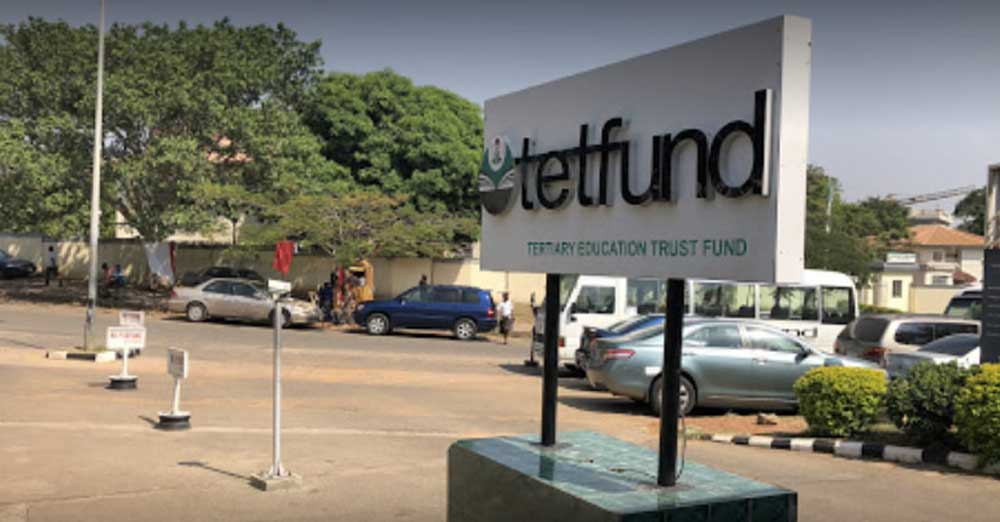
The Tertiary Education Trust Fund (TETFund) has announced its 2026 disbursement guidelines, with public universities set to receive over N2.5bn each.
Polytechnics will receive N1,871,059,920.53, while Colleges of Education will be allocated N2,056,527,973.04 each.
The disbursement will be made to 271 beneficiary institutions.
Executive Secretary of TETFund, Arch. Sonny Echono, while announcing the disbursement on Tuesday, at the strategic workshop with Heads Of Institutions, stated that the allocation is part of the 2026 disbursement guidelines, with 90.75 percent of the fund designated for direct disbursement.
This also includes 50 percent as annual direct disbursement, 40.75 percent as special direct disbursement, 9.07 percent for designated projects and 0.18 percent for stabilization funds.
Echono disclosed that the special direct disbursement category includes initiatives such as the establishment of Centers for Robotics, Coding & AI Machine Learning, and Centre for Cybersecurity Studies in selected Institutions
Advertisement
Echono added that TETFund is also expanding the Special intervention projects to cover commercial farm projects, equipping and upgrade of R&D offices, and development of student hostel projects through Public-Private Partnerships.
He disclosed that the Fund is also introducing the Nigerian Research and Education Network (NgREN) to improve access to global academic resources.
He added that the fund has sustained its efforts in research, innovation, academic staff training, and book development.
Echono urged beneficiary institutions to ensure full utilization of their 2025 allocations and fast-track the procurement process to access their 2026 allocations.
While speaking on the challenges of last year’s 2025 intervention cycle, Echono lamented the undue delay in processing projects for approval in principle and obtaining of due process for implementation is worrisome.
Advertisement
“Beneficiaries are advised to execute their procurement planning processes early enough to avoid these delays. Also worrisome is the slow and reluctant utilization of the TERAS platform with all its associated services by some beneficiary institutions.
“The Fund will be paying closer attention to this in the year 2026. The Fund also expect better documentation and knowledge of its guidelines for its training and content intervention lines. This should mitigate the challenges and problems experiences by scholars across beneficiary institution,” he said.