
Cardoso Calls For Africa-Led Global Economic Transformation
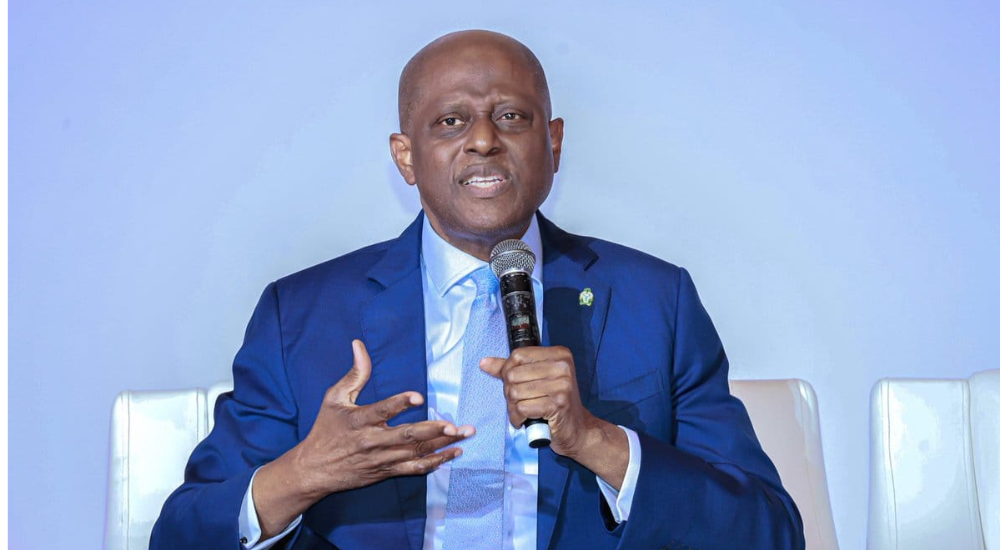
The Governor of the Central Bank of Nigeria (CBN), Olayemi Cardoso, has called on African countries and other emerging economies to take a leading role in shaping the evolving global economic order, stressing that the continent must move beyond merely adapting to global changes.
Speaking at the opening of the 7th Africa Emerging Markets Forum in Abuja on Wednesday, Cardoso said rapid changes in the global economy, driven by geopolitical tensions, shifting supply chains, technological innovation and reforms within the international financial system, present Africa with an opportunity to redefine its position in the global economy.
According to him, the continent must leverage its demographic strength, entrepreneurial capacity and abundant natural resources to become an active architect of the emerging global economic landscape.
“The question before us is no longer whether change is coming. Change is already here. The real question is whether emerging markets will simply adapt to this new order or play an active role in shaping it,” Cardoso said.
He noted that Africa’s youthful population, expanding consumer market and growing innovation ecosystem provide a strong foundation for sustainable economic growth, but stressed that these advantages can only be fully realised through sound macroeconomic management, stronger institutions and deeper regional collaboration.
Cardoso also highlighted Nigeria’s ongoing economic reforms, stating that the Central Bank has prioritised transparency, policy consistency and institutional accountability to restore investor confidence and strengthen macroeconomic stability.
Advertisement
He said the positive response from investors indicates that disciplined reforms are beginning to improve confidence in Nigeria’s economic outlook.
The CBN governor further emphasised that no country can successfully navigate today’s increasingly complex global economy in isolation, underscoring the importance of international cooperation.
He described the Emerging Markets Forum as an important platform that has, for nearly three decades, enabled policymakers, business leaders and development experts to exchange ideas and develop practical solutions to common economic challenges facing emerging markets.
Also speaking, the Deputy Governor of the Central Bank of Nigeria in charge of Corporate Services, Mohammed Sani Abdullahi, said the apex bank’s foreign exchange reforms have addressed structural distortions that had long affected Nigeria’s currency market.
He acknowledged that the reforms came with short-term adjustment costs but maintained that they have delivered measurable improvements in market stability.
Advertisement
“The reforms have come with adjustment costs, but they have reduced long-standing distortions in our markets. Under the previous system, foreign exchange subsidies were estimated at 3 per cent of GDP in 2022.
“Since the reforms began, we have seen a narrowing of the premium between the official and parallel exchange markets, while our gross external reserves have risen to $52.52bn as of July 17, providing approximately 11 months of import cover for goods and services,” Abdullahi said.
He added that the reforms demonstrate the Central Bank’s commitment to building a more transparent, efficient and market-driven foreign exchange system capable of supporting long-term economic growth.
In his welcome address, the Founding Director and Chief Executive of the Emerging Markets Forum, Harinder Kohli, described the 2026 edition as the largest gathering organised by the forum since its establishment.
“This is our seventh Africa Forum Meeting and our 39th meeting overall. I am pleased to say this will be our largest meeting ever,” Kohli said.
He noted that delegates from across Africa, Europe, the United States, India and other regions attended the forum, reflecting growing international interest in Africa’s economic prospects and investment opportunities.
Advertisement
Earlier, the Executive Director of the Centre for the Study of the Economies of Africa (CSEA), Chukwuka Onyekwena, said the global economy is undergoing one of the most profound transformations in recent history, driven by geopolitical tensions, changing trade patterns, artificial intelligence, climate change and tighter global financial conditions.
While acknowledging that African economies continue to face challenges such as inflation, food insecurity, commodity price volatility and fluctuating capital flows, Onyekwena argued that the continent is equally well-positioned to benefit from emerging global opportunities.
He identified Africa’s youthful population, expanding digital economy, renewable energy potential, regional integration initiatives and growing adoption of artificial intelligence as critical drivers of future economic growth.
“The central question before us is not whether the global economy is changing. It clearly is. The challenge is how Africa positions itself to seize the opportunities emerging from this transformation,” he said.