
Federal Road Safety Corps ‘Missing’ In FCT
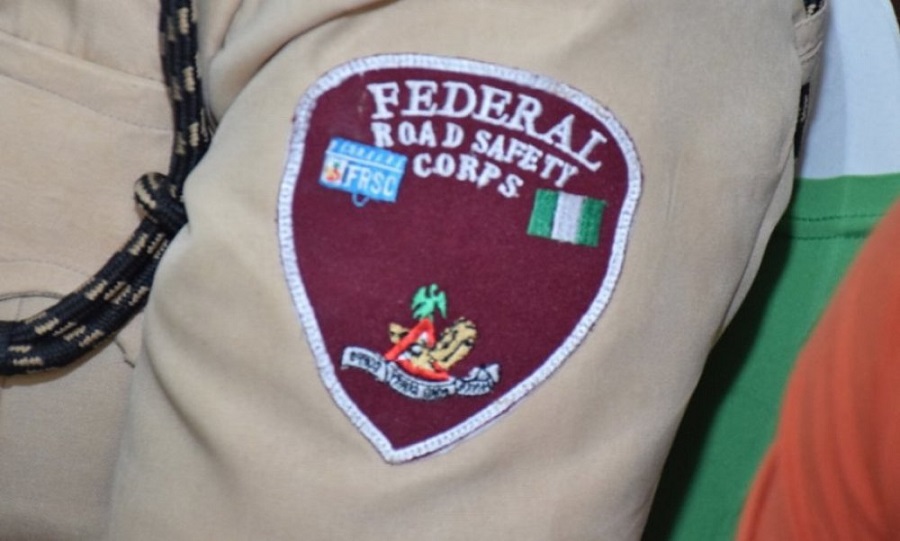
Road safety is not merely about regulating the movement of vehicles. It is fundamentally about protecting human lives. Every traffic regulation, every road sign, every checkpoint, and every enforcement operation exists for one overriding purpose: to prevent avoidable accidents and ensure that Nigerians travel safely.
The Federal Road Safety Corps was established to champion that responsibility. Over the years, the Corps earned public recognition through its visible presence on highways, strict enforcement of traffic laws, public education campaigns, and sustained efforts to reduce road crashes. However, many road users are beginning to ask whether the agency is still living up to that mandate.
Across Abuja, dangerous traffic violations are becoming increasingly common. Motorists drive against traffic with apparent impunity, traffic lights are routinely ignored, commercial motorcycles operate in restricted areas, and reckless driving often goes unchecked. These developments raise serious concerns about the effectiveness of traffic law enforcement and, ultimately, the safety of lives on our roads.
This is not an attack on the Federal Road Safety Corps or the many officers who continue to serve with dedication. Rather, it is a call for reflection, accountability, and renewed commitment to the agency’s statutory responsibility. When traffic laws are no longer enforced consistently, the consequences are measured not merely in broken rules but in broken lives.
For many residents of Abuja, one question has become increasingly difficult to ignore: Where is the Federal Road Safety Corps?
There was a time when the presence of the FRSC was unmistakable. Its patrol vehicles were visible on major highways and within the city. Officers monitored traffic, apprehended motorists who drove against traffic, checked expired driving licences, enforced road safety regulations, and generally reminded road users that traffic laws were meant to be obeyed.
Advertisement
Today, that visible presence has significantly diminished.
Driving against traffic, once considered a serious offence, has become commonplace across Abuja. Whether on the Airport Road, around major intersections, or within the city centre, motorists routinely violate traffic regulations with little or no fear of being stopped. The result is an increasingly dangerous driving environment where law-abiding motorists are exposed to unnecessary risks.
My recent experience illustrates the growing problem.
About a week ago, at approximately 6:30 p.m. to 7:00 p.m., while approaching the Area 1 Roundabout, where construction is still ongoing, I encountered what could easily have become a fatal accident.
As I approached the checkpoint, police officers signalled me to stop. At the same moment, an oncoming vehicle was driving directly against traffic at high speed towards my vehicle. Faced with the possibility of a head-on collision, I instinctively swerved to avoid being hit.
Advertisement
The offending driver escaped.
Ironically, rather than pursue the motorist who had endangered countless lives by driving against traffic, the officers questioned why I had not stopped immediately. I explained that preserving my life took precedence over complying with the stop signal under circumstances where stopping would almost certainly have resulted in a collision.
No responsible driver should ever have to make such a choice.
Unfortunately, this is no longer an isolated occurrence. It is becoming a daily reality for Abuja residents.
A particular disturbing trend is the growing disregard for traffic lights in Abuja. Increasingly, motorists ignore red lights and proceed through intersections as though traffic signals no longer matter. Compliance with basic traffic regulations appears to have weakened considerably, creating unnecessary risks for motorists and pedestrians alike.
Even more alarming is the conduct of some offending drivers. On several occasions, motorists who violate traffic lights have turned around to verbally confront or abuse drivers who were lawfully proceeding on a green light. In some instances, they even stop in the middle of the road to challenge innocent motorists who are simply exercising their lawful right of way. Such behaviour reflects a dangerous erosion of road discipline and respect for the rule of law.
Advertisement
Another issue that deserves attention is the noticeable decline in enforcement since the Vehicle Inspection Officers significantly reduced their roadside operations following legal challenges over aspects of their enforcement powers.
Whether related or merely coincidental, many motorists believe that the FRSC’s visibility also declined following the court-ordered withdrawal of the VIO from roadside operations. Before then, many road users observed what appeared to be healthy institutional competition, with each agency striving to demonstrate its relevance through active enforcement. The result was greater compliance with traffic regulations and a stronger culture of road discipline.
If that public perception reflects reality, it raises an important question: Was the FRSC’s performance enhanced by the healthy competition that existed between the two agencies?
My personal experience reinforces this concern.
My driving licence expired in January this year. For about two weeks before renewing it, I continued driving without a single officer asking to inspect my licence. After I renewed it, I was issued a temporary document while waiting nearly three months for the permanent licence to be produced. Throughout that entire period, not once was I stopped by the FRSC to verify whether my driving documents were valid.
That experience left me asking a simple question: If motorists can drive for months without any verification of their driving documents, how effectively is this aspect of road safety enforcement being carried out?
Too often, one sees FRSC personnel stationed by the roadside without visible enforcement activity. Road safety enforcement should be proactive, not passive. Officers should be actively identifying traffic offenders, checking compliance with licensing requirements, preventing dangerous driving, and ensuring that motorists obey the law.
Equally disturbing is the apparent resurgence of commercial motorcycles in areas where they were previously restricted for security and traffic management reasons. Commercial motorcycles now operate openly in many parts of Abuja with little visible enforcement. Illegal parking, reckless overtaking, one-way driving, and dangerous manoeuvres have become increasingly common.
This naturally raises a broader concern. If this level of indiscipline is becoming commonplace in Abuja, the nation’s capital, where one would expect the highest standards of traffic management, what is the situation in many other parts of the country?
Interestingly, my recent experience in Lagos presented a different picture. During a week-long visit last month, I observed a much higher level of compliance with traffic regulations. Motorists generally respected traffic lights and lane discipline largely because traffic management officers maintained a strong and visible presence on the roads. Credit should be given to the Lagos State Government for sustaining an effective traffic management system that promotes compliance and road safety.
By contrast, during a visit to parts of Osun State last year, I frequently saw FRSC patrol vehicles moving around, but there appeared to be little active enforcement. At some checkpoints, the interaction with motorists seemed limited to friendly greetings such as “Happy weekend, ma,” or “Happy weekend, sir,” without any visible inspection of vehicles or driving documents. While courtesy is commendable, Nigerians expect traffic officers to focus primarily on the responsibilities for which they were deployed: enforcing traffic laws and protecting lives.
The FRSC was established primarily to promote road safety, enforce traffic regulations, prevent crashes, educate motorists, and save lives. While driving licence administration is one of its statutory responsibilities, enforcement remains one of its most visible and important functions.
Many residents now wonder whether the Corps has quietly retreated from that responsibility.
Road safety enforcement is not merely about issuing fines or conducting routine checks. It is about protecting lives. Every motorist who drives against traffic places innocent families at risk. Every reckless driver allowed to continue unchecked increases the likelihood of avoidable tragedy.
It is therefore difficult to understand public commendations and awards when many Nigerians believe the agency’s visibility and effectiveness have declined. Recognition should reflect measurable improvements in public safety, compliance with traffic regulations, and public confidence. If those outcomes are not evident, citizens are entitled to ask whether such recognition is justified.
The growing breakdown of traffic discipline on Abuja roads should concern every Nigerian. Road safety is a shared responsibility, but the burden of enforcing traffic laws rests primarily on the institutions established for that purpose. When enforcement becomes weak or inconsistent, lawlessness fills the vacuum and innocent lives are placed at risk.
The Federal Road Safety Corps must rise to the occasion by restoring its visibility, strengthening enforcement, and reassuring Nigerians that road safety remains its foremost priority. Dangerous practices such as driving against traffic, violating traffic lights, operating with expired driving licences, and reckless driving should never become the norm in any civilized society.
This is not simply about issuing fines or making arrests. It is about preventing avoidable deaths and preserving public confidence in the rule of law. Nigerians deserve roads where discipline is enforced, offenders are held accountable, and every road user can travel without fear.
The time has come for the Federal Road Safety Corps to rediscover the purpose for which it was established. The lives of millions of Nigerians depend on it.
The question remains:Where is the Federal Road Safety Corps?
By Sola Adeola is a
Governance Analyst and Legal Researcher based in Abuja.
Email: bluelinescom@gmail.com
Phone: 08071313200