Counter Misinformation, Don’t Stay Silent, IGP Orders Police Spokespersons
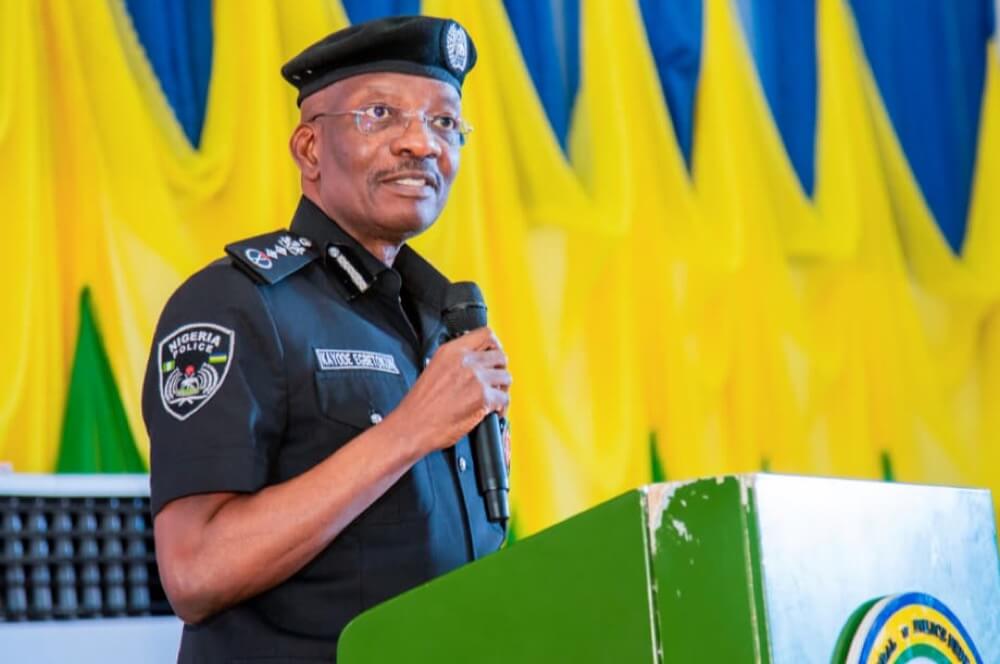
The Inspector General of Police, Kayode Egbetokun, has charged Police Public Relations Officers across the country not to remain silent in the face of misinformation, warning that false narratives now spread too quickly for the Nigeria Police Force to ignore.
He said the Force Headquarters cannot respond to every circulating falsehood, but PROs must act swiftly at the point where misinformation emerges.
“While we must acknowledge that it is neither strategic nor feasible for the Inspector-General or the Force Headquarters to respond to every distorted claim or sensational falsehood, silence is no more an option.”
Speaking at the 2025 Nigeria Police Force Public Relations Officers’ Conference in Abuja, Egbetokun said modern policing now relies heavily on transparent communication and public engagement.
He explained that public trust is shaped not only by operations but by how police actions are communicated, interpreted, and understood across the country.
He said PROs now operate on the frontline of an information environment dominated by false narratives, manipulated visuals, and rapidly circulating online content.
Advertisement
According to him, this shift has made communication a core operational tool, not a secondary function, because public perception can influence police legitimacy as strongly as enforcement outcomes.
The IGP warned that misinformation has caused considerable reputational damage to the Police, stressing that delayed or fragmented communication gives room for distorted narratives to thrive.
He emphasised that PROs must counter falsehoods promptly and responsibly to prevent them from becoming accepted public belief.
“I must particularly charge you to take firm, strategic hold of the social media space. It must not be a battlefield where the Force is constantly on the defensive. It must become a tool in your hands, an instrument of truth, reputation protection, public enlightenment, and confidence-building. We must lead conversations, not chase them.
“We must frame narratives, not merely react to them. There is a growing trend of misinformation circulating across digital platforms; old videos resurfaced as recent events, edited images presented as truth, and misleading narratives deliberately crafted to distort public perception.
Advertisement
“No public institution in Nigeria has suffered more reputational damage from misinformation than the Nigeria Police Force.
“The responsibility lies with you, the Public Relations Officers across Commands and Formations, to respond swiftly, accurately, and responsibly at the point where such misinformation emerges.
“You are the first line of defence in the information ecosystem, and your vigilance, clarity, and professionalism are critical to ensuring that misinformation does not become accepted reality.”
According to him, “the battle for the mind is now as critical as the battle against crime”, framing communication as equally vital to physical enforcement.

Egbetokun said the conference provided an opportunity to strengthen uniform messaging across commands and reiterated that inconsistent statements weaken institutional authority.
Advertisement
He explained that coherent communication helps citizens interpret police actions accurately, particularly during emergencies.
He reviewed administrative adjustments in the Force, including recent postings of Public Relations Officers and the expansion of communication infrastructure.
He said these measures aim to improve response speed, strengthen clarity, and support fact-based engagement across all formations.
The IGP urged spokespersons to tell a balanced story of policing, highlighting humanitarian efforts, conflict mediation, rescues, and acts of service carried out by officers.
According to him, such narratives help citizens recognise the human side of law enforcement and contribute to rebuilding trust.
He cautioned that transparency must not compromise investigations or expose sensitive case details, noting that “confidentiality protects victims and supports the integrity of ongoing operations”, and describing “discretion as an essential component of responsible communication.”
Egbetokun mandated PROs to deepen collaboration with journalists, civil society leaders, international partners, and community stakeholders. He said constructive relationships help correct misinformation early and create a more informed public environment.
Concluding, the IGP emphasised the importance of internal communication within the Force, noting that officers across all ranks must understand directives, reforms, and operational expectations.
He said informed personnel communicate better with the public and represent the institution more responsibly.