
Despite Drop In Inflation, Food Prices Remain Highest In Borno, Sokoto, Enugu – NBS Report
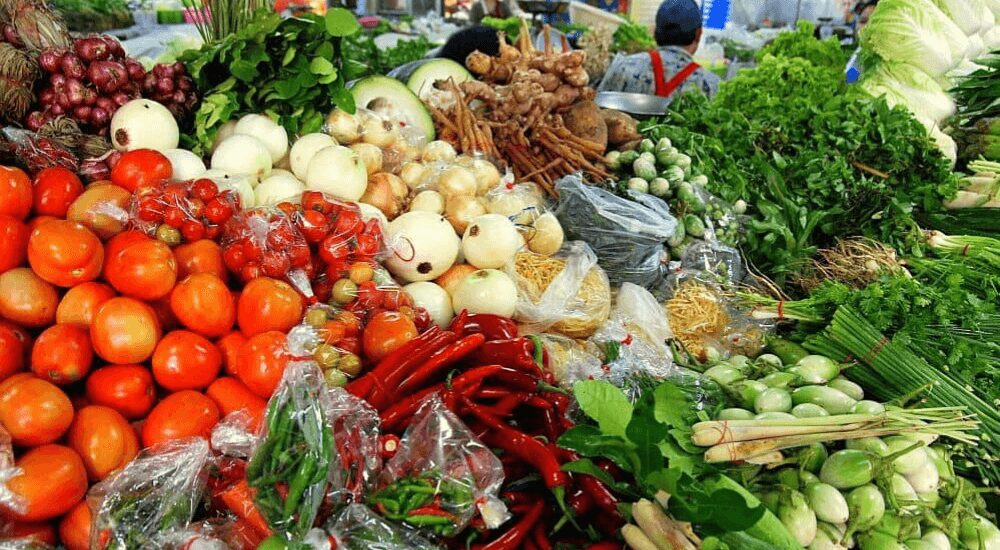
The National Bureau of Statistics (NBS) revealed on Thursday that despite a marginal decrease in headline and food inflation, Borno, Sokoto, and Enugu states continue to lead as the most expensive places to live in Nigeria.
Nigeria’s economic landscape has been characterized by harsh realities, pushing the cost of living to unprecedented levels.
However, THE WHISTLER reported that July’s headline inflation fell slightly by 0.79 percentage points to 33.40%, while food inflation eased by 1.34 percentage points to 39.53%, down from 40.53% in June 2024.
This marks the first decline in inflation since President Bola Tinubu took office in May 2023. An analysis of the Consumer Price Index (CPI) report by THE WHISTLER indicates that inflationary pressures varied across states during the period under review.
A key finding from the NBS report includes that the states where the cost of living was highest in July 2024 were not the states with the highest increase in the prices of goods and services.
THE WHISTLER’s analysis of the NBS report showed the top five states with the highest surge in food inflation to include Borno which recorded the highest increase in food inflation by 5.07 per cent, with an all-items inflation rate of 3.84 per cent.
Advertisement
Sokoto and Enugu states held the second and third spots with 4.99 per cent and 4.17 per cent, respectively.
Also, Sokoto’s all-items inflation rose by 3.59 per cent while Enugu increased by 3.76 per cent.
Nasarawa came fourth place with a 3.52 per cent increase in all item inflation and a 3.91 per cent surge in the prices of food items in the period under review.
Furthermore, the home of excellence, Lagos State, was not left out as it retained the fifth spot with 3.77 per cent increase in food inflation and a 3.14 per cent in all item inflation.
According to the statistic hub, food inflation was lowest in Kwara, Taraba, Ondo, Adamawa and Rivers state by (0.51; 0.56; 0.68; 0.79 and 1.09 per cent respectively.
Advertisement