
Ebola: DRC Bans Mass Gatherings
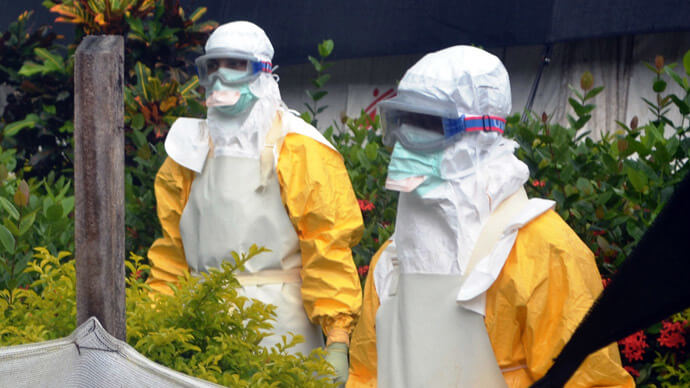
The Government of the Democratic Republic of Congo (DRC) has announced a total ban on mass gatherings in its capital, Kinshasa, and three other provinces, in an effort to contain a growing Ebola virus outbreak.
The directive, signed by the Interior Minister, Jacquemain Shabani, and issued to provincial governors late on Sunday, prohibits all political meetings, public marches, demonstrations, and any other events likely to attract large crowds.
Apart from the capital city of Kinshasa, the restrictions will also take effect in Tshopo, Haut-Uele, and Bas-Uele provinces.
According to a Health Ministry situation update released on Monday, 29 June 2026, the country’s confirmed Ebola cases have climbed to 1,274, with 360 deaths recorded since the outbreak was officially declared on 15 May.
While the epicenter of the outbreak has remained concentrated in the eastern provinces of Ituri, North Kivu, and South Kivu, the Interior Ministry stated that the new sweeping measures are pre-emptive steps designed to prevent the virus from spreading further into neighbouring territories and the heavily populated capital.
The latest restrictions follow previous containment efforts by the Congolese government, including a mandatory 21-day quarantine for travellers arriving from Ebola-affected areas, alongside the suspension of sporting and social activities in Ituri.
Advertisement
However, the opposition has strongly rejected the government’s latest health directive, dismissing it as an “unconstitutional” and “politically motivated” crackdown masquerading as a public health intervention.
Speaking to journalists in Kinshasa, Prince Epenge, the spokesperson for Coalition Article 64 (C64)—a broad opposition alliance—claimed the timing of the ban was suspicious.
Epenge argued that the restrictions were deliberately designed by the ruling majority to sabotage a massive anti-government march scheduled for 8 July.
The planned demonstration is aimed at protesting proposed constitutional amendments, which critics fear could allow President Félix Tshisekedi to extend his term in office.
Government officials have denied the political allegations, maintaining that the temporary ban is strictly guided by public health exigencies and scientific data to protect citizens from a highly contagious disease.
Advertisement