
Ebola: WHO Urges Countries To Lift Travel Bans On Central Africa
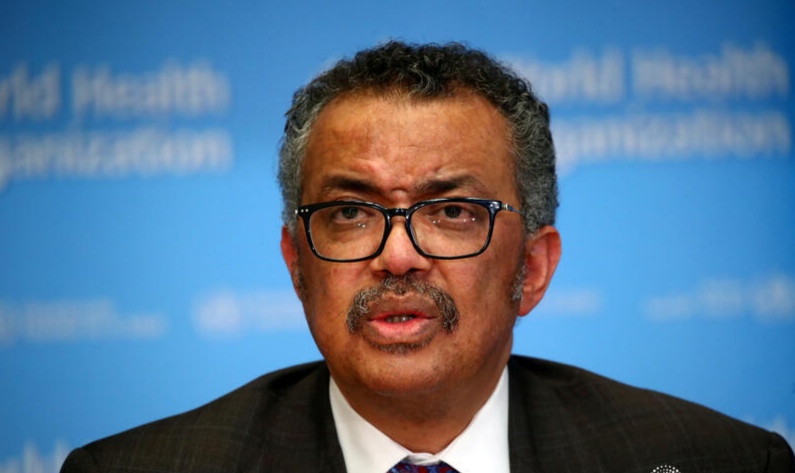
The Director-General of the World Health Organisation (WHO), Tedros Adhanom Ghebreyesus, has called on countries to end broad travel restrictions linked to the Ebola outbreak in Central Africa, warning that such measures are counterproductive and are impeding the response effort.
“There are ways to manage workers and to manage cases without having a strong, restricted travel ban and we do not encourage that as WHO,” Tedros said.
The WHO has declared the ongoing Ebola outbreak in the Democratic Republic of the Congo and Uganda a Public Health Emergency of International Concern, citing rising cases, cross-border spread and significant uncertainties about the scale of the epidemic.
The outbreak is believed to have been spreading for weeks before it was officially declared on 15 May, with the epicentre in Mongbwalu, a poor gold-mining town of 130,000 people in Ituri Province in eastern Congo.
Tedros described the outbreak as a “catastrophic collision of disease and conflict”, saying the disease is outpacing the response.
As of 27 May, a total of 906 suspected cases and 223 deaths among suspected cases have been reported in the DRC, with 134 confirmed cases, including nine in Uganda, and 18 deaths among confirmed cases across both countries.
Advertisement
Several countries have imposed travel restrictions in response to the outbreak.
Both Uganda and Rwanda have closed their borders with the DRC, while the United States has barred most travellers who have recently visited the DRC, Uganda or South Sudan. Canada has also announced a 90-day entry ban for residents from the DRC, Uganda and South Sudan.
The WHO advises against such measures, with Tedros dismissing border closures as ineffective and arguing they discourage countries from reporting outbreaks openly.
Health ministers from the Intergovernmental Authority on Development, an eight-nation East African bloc, met this week and agreed to redirect about $7m towards prevention across the region.
The International Rescue Committee (IRC) has warned that the outbreak risks becoming the deadliest on record without urgent international action, as it is now spreading faster than responders can contain it.
Advertisement
The virus has also reached North Kivu and South Kivu provinces, where the Rwanda-backed M23 rebel group controls major cities. Anger over strict rules for handling victims’ bodies, which clash with local burial customs, has fuelled at least three attacks on health centres.