
INVESTIGATION: 10 Years After Relocation Of Herdsmen To 12 FCT Communities, Landowners Await Compensation
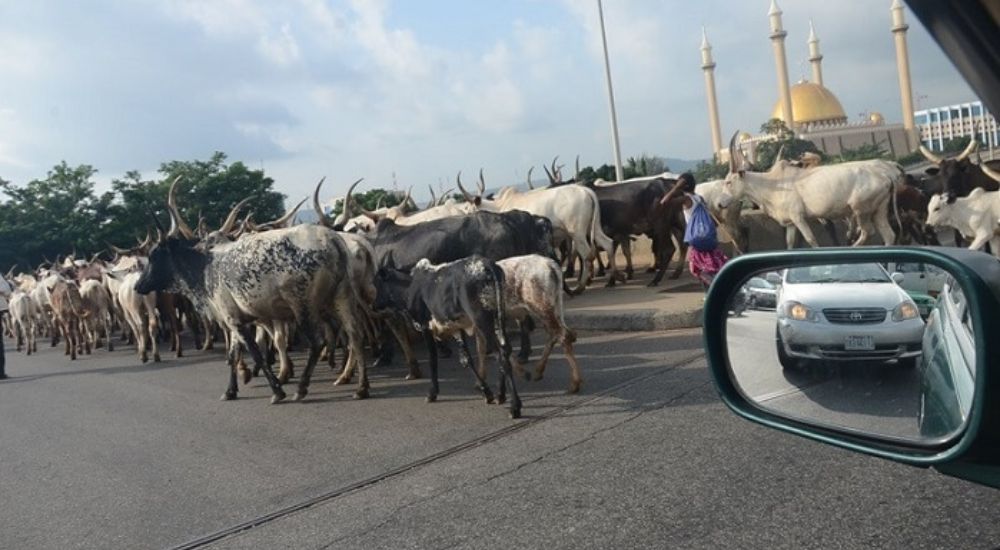
In October 2016, after many complaints from residents about cattle grazing in the Abuja metropolis and on major entrance and exit highways into the city centre, the then Federal Capital Territory (FCT) Minister, Muhammad Bello, directed herdsmen to move their cattle out of the city.
Bello also stated that the FCT Administration had moved a step further to identify new grazing reserves that would cater for their needs.
According to him, a total of 33,485 hectares had already been earmarked for grazing reserves to cater for about 7 million cattle. The breakdown; Paikon Kore 8,500 hectares, Karshi 6,000 hectares, Kawu in Bwari 9,000 hectares, and Rubochi in Kuje 9,985 hectares.
“The FCT Administration may even reach out to the host communities to work out a situation where compensation does not have to be in monetary terms because of the large expanse of land involved.
“Nothing should prevent the communities that are there and the Fulani living together because you don’t always have to move people away,” he was quoted as saying.
Advertisement
Ten Years On: No Compensation, More Land Grabbing
However, ten years after the Minister’s relocation order, findings from THE WHISTLER show that the communities whose land was allocated for the grazing reserve in Kawu have not been compensated and have also experienced constant land grabbing by herdsmen who claim the minister gave them the land.
“We have been besieged by Fulani who claim that the Minister of the FCT pushed them out of the city centre and told them to come live at the said reserve.
“But none of them come with any letter authorising them to stay here,” the Chief of Kurmi Dauda, Musa Manasseh Bawa, one of the landowning communities, told THE WHISTLER.
The Chief said the main challenge facing his community is the takeover of farmlands.
“The challenge we face now is that on our farmlands, the ones we always cultivate, we will just wake up one morning and see Fulani in the field,” he said.
Advertisement

He recounted an incident involving the area council chairman.
“There was a time the area council chairman came to Kurmin Dauda. I went to report the issue to him. He spoke, but when he left, they continued with what they were doing.
Now, on that particular land that the chairman visited, they have built houses there,” he stated.
Bawa, who noted that his people are mostly farmers, added that apart from their land being taken, their crops are being destroyed by the herders’ cattle.
“I visited one of my farms the other day and noticed that my palm tree was cut down for their cows to feed on. Why did they have to cut the palm tree down? Why not just climb up and cut the leaves and leave the tree alone?” he lamented.
Advertisement
The Chief said his people are known for cultivating beans, banana, yam, and other crops, but expressed fear that these crops are gradually disappearing due to the activities of herders, some of whom he said do not even own cattle.
“You cultivate a land this year, next year when you come back, someone has already occupied the land,” he narrated.
Govt. Returns in 2025: Boreholes, Promises, No Payment
In September 2025, the Federal Government said it had kick-started the relocation process of herders to the Kawu Grazing Reserve in Bwari Area Council, Abuja, with the development of infrastructure in the area.
The Minister of Livestock Development, Idi Maiha, led a team of officials to the 9,000-hectare reserve where a solar-powered borehole was launched.
That day, the minister explained that the grazing reserve plays host to over 10,000 herders and their families. He said the development process will continue rapidly and will include a 15-kilometer road, solar-powered boreholes, a dam, irrigation facilities, schools, solar power, a healthcare facility, security, pasture and manure production centres, markets, and others.
He noted that the government had come with “a bag full of commitment, dedication, and passion,” not empty promises.
On plans for the reserve, he said a dam in the area will be converted into a source of water for dry-season pasture cultivation.
He said about five to six motorized boreholes will be constructed in the area, which will serve potable drinking water for domestic use as well as animal consumption.
The delegation also came with some quantity of Napier grass, a type of tall, fast-growing grass that farmers use mainly as animal feed.
“We are saying that this grazing reserve is going to come alive. We have already had some consultations with a lot of stakeholders,” the minister said.
Original Owners Cry Foul Over Exclusion
However, original owners of the land have lamented that they were not included in the consultations and that compensation was not paid to them by the government for taking over their lands.
Bawa, who had granted an audience to the reporter in Bwari after many attempts to see him, spoke visibly weighed down by the situation.
He stated that the 9,000 hectares of land turned into a grazing reserve was the ancestral land of about 12 villages, some of whom were still living on the land.
“Some of these villages still live on the land while some have their farmlands there. For example, Dokuma, Tungan Bijimi, and Sabon Kawu, their farmlands are in there but the communities live outside the area. Tungan Adaka Gbagyi live in the area. Tungan Adaka Koro has its farmland within the hectares. Gidan Manu, Gidan Baushe, these communities have both their farmland and their village within and other communities,” he explained.
The Chief, who disclosed that they have sent several complaints to the area council, stated that the most important thing for him is not compensation, but for the FCDA to come and demarcate the land so that the original inhabitants know their portion and the herders know theirs.
“This will stop this invasion of people’s lands. Now, if you know your own portion, and you trespass, you know you are just looking for trouble,” he said.
He noted that if his people were like the Fulani, there would have been a serious crisis from the confusion in the area.
“The Minister of Livestock has visited that grazing reserve about two times. It baffles me that he came, planted grasses, and did other things, but did not ascertain if the proper thing has been done for the original inhabitants regarding the land,” the Chief lamented.
Yunana Bebe, the Mai Angwa of Anguwan Rana, echoed what Bawa said about the community’s experience living within the grazing reserve.
However, he made one specific request: that the government should reduce the hectares allocated for grazing.
“We will be happy if the government will do something for us. They should come and make a demarcation and reduce the hectares. We don’t need compensation because after compensation, we might still not live in peace,” Bebe said.
Paper Trail: Letters, Requests, No Answers
Community leaders noted that the problem escalated around 2023 and 2024, prompting the Secretary of the Original Inhabitants Development Association of Abuja (OIDA), Bwari Chiefdom, David Yakubu, to write an urgent letter to the FCT Minister for intervention.
In the letter dated July 29, 2024, the association pleaded for intervention, stating that Fulani herdsmen trooping in from Niger, Kaduna, and Plateau states were taking over their lands.
Before then, on January 11, 2023, the association had also written an SOS letter to the Chief Commissioner of the Public Complaints Commission and the Director of DSS, stating that the influx had escalated insecurity in the area.
Doom If Govt. Fails To Act-OIDA President
In an interview with THE WHISTLER, Pastor Danladi Jeji, President of the Original Inhabitants Development Association of Abuja(OIDA), warned that the situation in Kawu and other parts of the FCT could spiral into crisis if the government fails to act.
“This is not just a crisis. What we are going to see is doom. You cannot collect our ancestral lands and bring cattle from elsewhere. Our children are watching this injustice,” he told THE WHISTLER.
The association’s leadership said repeated letters to FCT authorities and the National Assembly on the concerns of the group have yielded no response.
Government Response: No Compensation Paid
THE WHISTLER wrote to the Department of Resettlement and Compensation of the FCDA for clarification.
An official, who identified herself as Madam Ada, told THE WHISTLER in a phone conversation that the letter was minuted to her for response. According to her, no compensation has been paid to the communities.
She, however, explained that the department only supervises the compensation process after “the people in charge” of the grazing reserve write to the director.
“What they do is to write to our director that they want to pay compensation, so the process will now start. There are people in charge of the grazing reserve. Our job is to monitor the payment,” she said.
A letter to the Mandate Secretariat, Agriculture and Rural Development Secretariat, submitted on April 23, 2026, to enquire about the grazing reserve’s operation and compensation, went unanswered.
Ministry: “Not Our Job”

THE WHISTLER also sought a response from the Federal Ministry of Livestock Development, which has started projects on the said reserve.
After an unsuccessful visit to the ministry, the Head of Press and Public Relations at the Ministry, Oghenekevwe Uchechukwu, while responding to questions forwarded via WhatsApp, said the project “remains a top priority” but declined to provide specifics on compensation, legal status, or timelines.
On compensation under the Land Use Act, the Ministry said it is not the implementing authority and could not state what stage the process is at, noting only that it continues to engage “appropriate authorities.”
She did not name the authority or give a timeline.
On concerns about non-cattle owners settling in the area, the Ministry said access is being structured to protect host communities and that registration frameworks are “being developed.”
She, however, gave no criteria and, in a follow-up, said the number of registered operators in the reserve will be published once infrastructure is ready.
On community engagement, she stated that her ministry is “actively engaging stakeholders” to build trust, but gave no steps taken with the original inhabitants of the land or a timeline to resolve compensation.
Legal Expert Speaks
Speaking on the issue, a legal practitioner, Isaac Steven, said the government’s powers and responsibilities are clear under the Land Use Act 1978.
“Section 28 allows the FCT Minister, acting for the federal government, to revoke land for overriding public interest. But Section 29 provides that adequate compensation must be paid to occupiers based on the economic value of the land,” he told THE WHISTLER.
“If the communities have not been compensated as they claim, then the government is in violation of Section 29,” Steven said.
He advised the communities to first seek dialogue with the FCT Minister for relocation and monetary compensation.
If that fails, he advised that “the next step is the courts. There are several Supreme Court judgments on this issue. The law is clear: you cannot dispossess people without compensation.”
–This report was done with support from Civic Media Lab.