
FAVOUR AGBRO: Young Life Lost To State’s Failure
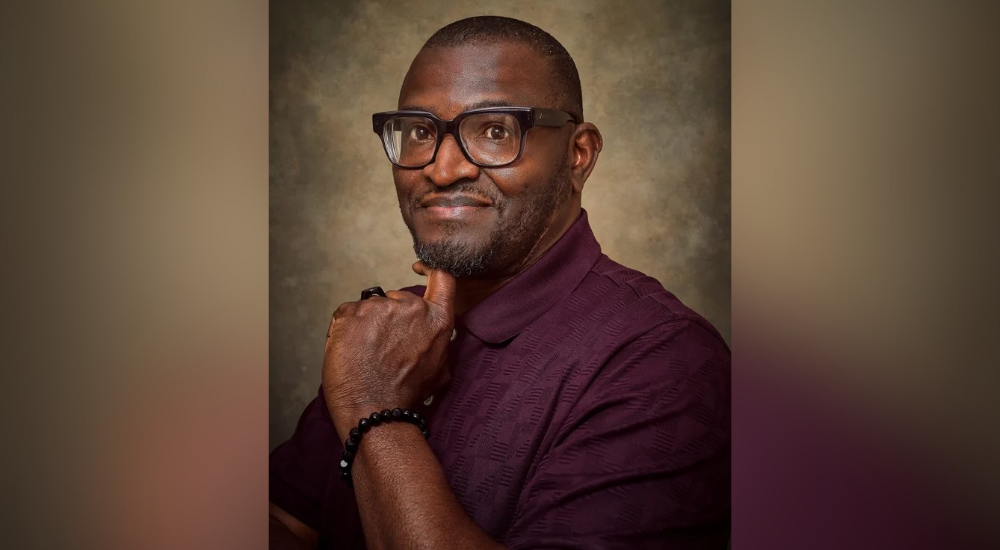
Favour Agbro’s story, like countless others before hers, lays bare Nigeria’s systemic dysfunction—another young woman undone by the archaic mindsets and institutional failures that continue to define much of modern Nigeria.
For context, Favour was a bright-eyed twenty-year-old woman with a dream familiar to countless young Nigerians: to build an online following large enough to turn creativity into a livelihood. She hoped to create content that would attract thousands of followers to her TikTok and Facebook accounts—liking, commenting on and sharing her videos until the algorithms rewarded her with the one goal many creators seek: monetisation.
But Favour wasn’t one to simply dream. She’d moved from dreaming to doing. And that decisive pursuit was where her story turned tragic.
With the benefit of hindsight, Favour’s decision to reach out to the forty-year-old content creator, Ifeanyi Ogbonna, better known online as “Odogwu of Asaba,” proved devastating. She had travelled to meet him from her hometown of Warri to Asaba—a road journey of roughly three to three and a half hours, depending on the traffic, road conditions and checkpoints.
As the bus painstakingly wound its way towards Asaba, its driver repeatedly slowing to negotiate crater-sized potholes and flooded stretches of road, Favour’s thoughts were likely on what the journey might bring: much-needed financial assistance, making it big as a content creator, and eventually, a life beyond poverty for herself and those she loved. Perhaps she imagined owning a home, buying a car, replacing the wardrobe deprivation imposed on her and, one day, maybe even joining the millions of Nigerians in their japa rush.
Advertisement
These are reasonable aspirations—neither beyond her nor beneath her. They are the familiar dreams of countless young Nigerians blessed with ambition and the energy to pursue it. Favour appeared to possess both.
While dreaming on that bus of the possibilities Asaba appeared to hold, Favour could scarcely have anticipated that the man who had cultivated the reassuring persona of a mentor would, according to her account, subject her to the violence she later described.
Whatever assurances he offered must have been persuasive enough for her to feel safe travelling alone to meet him. According to the account she later gave, however, he disregarded her desperate pleas and sexually assaulted her. She had reportedly made it clear before travelling that she was not interested in sex, and that as a virgin, she intended to remain one until she chose otherwise.
Was Favour insufficiently alert to the danger? Perhaps. Greater caution—meeting him in a public lounge or travelling with a friend, might have reduced her vulnerability. But precaution is not consent, and failing to anticipate another person’s criminal conduct does not transfer responsibility from the aggressor to the victim. The duty to respect her autonomy and not subject her to sexual violence rested entirely with the man she had gone to meet.
That said, this essay is not about venting against Mr Ogbonna’s savagery. Not mainly, anyway. It is first and foremost a critical examination of how society and the institutions charged with safeguarding its citizens failed Favour Agbro.
Following Favour’s ordeal and her subsequent decision to end her life, victim-blamers predictably emerged, armed with the same ossified thinking that has long excused predators and condemned their victims.
Advertisement
In their worldview, a woman in a short skirt or tight-fitting clothing is asking to be sexually assaulted. A woman who pays a visit to a man’s home all by herself is assumed to have traded away her right to bodily autonomy. By the same token, since Favour had travelled out of town to meet with the content creator, she ought to have understood that her consent was somehow unnecessary.
Could the fear that she would encounter such regressive attitudes have deepened her despair?
After such an ordeal, a victim needs at least three things if she is to begin recovering.
Belief and validation: She must not be doubted, interrogated, or blamed. She needs to know that her loved ones, the wider community and the authorities believe her, empathise with what she has endured and understand that it was not her fault.
Safety and compassionate support: She needs trusted people around her, protection from the alleged perpetrator, privacy from public scrutiny, and practical assistance, including being accompanied to the hospital or the police station if she chooses to report the assault.
Access to medical, psychological and legal care: She may require treatment for injuries, a forensic examination, emergency contraception, HIV post-exposure prophylaxis, trauma-informed counselling and clear guidance through the justice system.
The sobering truth is that before Favour, there was Nigeria—a country in which institutional failures have become as commonplace as banditry in the bush and collapsed classroom roofs. In such a country, the already difficult journey towards recovery can seem as improbable as uninterrupted electricity. Favour may have believed that, and with good reason, one might argue.
This is, after all, a Nigeria where victims fear reporting crimes, patients fear hospitals, commuters fear highways, parents fear sending their children to school, and citizens fear that justice will arrive too late, if it arrives at all. Is it then unreasonable to surmise that this alarming catalogue of institutional failures intersected directly with Favour’s plight and helped explain it?
Advertisement
Favour was only twenty and came from a humble background. She lived in a Nigeria where the “haves” are better served, and the “have-nots” are frequently not served at all.
Would she have trusted the police to investigate diligently, particularly where the accused appeared to possess more money, greater influence and public visibility than she did? Nigeria’s documented failures to investigate and prosecute sexual violence, combined with survivors’ fear of stigma and victim-blaming, make such distrust far from irrational.
What if she feared she may have been exposed to HIV but did not know where or how to obtain post-exposure prophylaxis within the narrow window in which it is most effective? What if cost, distance, inadequate information, or shortages placed that care beyond her reach? Where would that have left Favour, psychologically?
What if her assailant had threatened her with words to this effect: “Talk and no one will believe you!” “Talk, and I will use my fame and money to kill the case!”
What if she believed it, especially given the widely documented susceptibility of parts of Nigerian law enforcement to corruption and financial influence? Is it conceivable that this might have left her in a state of profound despair?
Moreover, what if Favour felt that confiding in her friends would only turn her private trauma into a subject of public gossip?
The National Bureau of Statistics’ Crime Experience and Security Perception Survey estimated that approximately 1.4 million people experienced sexual offences between May 2023 and April 2024, while only 22.7% reported the crime to the police. One wonders why.
These figures reveal not only the prevalence of sexual violence but also the depth of silence surrounding it. The question is no longer whether Nigeria is failing victims; the evidence makes that painfully clear. The urgent questions are how that failure will be confronted, who will accept responsibility for confronting it, and how many more young women must be lost before the state decides that indifference is no longer an option.
David Kunle Agunbiade is a creative writer, essayist and a PhD candidate. Email:
davidagunbiade@gmail.com