
FCT Residents Demand Return Of Monthly Sanitation
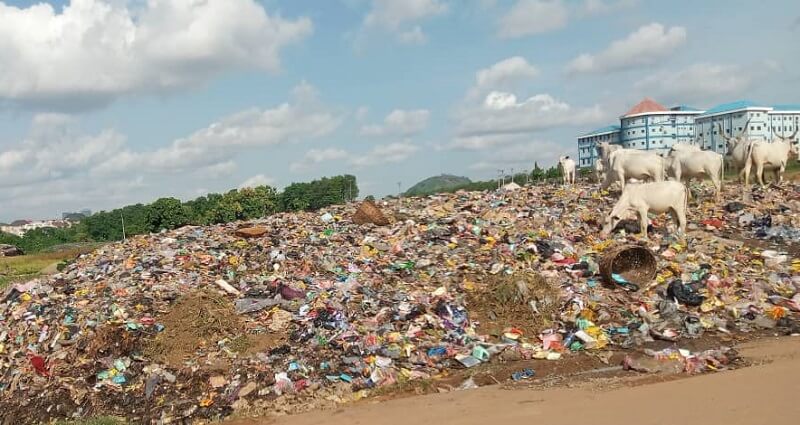
Some residents of the Federal Capital Territory (FCT) have called for the reintroduction of periodic sanitation exercises to promote environmental cleanliness, improve public health, and curb the growing menace of indiscriminate refuse dumping.
The residents expressed concern over mounting hygiene challenges, particularly in satellite towns, and urged the authorities to revive the exercise that was once a national routine.
At the Bwari Area Council secretariat, for instance, a refuse dumpsite has extended into a major road, a development which many residents described as hazardous to health and unsafe for road users.
They wondered why the exercise, which they had grown accustomed to as a day of collective community cleaning, was suspended in the first place. They insisted that its reintroduction would foster public ownership of the environment and address the sanitary challenges plaguing the FCT.
The monthly sanitation exercise was first introduced nationwide in 1984 during the military regime of Maj.-Gen. Muhammadu Buhari under the War Against Indiscipline (WAI) Decree. The initiative restricted movement every last Saturday of the month for three hours, compelling residents to clean their surroundings.
Over the years, the practice was modified across states, with adjustments in dates and enforcement levels. However, participation gradually declined, leading to its eventual collapse in many areas.
Advertisement
In August 2023, FCT Minister Mr Nyesom Wike announced plans to reintroduce the exercise as part of efforts to keep Abuja clean.
He explained that two Saturdays each month would be dedicated to sanitation between 7 a.m. and 10 a.m., allowing residents and sanitation companies to evacuate refuse from public spaces.
“We must all make sacrifices. There is nothing like it; we are going to suffer. You also contribute to refusing. So, if you spare three hours on a Saturday at home to clear the refuse and bring it out for us to evacuate and dispose of, then that is the little way you can help,” Wike had said.
Two years after the announcement, however, the initiative has yet to be implemented.
Mr Amos Abache, a community leader in Bwari, stressed that restoring the monthly sanitation with strict enforcement would revive community participation in waste management.
Advertisement
“At least once a month, residents should be compelled by the authorities to come outside to clean up their surroundings—cut overgrown grasses, clear drainage, gather and burn refuse. This will not only beautify the environment but also reduce diseases like cholera, malaria and typhoid,” Abache told NAN.
He further called for environmental health officers and mobile sanitation courts to be deployed for effective monitoring and enforcement.
Similarly, Mrs Rabi Ohida, a health worker, maintained that sanitation exercises would help keep markets, streets, and drainage systems clean while also reducing pollution.
“The campaign against environmental pollution must go on. Awareness and education on environmental sanitation must continue, irrespective of violations or non-responses from residents. Asking people to come out once a month to clean their surroundings is a necessary step to improve public health,” she said.
Mr Mohammed Sani, a businessman, argued that citizen involvement would reduce the burden on local councils. He noted that clean environments enhance property values and quality of life.
“Most areas in the FCT are dirty because of indiscriminate dumping. If residents are asked to periodically gather their refuse with sanctions attached, they will adjust and stop the practice,” Sani said.
Advertisement
Environmental expert Mr Zachary Abutu, however, cautioned that past experiences showed inconsistent participation and resistance from some residents who viewed the exercise as an infringement on their movement and businesses.
“Market closures, roadblocks, or business interruptions during clean-up days can affect livelihoods. Without proper planning, sensitisation, and supervision, the exercise risks being ineffective,” he warned.
Abutu emphasised that for periodic sanitation to succeed, it must be backed by continuous waste collection services and strong community education, alongside incentives and penalties.
While opinions differ, there is a broad consensus among residents that reintroducing monthly sanitation—with proper enforcement, planning, and public engagement—would go a long way in restoring cleanliness, tackling pollution, and safeguarding public health in the Federal Capital Territory.