
Fertility Clinics Getting Rich Off Students’ Desperation In Plateau
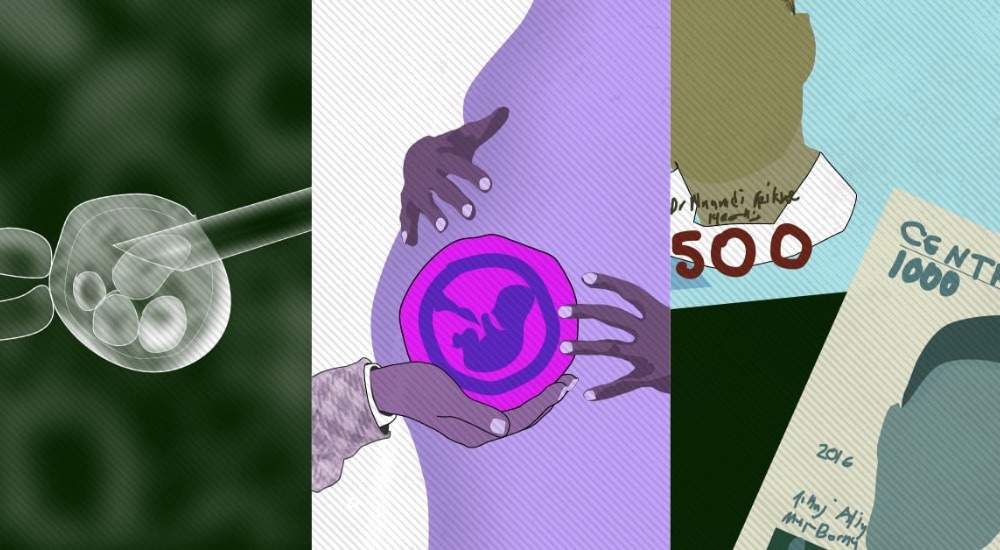
Nobody advertises it. There are no flyers on campus noticeboards, no social media posts with clinic addresses. It moves the way most things move among students with no money and urgent needs, mouth to mouth, roommate to roommate, quietly and without paperwork.
In Plateau State, a growing number of young women are selling their egg cells to fertility clinics for between N120,000 and N150,000 a cycle.
The clinics charge couples many times that amount for the same eggs. And when something goes wrong and sometimes it does there is no regulator to call, no law to invoke, and no record that the transaction ever happened.
The Girl Who Just Needed to Pay Her Fees
Blessing (not her real name) was in her second year at the University of Jos when the money stopped coming from home.
Her father had lost his trading business to the economic downturn that squeezed millions of Nigerian households in 2024, and her mother, a petty trader in Vom, could barely cover feeding costs.
Advertisement
School fees, hostel rent, and examination levies had stacked up into a debt that felt impossible.
It was a coursemate who told her. The details were sparse but the headline was clear: a fertility clinic in Jos paid young women for their eggs, the procedure was quick, and the money was real.
“She told me it was like giving blood,” Blessing told THE WHISTLER, speaking in a low voice and declining to give her faculty or year of study.
“She said she had done it and nothing happened to her. I needed the money badly and I did not ask too many questions.”
Within two weeks, Blessing had presented herself at the clinic, signed documents she described as “plenty of papers I did not read carefully,” received a course of hormone injections over several days, and undergone the retrieval procedure. She walked away with N140,000. She paid her fees. Then the pain started.
Advertisement
“About a week later, my stomach was very swollen and I could not sleep well. I went to the clinic and they gave me some tablets and told me it was normal. But it lasted almost one month,” she said.
She has not donated again. She has not seen a gynaecologist since. She does not know if the procedure has affected her long-term fertility. Nobody told her to find out.
The Commission Sounds the Alarm
Blessing’s experience is precisely what the Plateau State Gender and Equal Opportunity Commission (PLASGEOC) said it has been uncovering across the state’s campuses and precisely why it has decided to speak publicly about a practice that has, until now, operated entirely in the shadows.
The commission said it had identified at least one fertility facility in the state where young women donate their ova, the medical term for egg cells in exchange for cash payments. It described the practice as exploitative and classified it as a form of gender-based violence.
The commission’s Head of Information Unit, Nene Dung, said donors are reportedly paid between N120,000 and N150,000 per egg retrieval cycle, while the couples receiving treatment are charged significantly more for the same procedure.
Advertisement
“People seeking fertility treatment are charged significant amounts, while young girls are paid to donate their ova. Some of them use the money to purchase expensive phones or meet other personal needs,” Dung said.
The commission has already taken its awareness campaign directly into higher institutions engaging the University of Jos, Plateau State Polytechnic in Barkin Ladi, the College of Education Gindiri, and the University of Education Pankshin.
Students at each institution have been told about the potential health consequences of egg donation and urged to make informed decisions about their reproductive health.
“The problem is not limited to communities; it is also prevalent in schools. We are intensifying awareness efforts to ensure young women understand the implications and risks involved,” Dung said.
The commission also called on parents and guardians to pay closer attention to the welfare and activities of their children, and urged all stakeholders to support efforts to hold exploitative facilities accountable.
A Booming Industry, a Broken Regulatory Framework
The alarm in Plateau State is a localised expression of a national problem rooted in the near-total absence of regulation governing Nigeria’s fast-expanding fertility industry.
There are now around 100 fertility clinics operating across Nigeria which is an increase of over 4,000 percent since the first IVF clinic was established in the country over two decades ago.
The industry has grown rapidly, fuelled by rising awareness of infertility treatment and the expansion of private fertility services beyond Lagos and Abuja into secondary cities like Jos, Kaduna, and Kano.
Regulatory oversight has not kept pace.
Nigeria’s National Health Act of 2014 is the only law that attempts to regulate egg donation in the country, but it does not directly address it.
Section 53 of the Act criminalises the buying or selling of human tissue and since eggs are considered human tissue, this creates a legal grey area.
Egg donation itself is not explicitly illegal, but there are no regulations specifying who can donate, how often, or what compensation is appropriate. As a result, many young women go through the process without proper counselling, medical support, or clear information.
With the growing number of private fertility clinics in Nigeria, there is a risk that assisted reproductive technology may become increasingly commodified where profit is prioritised over patient welfare.
In a country where poverty rates are high, women may be pressured into donating eggs for financial reasons, often without a full understanding of the medical risks involved.
Across Africa more broadly, poor regulation and lack of transparency in the fertility industry leave donors and recipients vulnerable to exploitation and unethical practices. The absence of a clear legal framework has sparked concerns around informed consent and donor protection.
What the Medicine Says
For Blessing and the many young women like her across Plateau State’s campuses, the procedure they are agreeing to for N120,000 to N150,000 is medically non-trivial.
Egg donation requires controlled ovarian hyperstimulation, a course of daily hormone injections that forces the body to produce multiple egg follicles simultaneously followed by a surgical retrieval procedure conducted under sedation.
The most documented and serious immediate complication is ovarian hyperstimulation syndrome, or OHSS, the very condition that left Blessing with a month of abdominal swelling and sleepless nights.
THE WHISTLER learned that in a study of 617 egg donors in the United States, 10.3 percent experienced severe OHSS symptoms, while 1.62 percent were hospitalized with critical OHSS including kidney failure and cardiovascular collapse. Nineteen women in the same study described ovarian torsion, a condition in which engorged ovaries twist on themselves and cut off their own blood supply.
In severe OHSS cases, ovaries can balloon to several times their normal size, causing abdominal pain, fluid retention, and dangerous blood clots. Around five percent of women undergoing ovarian stimulation may encounter moderate to severe OHSS.
Beyond OHSS, the rate of serious complications from retrieval procedures including ovarian torsion, intra-abdominal bleeding, infection, and ruptured ovarian cysts has been documented at between 0.7 and 0.87 percent of retrieval cycles, with a further 8.5 percent of donors experiencing minor complications serious enough to require medical attention after the procedure.
These figures come from well-regulated clinical environments in countries where fertility clinics operate under mandatory licensing, pre-procedure counselling protocols, and post-procedure monitoring requirements. In Nigeria, where none of those standards are uniformly enforced, the risks borne by donors like Blessing may be substantially higher.
Dr. Ladi Dachung, a gynaecologist based in Jos who has no affiliation with any fertility clinic, said the absence of a regulatory framework means that women who experience complications after egg donation have almost no formal recourse.
“When a young woman walks into a clinic, gets injections, has her eggs removed and then experiences problems, there is no authority she can complain to that has any power over that clinic. There is no licensing body that can sanction the clinic. There is no record of the procedure that links her to the facility. She is entirely on her own,” Dr. Dachung said.
The Exploitation Arithmetic
At the core of what the Plateau commission is calling gender-based violence is a financial structure that places all the risk on the donor and almost all the profit with the clinic.
A young woman in Jos is paid N120,000 to N150,000 to undergo hormonal stimulation and surgical egg retrieval, a procedure that carries documented medical risks and no therapeutic benefit to her own body. The clinic takes those eggs and charges an infertile couple undergoing IVF treatment many multiples of that amount. IVF treatment in Nigeria can cost around ₦1.1 million per cycle , and cycles using donor eggs typically command a premium above that figure.
The donor receives less than 15 percent of what the procedure generates. She bears 100 percent of the physical risk.
Dr. Safiya Ahmad Nuhu, gender studies at Bayero University Kano, who has researched reproductive exploitation in northern and north-central Nigeria, said the financial structure is deliberately designed to take advantage of economic vulnerability.
“These clinics are not selecting donors randomly.
They are targeting young women in financial distress such as students, low-income women, women with no safety net. The payment is calibrated to be just enough to be attractive without being large enough to attract scrutiny. It is a very deliberate exploitation of poverty,” she said.
Ferrukh Faruqui, an international researcher who has studied egg donation practices described it as “unethical” that vulnerable young women continue to be exploited by a profitable, largely unregulated fertility industry, calling the financial incentive structure an “ethical conflict of interest for poor women” who risk their health for the benefit of wealthy recipients and profitable clinics.
The Silence That Protects the Trade
Part of what allows the practice to continue unchallenged is the silence built into its structure.
Donors are typically required to maintain confidentiality as a condition of payment. The clinics operate discreetly. And the young women who experience complications like Blessing, with her month of abdominal pain are quietly managed and sent home without formal documentation.
With no clear national law governing egg donation, many clinics operate without transparency or accountability. Many young women go through the process without proper counselling, medical support, or clear information leaving them vulnerable to exploitation.
There is also a cultural dimension. In Plateau State, as across much of Nigeria, reproductive health is a deeply private subject. Young women who experience complications after egg donation are unlikely to discuss it openly, still less to seek legal redress. They suffer quietly, and the clinics continue operating.
Blessing has not told her parents what she did. She has not told most of her friends. When asked if she would warn other students against it, she paused for a long time before answering.
“I would tell them to think very carefully,” she said finally. “The money is real. But what they do not tell you is also real.”
What Must Change
Reproductive health advocates and legal scholars have consistently identified the same set of reforms that Nigeria needs to bring the fertility industry under meaningful oversight: a dedicated legal framework governing assisted reproductive technology; mandatory licensing and regular inspection of fertility clinics; standardised and enforceable informed consent protocols; limits on the frequency of donation per individual; and clear, regulated compensation guidelines that prevent economic desperation from substituting for genuine consent.
Scholars have specifically recommended that regulatory measures be established at the state level across Nigeria, with legislation clearly stating that free and informed decision-making is central to all assisted reproductive technology procedures, and that professional bodies and ART institutions must provide consistent, updated guidelines aligned with international best practices.
PLASGEOC has called on all stakeholders to support its awareness campaign and demanded that anyone found engaging in exploitative practices be held accountable under the law.
But accountability requires a law specific enough to be invoked and that law does not yet exist.
Until it does, the trade will continue as it always has: without advertising, without records, and without consequences.
One whisper at a time, in the corridors of student hostels across Plateau State, the next Blessing is already being recruited.