
House Rent In Lagos Fourth Most Expensive In Africa— Report
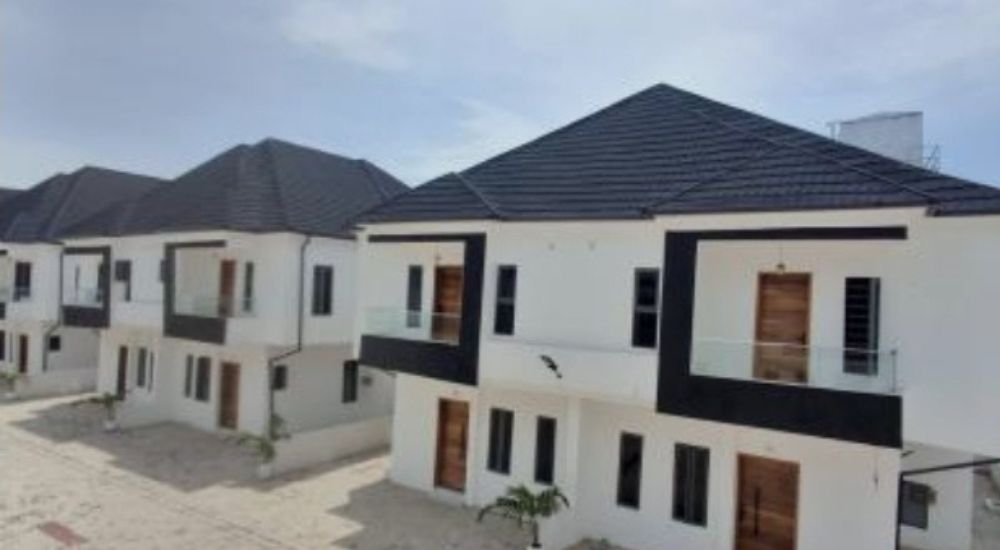
A new report by Fortren & Company has ranked Lagos as the fourth most expensive city for rental housing in Africa, underscoring mounting affordability pressures that are increasingly forcing residents out of prime urban centres.
The report, which examined the “Average Rent of 2-Bedroom Apartments Across Africa’s Most Important Cities,” places Lagos behind Abidjan, Cape Town, and Accra, which occupy the first, second, and third positions respectively. Other cities listed include Douala, Nairobi, Kigali, Dar es Salaam, Cairo, and Casablanca.
According to the findings, the average annual rent for a luxury two-bedroom apartment in Lagos’ high-end neighbourhoods—such as Ikoyi, Banana Island, and Victoria Island—stands at approximately $19,379 (about N26.8m). This compares with significantly higher rental costs in Abidjan at $41,671, Cape Town at $27,813, and Accra at $26,299 for similar properties.
Despite ranking fourth, analysts say the pace and scale of rent increases in Lagos remain among the most severe on the continent, driven by surging demand, constrained housing supply, and macroeconomic pressures.
Over the past two years, rental prices in the city have risen sharply, with industry estimates suggesting increases of between 50 and 200 percent.
Advertisement
Principal Partner at Ubosi Eleh + Co,Chudi Ubosi, noted during a recent housing webinar that the spike in rents has pushed the income-to-rent ratio in Lagos to as high as 70 percent—well above the 30 percent affordability benchmark recommended by the United Nations.
The sharp rise in rental costs is placing considerable strain on household incomes and reshaping living patterns across the city. As rents climb in central districts, many residents are relocating to peripheral areas in search of more affordable accommodation. Even in these outskirts, however, annual rents for standard two-bedroom apartments now range between N1.5 million and N2.5 million, reflecting the widespread nature of the housing crunch.
Market analysts attribute the surge to a combination of structural and economic factors. High inflation, elevated borrowing costs, and soaring prices of construction materials have made homeownership increasingly unattainable for a large segment of the population. As a result, more people are turning to the rental market, intensifying demand and driving up prices.
The report highlights that limited land availability in prime areas, speculative activity, and the impact of currency devaluation have also contributed to rising real estate costs in Lagos. Developers, facing higher input costs and economic uncertainty, have continued to price new developments at premium levels, particularly in high-end districts.
Research Director at Fortren & Company, Martin Uche explained that a significant portion of high-end residential properties in Lagos are priced in U.S. dollars, effectively narrowing the market to a small segment of high-income earners and expatriates.
Advertisement
“High-end residential stock in neighbourhoods like Ikoyi, Victoria Island, and Banana Island are typically dollar-denominated, which compresses the market into a limited socioeconomic band and sustains elevated rental values,” he said.
He further noted that some ultra-luxury developments in Ikoyi, particularly along the Bourdillon, Alexandra, and Gerrard corridors—command annual rents of up to $130,000, highlighting the sharp disparity within the city’s housing market.
Across the broader African market, similar dynamics are playing out in other leading cities. In Cape Town, for instance, rents have risen by nearly 70 percent since 2014, driven by an influx of both domestic and international residents, as well as a shift by landlords toward short-term rental markets catering to tourists.
In Accra, strong economic growth and the presence of multinational corporations, diplomatic missions, and non-governmental organisations have created intense demand for a limited supply of high-end housing. This demand is further amplified by expatriate housing allowances, which are often denominated in foreign currency.
The report also points to structural inefficiencies in Africa’s rental systems as a key factor exacerbating affordability challenges. In many countries, including Nigeria and Ghana, tenants are typically required to pay one to two years’ rent upfront—a practice that significantly raises the financial barrier to securing housing.
According to Uche, this system reflects broader issues such as limited access to credit data and low trust between landlords and tenants, prompting property owners to demand large advance payments as a form of risk mitigation and capital recovery.
Advertisement
While the current market conditions have intensified the housing burden for residents, analysts suggest they also present opportunities for investors, particularly in the development of build-to-let residential units. Demand is especially strong for smaller apartments, such as one- and two-bedroom units, which are increasingly preferred by a growing urban population.
Nevertheless, experts warn that without targeted policy interventions to boost housing supply, improve financing options, and regulate rental practices, the affordability crisis in Lagos could deepen further, with long-term implications for urban development and economic stability.