
ICRC Rolls Out PPP Template To Close $2.3tn Infrastructure Deficit
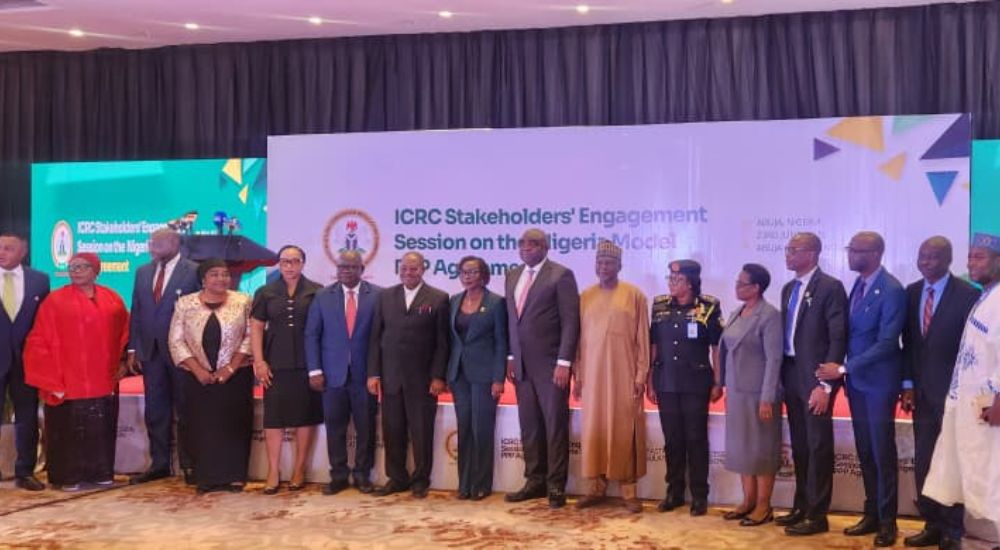
The Infrastructure Concession Regulatory Commission (ICRC) has unveiled a Model Public-Private Partnership (PPP) Agreement aimed at attracting private capital and accelerating infrastructure delivery as Nigeria seeks to bridge an estimated $2.3tn infrastructure deficit.
Director-General and Chief Executive Officer of the Commission, Dr. Oseodion Ewalefoh, disclosed this on Tuesday at a one-day stakeholders’ engagement session on the Model PPP Agreement for Ministries, Departments and Agencies (MDAs) of the Federal Government in Abuja.
According to him, Nigeria would require about $100bn annually over the next two decades to close the infrastructure gap by 2043, a task he said could not be funded solely from government revenues.
He said the administration of President Bola Tinubu had positioned Public-Private Partnerships at the heart of its development strategy under the Renewed Hope Agenda, stressing that mobilising private sector capital, expertise and innovation had become imperative.
“I wish to begin this morning not with a speech, but with a figure: $2.3tn. That is the conservative estimate of Nigeria’s infrastructure deficit today,” Ewalefoh said.
“To close that gap by 2043, Nigeria must mobilise approximately $100bn every year. Government revenue alone, even under the most disciplined fiscal management, cannot bear that weight.”
Advertisement
He noted that for nearly two decades after the enactment of the ICRC Establishment Act in 2005, PPP transactions in Nigeria were negotiated on a project-by-project basis, leading to inconsistencies in risk allocation, dispute resolution mechanisms and contractual provisions.
According to him, the absence of a standard framework resulted in prolonged negotiations, increased transaction costs and reduced investor confidence.
“To address these challenges, the Commission spent almost two years developing a Model PPP Agreement that provides a dependable framework benchmarked against Nigerian laws and global best practices,” he said.
The ICRC boss explained that the model agreement was designed as a reference document rather than a one-size-fits-all template, adding that each project would still require sector-specific structuring and commercial considerations.
He said the framework would enable MDAs to negotiate from a common baseline, thereby shortening the period required to achieve financial close and reducing disputes arising from unclear risk-sharing arrangements.
Advertisement
Ewalefoh stated that the Commission reviewed existing concessions, engaged legal experts, financial advisers and development partners, and sought inputs from investors and lenders before finalising Version 1.0 of the model agreement.
According to him, the document would remain a living instrument subject to periodic reviews in line with evolving laws, project experiences and international best practices.
He identified deliberate risk allocation as one of the major features of the framework, saying risks are assigned to parties best positioned to manage them.
He said the agreement contains provisions on conditions precedent, insurance, force majeure, changes in law, default and termination arrangements.
“The default and termination regime is carefully balanced. It defines defaults applicable to both the concessionaire and the grantor, complete with remedies and compensation formulas. This balance is what lends the agreement credibility with serious investors and lenders,” he said.
Ewalefoh further explained that the framework protects project financiers through direct agreements that provide lenders with cure and step-in rights, enabling them to remedy defaults before project termination.
Advertisement
He added that the dispute resolution mechanism adopts a graduated approach beginning with consultation and negotiation, followed by confidential intervention by the ICRC and arbitration under the Arbitration and Mediation Act, 2023.
According to him, the arrangement is intended to minimise litigation costs and ensure quicker resolution of disputes.
The Director-General also said the agreement provides a robust contract management and performance monitoring framework comprising governance structures, key performance indicators, reporting obligations and periodic reviews.
He stressed that anti-corruption and ethical standards were embedded across the provisions to strengthen transparency and accountability in concession agreements.
Ewalefoh said the framework would strengthen Nigeria’s negotiating position and reassure investors that government institutions operate within a predictable and legally sound environment.
He urged MDAs to engage competent legal, financial and technical advisers while adapting the template to their specific sectors and project requirements.
“Every adapted agreement must be returned to the ICRC for statutory review, not as a bureaucratic hurdle, but as a safeguard for the MDA, the Government and the Nigerian public,” he said.
The ICRC chief noted that standardisation would improve the bankability of projects, lower the cost of capital and facilitate access to alternative sources of infrastructure financing, including pension funds, Sukuk, green bonds and blended finance.
He said Nigeria’s recent removal from the Financial Action Task Force (FATF) grey list had renewed international investor interest, adding that a transparent and predictable PPP framework could convert that interest into long-term capital commitments.
“In global finance, reputation is pricing. This document constitutes reputational infrastructure, every bit as vital as the roads, rail lines and airports it will help finance,” he said.
Ewalefoh charged MDAs to study the agreement closely, provide feedback and champion its adoption across government institutions.
He assured stakeholders that the Commission would continue to provide support to facilitate faster and more efficient project delivery.
Also speaking, Solicitor-General of the Federation and Permanent Secretary, Federal Ministry of Justice, Mrs Beatrice Jedy-Agba, said the Ministry played a critical role in strengthening the legal foundations of the framework.
She said legal experts worked extensively on provisions relating to dispute resolution, sovereign obligations, liability and contractual safeguards to ensure the interests of the Federal Government were adequately protected.
Jedy-Agba called on stakeholders to actively participate in refining the framework, noting that their contributions would help build a more transparent, accountable and investor-friendly PPP ecosystem.
She expressed optimism that the initiative would serve as a cornerstone for future infrastructure development and contribute significantly to Nigeria’s economic growth and prosperity.
The stakeholders’ engagement brought together representatives of MDAs, legal practitioners, financial experts, development partners and private investors to review and validate the framework, which the ICRC described as a key instrument for delivering sustainable infrastructure through stronger collaboration between the public and private sectors.