
If Jonathan Was Wrong To Concede In 2015, Why Should Future Presidents Accept Defeat?
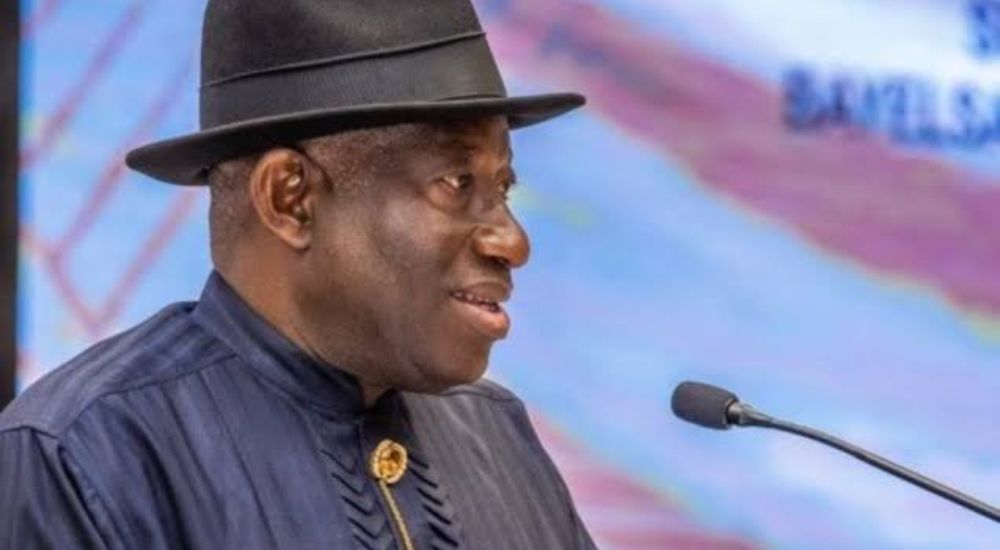
In a recent interview on Arise News, public affairs analyst Dayo Sobowale made a remark that deserves closer attention than the ordinary cycle of television commentary usually receives.
Reflecting on the 2015 presidential election, Sobowale suggested that former President Goodluck Jonathan may have made a grave mistake by conceding defeat to Muhammadu Buhari.
Sobowale stated bluntly: “Jonathan chickened out to Buhari, if he had stuck to his gun as incumbent, maybe he would still be president and maybe we would not have gone through the misery and tragedy of Buhari regime.”
At one level, the sentiment is understandable. Many Nigerians look back on the years after 2015 with frustration, economic exhaustion, and political disillusionment. In periods of national hardship, societies often revisit decisive historical moments and ask whether different choices might have produced different outcomes.
Retrospective political regret is not unusual. But the implications of Sobowale’s argument extend far beyond dissatisfaction with Buhari’s administration.
The deeper question is whether democratic concession should be governed by constitutional principle, or retrospectively judged according to the performance of the government that follows.
Advertisement
That distinction matters enormously, because Sobowale’s criticism is not merely that Jonathan conceded power. It is that the concession became regrettable because the succeeding administration, in his view, governed badly and deepened national suffering.
And that is where the democratic contradiction emerges. If democratic concession can later be condemned because the incoming government performed poorly, then the principle underlying peaceful transfer of power begins to shift dangerously.
Concession ceases to be treated as a constitutional obligation necessary for democratic continuity. It becomes judged in hindsight by the performance of the government that follows. That may appear like a subtle change in reasoning, but it carries profound implications for democratic culture.
Jonathan was the incumbent president in 2015. He lost an election and conceded peacefully. At the time, that decision was widely praised, both within Nigeria and internationally, as an important democratic milestone. It lowered political tension, reduced fears of post-election instability, and strengthened public confidence in the possibility of constitutional transfer of power in a country long haunted by political distrust.
Sobowale now invites Nigerians to reinterpret that moment differently; not as democratic maturity, but as political error, because the succeeding administration later disappointed many citizens. But once concession becomes judged primarily through the lens of subsequent governance performance, democratic restraint itself becomes conditional. And once that principle becomes conditional, the implications become difficult to contain.
Advertisement
Because, if an incumbent may retrospectively regard concession as a national mistake because the succeeding government governed badly, then future incumbents may prospectively feel justified in resisting electoral defeat on the grounds that the opposition could govern even worse. The logic naturally expands beyond the election under discussion.
That is the danger embedded in this kind of reasoning.
Whether intentionally or not, arguments of this nature gradually normalize the belief that concession is wise only when the likely successors are perceived as competent, safe, or politically acceptable. Once that mentality enters political culture, every ruling party acquires a ready justification for treating electoral defeat as negotiable rather than binding.
At that point, democratic legitimacy itself begins to weaken. As a result elections cannot survive as constitutional mechanisms, if incumbents begin assessing whether to concede power based on projected future performance by their opponents. The entire moral foundation of electoral democracy rests on a more difficult principle than that: power must remain transferable peacefully, even when the incoming government may later disappoint, fail, or govern badly.
Without that discipline, democratic stability becomes fragile. Every ruling party will eventually convince itself that national interest requires its continued control of power. Every incumbent will eventually persuade itself that the opposition represents danger. Electoral defeat will begin to feel less like a temporary political loss and more like a national threat requiring resistance.
History shows that democratic erosion rarely begins dramatically. Institutions are often weakened first through gradual shifts in political reasoning. Dangerous precedents are normalized rhetorically before they are normalized institutionally. Citizens slowly become accustomed to arguments suggesting that democratic rules should hold only when the “right” people are likely to benefit from them. That is why political language matters.
Advertisement
When influential analysts begin retrospectively portraying peaceful concession as political naivety, because the succeeding government governed poorly, they may not explicitly advocate future resistance to electoral outcomes. But the democratic implication of such reasoning becomes increasingly difficult to separate from future political behavior, once the logic is generalized beyond a single historical moment.
Because politics does not operate only through direct instruction. Political cultures are shaped through repeated justifications, repeated fears, and repeated exceptions to democratic principle. And in fragile democracies like ours, those exceptions accumulate dangerously.
The implications for 2027, therefore cannot simply be ignored. If Nigerians begin internalizing the belief that Jonathan’s concession became a historic mistake, because Buhari’s government later performed badly, then future incumbents may increasingly persuade themselves that refusing defeat is not democratic subversion, but patriotic caution. Electoral resistance can then be reframed not as personal political survival, but as national protection against an allegedly disastrous opposition.
History across many societies shows how easily that transition occurs. At first, political actors merely argue that the opposition will govern poorly. Then they argue that national suffering justifies extraordinary resistance. Eventually, constitutional restraint itself begins to look naïve, while refusal to relinquish power starts presenting itself as responsibility.
That is how democratic cultures decay long before institutions formally collapse. None of this means governments should be immune from retrospective criticism. Nigerians are fully entitled to debate the consequences of the 2015 election and to judge the record of Buhari’s administration harshly if they choose. Democratic accountability requires honest evaluation of governance outcomes.
But that evaluation must remain separate from the democratic principle governing peaceful transfer of power itself. Otherwise, every concession becomes vulnerable to future reinterpretation based on subsequent disappointment.
Every electoral transition becomes haunted by the possibility that losing parties will later conclude that constitutional restraint was a mistake. And once that mentality takes root deeply enough, elections cease functioning as settled mechanisms for transferring authority peacefully. They instead become provisional arrangements accepted only when political actors feel comfortable with what may come next. No democracy can remain stable under such conditions.
This is ultimately why Sobowale’s comment matters beyond the interview in which it was made.
The issue is no longer simply whether Jonathan should or should not have conceded in 2015. The larger issue is what kind of democratic culture Nigerians are being encouraged to normalize ahead of future elections. A democracy cannot survive if incumbents begin to believe that conceding power becomes optional whenever they fear the opposition may govern badly.
The moment constitutional transfer becomes dependent on projected performance rather than electoral legitimacy, democracy itself becomes conditional. And once democratic legitimacy becomes conditional, democratic decay has already begun.
That is why the argument deserves careful resistance now, before it quietly hardens into political common sense by 2027.