
INTERVIEW: Fakers Using Cassava, Yam Starch To Counterfeit Drugs – Researcher
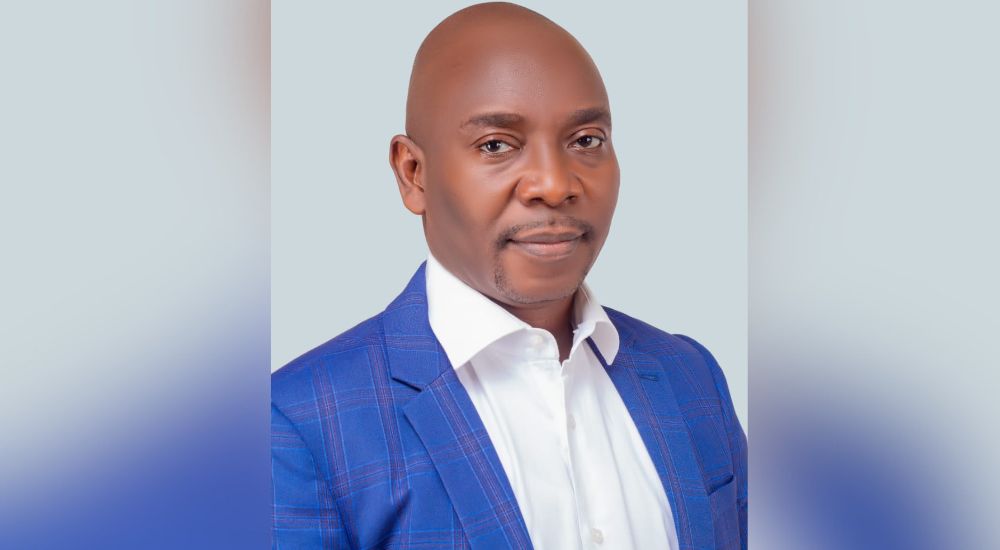
Prof. Sunday Awofisayo is a Professor of Biopharmaceuticals and Clinical Pharmacy at the University of Uyo, and leads the research team at the Bioscientific Research Group, Department of Clinical Pharmacy and Biopharmacy. His work sits at the intersection of drug formulation, biopharmaceutical research, and how Nigerians can tell real medicines from fakes.
In this interview with THE WHISTLER, he spoke on the rise of counterfeit medicines, the role of research funding, and new methods for detecting fake drugs.
Can you explain what biopharmaceuticals are and what your work as a public analyst entails?
Biopharmaceuticals relate to the biological system in our body and health. I am also a Licensed Public Analyst. I analyse food, water, drugs, and cosmetics for their authenticity and quality, whether in drugs or in people’s blood.
You mentioned a research group you lead. What is it about and why is it important?
Research involves people who want to find out how things are, to see whether they can do this or that to take it to where it should be or to make it better. If Nigeria does enough research, we will get to where we are going. China is doing a lot of research. That is why they are surging ahead, and they are leading the world.
Advertisement
The Bioscientific Research Group has lecturers and professionals. We look at problems and how to solve them. We want to first find out how things are, why they are like that, and what we can do to make it better and solve the problem. The research group should be headed by a senior academic, and then other people can join. It gives the direction, it gives the leadership, and that is what I do in that research group.
You are advocating for more research groups in universities. What are the challenges you face?
I am advocating that there should be more research groups in our universities, headed by professors. But unfortunately, people are struggling. There is no money, no support. How do you want them to do research in the first place? There is no support. We need government to support research groups.
In Nigeria now, there is the National Institute for Pharmaceutical Research and Development (NIPRD) in Abuja. That is the major body that is doing pharmaceutical research and development. But it should start from the various universities. The universities have no equipment, no incentives, nothing. The research group I am heading is viable. We have a formula that makes our research group viable.
In all of my faculties, there are only two research groups. In many faculties, there is not a single one. To have a research group, you must find out how to sustain it financially.
Advertisement
How are you sustaining your group financially?
As I said earlier, I am a public analyst. I analyse food, water, and drugs. When people dig their boreholes, they want to be sure that the water is good and okay for consumption. I undertake to help them. I take samples, analyse them, and they pay for it.
We have another group outside of the university with a similar name. That one is called BALSEC. BALSEC is the acronym for Bioscientific Research and Development Limited by Guarantee. It is a Non-Governmental Organisation (NGO).
That NGO is where we do all the business because we cannot use the university to do business. As a consultant and a professor, there is no law that says I cannot do analysis for clients. They do not even pay me. They pay that organisation, which has a managing director and a director. I am a civil servant, and there are rules about such prohibitions.
So BALSEC sponsors any of our activities that need sponsorship. If we apply to our universities, the response is going to be no money, no funding, no provision for what we are asking for. If I want to go to Japan tomorrow, BALSEC will pay. I was recently in Abuja to train pharmacists on simple methods to detect fake drugs. I did not put any burden on my host. They were able to do what they could, but my group took care of the rest. Without that kind of support, we cannot do what we just did.
This is a way we sustain our research. The NGO is building a training centre and we have estimated it will cost N1 billion. We are not asking for money from any politician or anybody. It is the businesses we are doing that will generate that money. We also organise trainings online. There were persons from Cameroon and from Ghana on that training. They paid N25,000 to be on that platform. That is part of the money we put together to achieve our goal.
Advertisement
You were in Abuja for the training of pharmacists on how to detect fake drugs. What kind of impact are you hoping for?
I am hoping that the Minister of Health can see what we are talking about here, and then sign that this training should happen in all the 36 states, and the government will support it. That would help. NAFDAC alone cannot fight this menace of fake drugs. If they train pharmacists to know how to detect them, it will go a long way to stop the issue.
All I am asking for is a breakthrough. If the Minister of Health can use his red biro and sign that all the teaching hospitals and all the states participate in the training, it will help a great deal.
Can you explain this method you use to detect fake drugs?
The method for detecting fake drugs is very simple. It is something you can do even if you are not a professional pharmacist. If you have a tablet and you are suspecting it, you can remove one tablet and crush it into powder. I have published a book called Test and Stock Skills. The book gives you one, two, three steps. If you have one millilitre of water, put it in a test tube and add one drop of a chemical. It will turn pink to show that the drug is there. If it does not turn pink, that drug is not there. That means you are actually swallowing starch or powder all this while.
Some fakers buy cassava starch or yam starch. That is not costly. What is costly is the active drug. One drum can be N29m. You may need 30 of those drums to produce drugs for Abuja for just one week. If you needed to cater for Abuja for one month, you need 30 times 4, which is 120 drums. Multiply by N29m for each drum. Some fellows do not even put starch. They just produce starch only and still sell it as if they have put the active drug in it. They spend money to get artists to do a very fine design, reduce the price a little, and sell to pharmacists. Pharmacists only look at the outer carton. The outer carton is not what we are talking about. We are talking about what is inside. Some persons are underground, dead and buried due to fake drugs. The best consultant may have given them a good diagnosis and written the best drug, but when they went to buy, they now bought fake drugs.
NAFDAC approves the first consignment of a drug and gives it a NAFDAC number. Subsequently, some producers start to make fake drugs. Sometimes they do not maintain the first quality. They copy the same shape and everything, but it is empty. NAFDAC cannot monitor all of that. Since they are selling to us, pharmacists, and we keep buying, then we need to keep checking to be sure that we are protecting our clients.
Is this the first time you are doing this training? And can non-pharmacists learn it too?
This is the first training for this method. Nigerians who want to learn can buy the book. Because some Nigerians are not science-inclined, I have written a proposal for N15m to TETFund. I want to impregnate the chemicals onto paper, like a pregnancy test strip. We will label them, for example, as paracetamol paper, diclofenac paper, etc. If you are selling diclofenac to any pharmacy, you should let that paper be inside. Instead of making it 10 tablets, make it 11, so that person can remove one to test. It becomes very difficult for a faker to fake the tablet or the paper. If a non-professional buys a drug, he can remove one tablet, follow the simple step, and put it in. It is not done anywhere in the world. It will be the first in Nigeria. I am hoping that they will accept the proposal because it will save a lot of people.
Apart from fake drugs, what other public health problems is your group working on?
We are also tackling other public health issues. We just finished a training this evening from 5 to 6 p.m. on medication error, protocols, and prevention. One out of ten people who go to the hospital globally dies from medication error issues. A doctor may write 10 milligrammes and the nurse injects 100 milligrammes. A nurse may give the same injection twice without documenting it. There may be three Mr. Johns on a male ward, and the drug for Mr. John A is given to Mr. John B. All those are errors: communication errors and system errors. We are talking about that from now till the end of August. Participants will take an exam and we will issue them a certificate of participation or certificate of proficiency.
My course mate’s wife died last year. She had cancer but she was fine. She went to the hospital and complained of pain. When they were going to give her morphine, they gave her an overdose. She could not breathe. When they write the cause of death, they say death secondary to cancer. That is not death secondary to cancer. That is death secondary to an overdose of a medication. That is also a public health problem. We are currently training people on that.
Medication error happens in America and in the developed world, but it is not as frequent as we have in Nigeria. In Nigeria, they do not tell you that you are the cause of that death. If you do not own up to your mistake, you are likely to do it again. Doctors write illegibly. They may be writing aminophylline and the person giving the injection thinks it is amitriptyline. In the developed world, they are not using hands to write again. It is a computer or typewriter, so everything is clear. Patients also have the right to know the name of any tablet they are collecting from a doctor.
What prompted you to start this research group?
As a pharmacist and a lecturer, we have to do research. We have to make things better and see how to do things in a new way to get better results. If you are doing things the old way, you are still going to get the same results and you are not going to make progress. Research always leads to development. Nigeria is not doing research. China is doing research and they are moving to the next level steadily. So Nigeria should do research. That is what prompted us.
What are your plans for the group in the next five years?
In the next five years, the plan for the group is to build a training centre where 100 people will come and live there for one month and be trained on many things.