
Pharmacists Tackle Fake Drug Menace With New Detection Skills
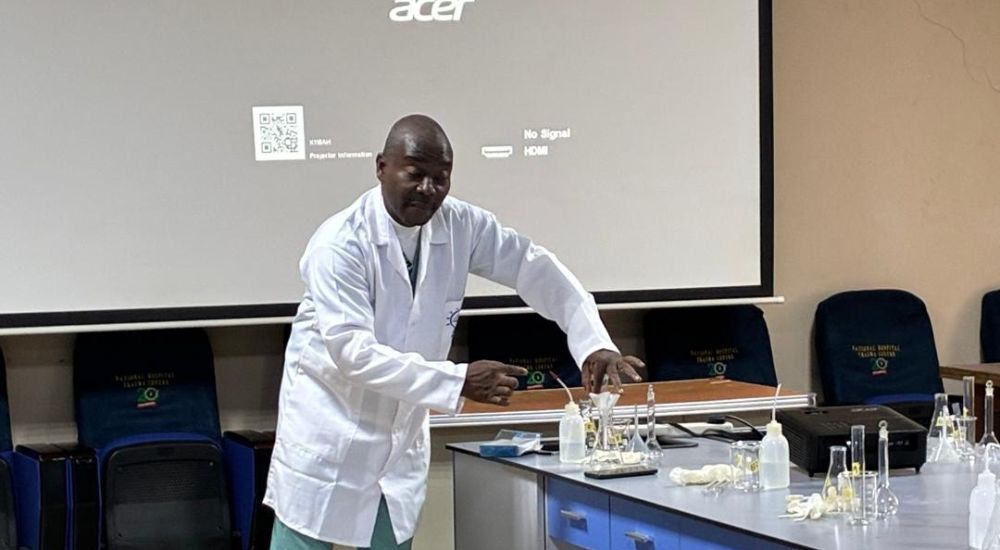
Pharmacists from the Federal Capital Territory, Niger and Nasarawa states have intensified efforts to combat the growing menace of counterfeit medicines in Nigeria through a hands-on capacity-building workshop aimed at equipping practitioners with skills to detect and isolate suspected fake drugs before they reach patients.
The workshop, titled “Test and Stock for Medicines Against Counterfeiting”, was organised by the West African Postgraduate College of Pharmacists (WAPCP), Abuja Branch, in collaboration with the Bioscientific Research Group of the Department of Clinical Pharmacy and Biopharmacy, University of Uyo.
Speaking at the event, Prof. Sunday Awofisayo, Professor of Biopharmaceuticals and Clinical Pharmacy at the University of Uyo and principal researcher of the Bioscientific Research Group, said pharmacists must take a more active role in assuring the quality of medicines dispensed to Nigerians.
He said pharmacists are recognised as drug experts and should be able to assure patients that medicines contain the active ingredients stated on their labels.
According to him, counterfeit, falsified and substandard medicines can lead to treatment failure, prolonged illness, organ damage and even cancer when harmful substances are substituted for genuine ingredients.
Advertisement
Awofisayo said pharmacists should begin implementing simple drug assurance systems within their facilities by sampling and testing suspicious medicines before dispensing them and referring questionable products to the National Agency for Food and Drug Administration and Control (NAFDAC) for further investigation.
“If the quality is not there from the beginning, no matter how good the consultant or specialist is, treatment outcomes will be compromised,” he said.
He noted that the workshop was designed to refresh knowledge acquired during professional training and provide practical skills in detecting counterfeit medicines through basic laboratory procedures, including colourimetric testing and thin-layer chromatography.
Also speaking, the Zonal Coordinator of WAPCP, FCT Zone, Dr. Tijani Mufutau, described counterfeit medicines as a major threat to public health, saying pharmacists have a responsibility to verify the authenticity of medicines before they are supplied to patients.
He said fake medicines contribute to therapeutic failure, organ damage, death and increased healthcare costs due to prolonged hospital stays and additional treatments.
Advertisement
Mufutau stressed the importance of continuous training and retraining of pharmacists to ensure they remain updated on methods of identifying and preventing the circulation of counterfeit drugs.
Workshop lead and immediate past Zonal Coordinator of WAPCP Abuja Zone, Dr. Abubakar Danraka, said the training formed part of efforts by pharmacists to complement existing strategies aimed at reducing the circulation of counterfeit medicines.
He explained that the programme focused on empowering pharmacists with practical skills that can be deployed immediately without reliance on expensive laboratory equipment.
Danraka said participants were being trained to use basic tools and techniques capable of identifying medicines that require further confirmatory testing by regulatory authorities.
He noted that the high cost of sophisticated quality assessment equipment had limited medicine testing in many health institutions, adding that the initiative sought to bridge that gap.
According to him, strengthening NAFDAC and other relevant institutions through increased funding and support would help scale up such interventions across the country.
Advertisement
Former National Chairman of the Association of Community Pharmacists of Nigeria, Dr. Albert Alkali, described falsified medicines as one of the biggest challenges facing the country’s healthcare system.
He said patients could suffer severe health complications, including kidney, liver and heart damage, from consuming counterfeit medicines.
Alkali urged Nigerians to obtain medicines only from registered pharmacies and seek professional guidance from pharmacists when purchasing drugs.
Participants at the workshop also called for stronger regulation, stricter enforcement of existing laws and increased local pharmaceutical manufacturing to reduce dependence on imported medicines and improve quality control.
Also speaking, Pharm. Rahma Issa Deputy Head Jummai Babangida Aliyu Maternity and Neonatal Hospital, Minna, said widespread circulation of counterfeit medicines was undermining treatment outcomes and negatively affecting both household and national economies.
She advocated increased support for local drug manufacturing and stronger enforcement measures against offenders.
Similarly, the Head of Pharmacy at the National Hospital Abuja, Pharmacist Clara Adesola, said pharmacists attending the workshop would transfer the knowledge acquired to colleagues in their respective institutions to widen the impact of the training.
She noted that drug source verification, visual inspection and the use of NAFDAC registration checks remained important measures for reducing the risk of counterfeit medicines entering health facilities.
Participants agreed that strengthening pharmacists’ capacity to identify suspicious medicines before stocking them would significantly reduce the circulation of counterfeit products and improve patient safety across the country.