
NEMA Begins Preparations For 2026 Floods
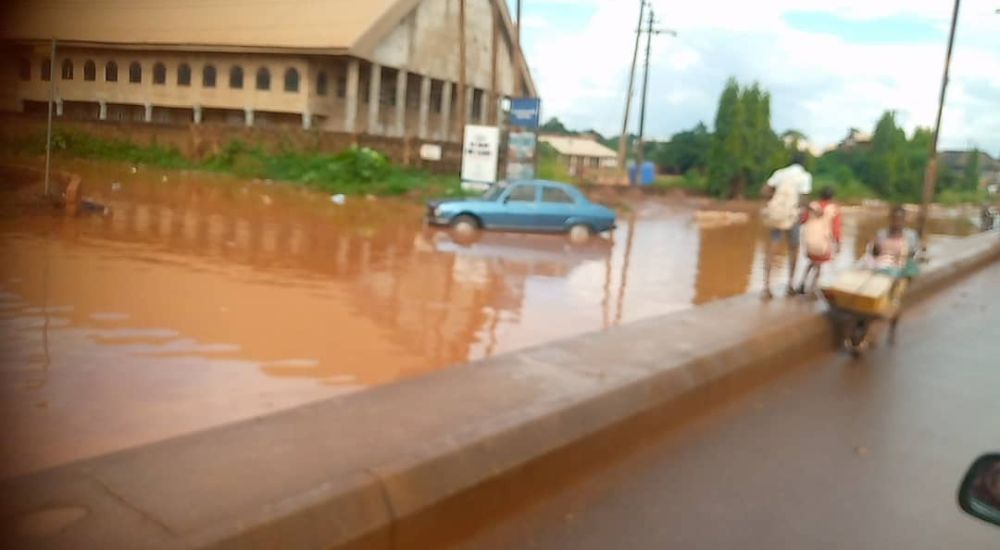
The National Emergency Management Agency (NEMA) has convened a technical session to analyse the 2026 Seasonal Climate Prediction (SCP).
This is part of its renewed strategy to shift Nigeria’s disaster management from reactive response to proactive preparedness.
The meeting was held in collaboration with the Emergency Coordination Forum (ECF) and also featured the presentation of the 2025 After-Action Review (AAR). It described AAR as a roadmap designed to bridge the gap between scientific data and field-level implementation.
In her opening remarks, the Director-General of NEMA, Mrs Zubaida Umar, drew attention to the 2026 rainfall and temperature projections released by the Nigerian Meteorological Agency (NiMet). Umar said that the NiMet projections must serve as vital decision-making tools for all levels of government.
“The theme of this meeting is “strengthening multisectoral preparedness and early action for climate-related disasters in Nigeria. It underscores the importance of timely, coordinated, and evidence-based action,” Umar said.
She said that recent years had exposed systemic gaps in coordination, particularly regarding flood variability which continues to threaten lives, infrastructure, and national development.
Advertisement
“Preparedness must be proactive, not reactive. The effectiveness of our collective response will depend on the actions we take following this meeting,” she said.
Providing a comparative analysis of past disasters, Mr Dapo Akingboade, Assistant Director of Planning at NEMA, revealed a sharp decline in the impact of flooding in 2025 compared to the devastating 2024 season. According to data presented during the AAR, the number of persons affected dropped from over five million in 2024 to approximately 500,000 in 2025.
“Similarly, fatalities decreased from over 1,000 in 2024 to 241 in 2025.”
He said that in 2025, 27 states were affected by flooding compared to 35 in 2024, while fatalities dropped from over 1,000 to 241.
Akingboade credited the progress to early dissemination of forecasts, community awareness campaigns, simulation exercises, and proactive coordination by agencies.
Advertisement
“Early warnings issued by NiMet and the Nigeria Hydrological Services Agency (NIHSA, coupled with improved coordination at NEMA’s operations centre, helped reduce casualties and losses,” he said.
He, however, said that challenges persisted in drainage maintenance, delayed evacuation from high-risk zones, and incomplete early warning system coverage in some rural areas.
He called for stronger state-level contingency planning, operationalisation of existing disaster-response frameworks, and inclusion of local languages and traditional leaders in awareness campaigns.
“Our progress in 2025 shows what is possible when forecasts are linked to action. We must now build on these lessons to strengthen preparedness in 2026,” he said.
NiMet’s Assistant Chief Meteorologist, Abubakar Sadiq, presented the 2026 SCP. Sadiq said that the climate for the year would be influenced by a transition from a “weak La Niña” to a “neutral phase” in the Pacific sea surface temperatures.
He said that NiMet’s rainfall predictions had reached an accuracy level of 74 per cent, and the agency is working to make forecasts even more objective through automated scripts. He also said that recent unusual weather in the FCT was due to “extra-tropical features” rather than standard seasonal patterns.
Advertisement
Representatives of various technical and humanitarian partners pledged their support for the 2026 cycle.
Mr John Gbadegesin, representing the Director-General of the Nigeria Hydrological Services Agency (NIHSA), said that the 2026 Annual Flood Outlook (AFO) was scheduled for release on April 15. He said that the agency had improved its forecasting accuracy, which has significantly reduced the socio-economic costs of flooding.
The Disaster Management Coordinator for the Nigerian Red Cross Society, Mr Timothy Yohana, said that the organisation was ready to deploy its 800,000 volunteers across the country to support NEMA’s grassroots early warning efforts.
Brig.-Gen. Julius Ogbobe, Deputy Director of Search and Rescue at the Defence Headquarters, also reaffirmed the military’s commitment to harmonising rescue operations with NEMA to ensure a more efficient national response.