
Oil, Gas Won’t Become Irrelevant Soon, Says FG
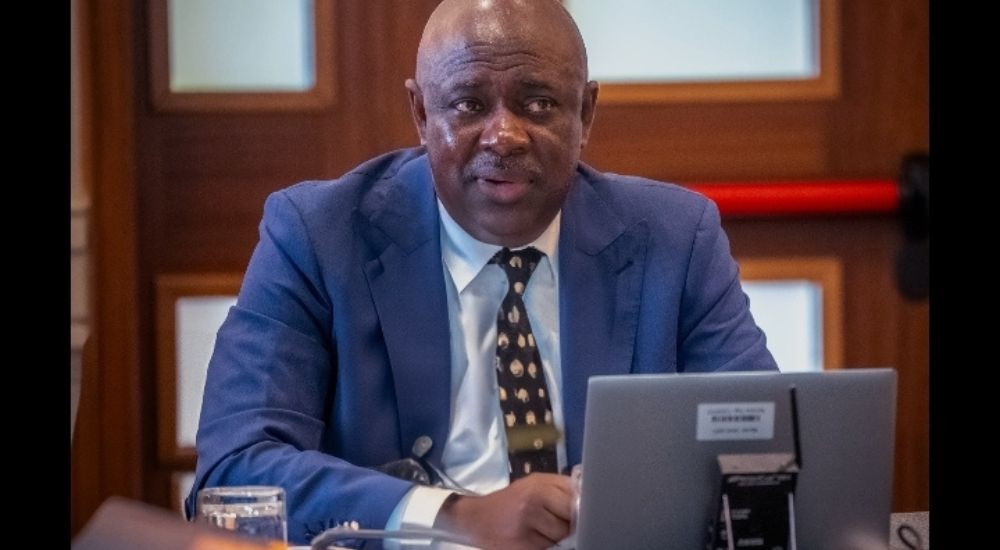
The Federal Government has said oil and gas will remain dominant in the global energy mix for the foreseeable future despite the ongoing transition to cleaner sources of energy.
The government also urged Nigeria to leverage its strategic position in the global energy market to attract more investment, expand refining capacity and strengthen its role in Africa’s energy sector.
Speaking at the second West African Refined Oil Market Conference in Abuja, the Minister of State for Oil, Heineken Lokpobiri said available data from international organisations showed that oil and gas would continue to play a dominant role in meeting global energy demand.
He said concerns about the energy transition should not discourage investment in Nigeria’s oil and gas industry, stressing that the country remained critical to global energy security.
“Oil and gas will still be the most dominant source of energy,” he said.
Advertisement
The minister Nigeria had taken bold decisions to reform the petroleum sector and unlock opportunities across the upstream, midstream and downstream segments.
He urged stakeholders to sustain the reform momentum and restore the confidence of global investors in Nigeria’s energy industry.
According to him, the country must attract capital not only into crude oil production but also into refining and other midstream and downstream activities.
He said Nigeria could no longer afford to export crude oil without adding value, noting that increased domestic refining capacity could enable the country to capture a larger share of the African petroleum products market.
He said the country’s refining expansion presented an opportunity for Nigeria to strengthen its position as a regional energy hub and contribute more significantly to Africa’s energy security.
Advertisement
He also called for stronger cooperation among African countries and regulators, saying regional integration was essential to unlocking the full potential of the continent’s energy market.
The CBN Governor, Olayemi Cardoso, in a goodwill message delivered on his behalf at the conference, said deeper regional integration of refined petroleum markets could generate significant opportunities for the financial sector and wider African economy.
Cardoso who was represented by
Emem Usoro. Deputy Governor, Operations, said harmonised regulations, transparent and fair pricing, efficient cross-border trade and innovative financial solutions were necessary to create a sustainable regional refined petroleum market.
He said fragmented national approaches would not deliver the level of integration required to build a resilient West African energy market.
According to him, a transparent, integrated and well-functioning regional refined products market could facilitate the mobilisation of long-term capital for refineries, storage facilities, transportation networks and other critical infrastructure.
Cardoso said such developments could strengthen bank assets, stimulate capital markets, improve foreign exchange efficiency, deepen intra-African trade and boost investor confidence across the region.
Advertisement
“The Central Bank of Nigeria is therefore a vital stakeholder in our discussion today because we recognise the importance of a strong, transparent and investment-ready energy market for sustainable economic growth and regional prosperity,” he said.
Also speaking, the Commission Chief Executive of the Nigerian Upstream Petroleum Regulatory Commission, Oritsemeyiwa Eyesan, said the Nigerian oil and gas industry was undergoing significant transformation across the value chain.
Eyesan said the country was witnessing a spike in refining capacity, with Nigeria increasingly moving from meeting domestic refining needs to exporting refined petroleum products.
“We are seeing Nigeria not only meet its refining needs, but attempt to also export. That is unprecedented,” he said.
She added that crude oil production was also increasing, with Nigeria now able to exceed the production benchmark set for it by OPEC.
According to her, the developments across the upstream, midstream and downstream sectors made it necessary to close the loop by developing an integrated West African crude and refined petroleum products market.
Eyesan said stakeholders at the conference would discuss and align on a West African pricing system, stressing that regional integration was no longer optional.
“The West African market must be integrated. We can no longer afford to operate in silos,” she said.
She called for an integrated system linking the various segments of the petroleum value chain across West Africa, as well as greater harmonisation of regulatory frameworks.
Eyesan also identified infrastructure as critical to achieving regional energy integration, urging governments and industry players to develop the infrastructure, markets and systems required to support cross-border trade.
“We must build appropriate infrastructure across the value chain. We must build a ready market, ready systems, industries across the value chain. It’s no longer isolated. It’s no longer individualistic,” she said.
She expressed optimism that the conference would produce practical solutions for integrating the region’s energy markets, adding that stakeholders needed to move beyond discussions to implementation.
“It’s not about talk, talk, talk. We just have to do it, and I think we have all it takes to ensure that we get it done,” Eyesan said.
The conference brought together regulators, financial institutions, investors and other industry stakeholders to deliberate on strategies for developing an integrated and resilient West African refined petroleum products market.