
Tarrrif Hike: Lecturers, Students Groan As Universities Ration Electricity To Reduce Cost

…Our Electricity Bill Has Ballooned From N30m To N100m – Bayero Varsity
…Unilag Reduces Electricity Supply To Hostels By 12 Hours
… Electricity Supply In Our Hostels Is Between 8pm To 11pm Daily – Uniport Students
The recent hike in electricity tariffs imposed by electricity Distribution Companies (DisCos) is severely impacting academic activities and other operations of both public and private universities across Nigeria, investigations by THE WHISTLER have shown.
The Nigerian Electricity Regulatory Commission had in April announced a new tariff hike of N225 per kilowatt hour for customers on Band A. This represents about 241 per cent increment in the rate. Customers on Band A are those who enjoy 20 hours and above electricity supply daily.
However, the tariff was later slashed from N225/kwh to N206.80/kwh in May, with power Distribution Companies (DisCos) maintaining that tariff for Bands B, C, D, and E remained unchanged. These categories of customers pay about N68/kwh.
Advertisement
The high electricity tariff has sparked concerns over the sustainability of quality education in the country.
The President of the Academic Staff Union of Universities (ASUU), Prof. Emmanuel Osodeke, for instance, had warned that most Nigerian universities were on the verge of shutting down over the unbearable cost of electricity.
The ASUU president said while public universities received N15m monthly from the Federal Government as running costs, the electricity bills of some universities run into between N200m to N300m monthly.
He noted that the classification of electricity consumers into bands had increased the costs of most universities, adding that the rise in electricity cost was hampering the administration of most public universities in the country.
Also, recently, the Vice Chancellor of Elizade University, Prof. Kayode Ijadunola, warned that the high cost of electricity supply to universities in Nigeria might lead to the collapse of the nation’s university system in 2025.
Advertisement
The VC said the cost of energy in the country’s tertiary institutions had tripled in the last few months, noting that the situation was threatening the survival of the university system.
Ijadunola stated that the transition to the Band A electricity billing system introduced by the DisCos was the greatest challenge currently facing most institutions of higher learning in the country.
The VC said despite the fact that the monthly bills had become largely unaffordable, power supplies to the universities had remained irregular while most of the institutions still depended on diesel-powered electrical generators to provide backup power supply at very exorbitant costs.
“The cost of power threatens the survival of the university system in 2025 if the current challenge remains unaddressed by the relevant authorities of the government,” he said.
UNILAG Rations Electricity Amid High Tariff Charges
Advertisement
Amid these challenges, Nigerian universities are looking for alternative ways to cope with the situation.
The University of Lagos has adopted the “rationing” of power supply in order to reduce electricity consumption in the school.
UNILAG is currently on Band A. The upgrade of the school from Band B to Band A has resulted in a hike in monthly electricity bill.
Before the upgrade to Band A, the university’s monthly electricity bill ranged between N150m and N180m.
However, it nearly doubled in June, reaching close to N300m. This has been challenging for the school to cope with.
In late August, the university was plunged into darkness by the Eko Electricity Distribution Company (EKEDC) over outstanding debt.
According to the UNILAG management, the disconnection of electricity supply came after the institution had paid the EKEDC N180m for the month of July.
Findings by THE WHISTLER show that power is switched off in hostels from 9am to 6pm, and switched on from 6pm to 9am daily.
“It started before the undergraduate students went on break,” a postgraduate student, who gave her name as Chidiogo told THE WHISTLER when asked about the start of electricity rationing.
The university resumed its first semester on October 28, but undergraduate students have been asked to remain at home, attending classes online rather than in person. THE WHISTLER gathered that this arrangement is due to ongoing renovations in the university’s hostels.
A student, Femi Aina, said he learnt students will resume physically by January 2025.
However, another student who identified herself as Deborah Adegoke said there was no specific date given for physical resumption of classes.
“I don’t know how long the online classes will last,” said Adegoke, with her laptop on her lap and an ear pod in her left ear, as she prepared to log in for an online Zoom class.
There are insinuations that the decision to have undergraduate students remain at home for online lectures may be a cost-cutting measure to reduce electricity expenses.
Speaking with THE WHISTLER, the university’s Head, Communication Unit, Adejoke Alaga-Ibraheem, said the school was reconnected within four days after EKEDC disconnected electricity supply to the institution.
According to her, UNILAG has accumulated close to N1bn as a result of high electricity charges.
Alaga-Ibraheem also confirmed rationing of electricity in the school, adding that the university had adopted several measures to cut electricity costs.
“We ration electricity, reduce wastage, and are expanding our alternative power sources,” she stated.
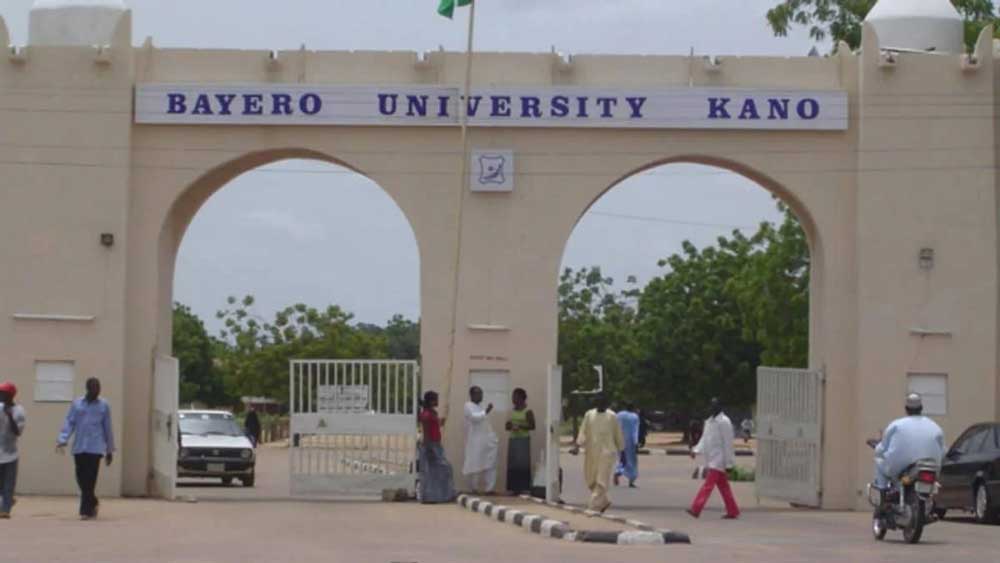
Bayero University, Kano Adopts Same ‘Rationing’ Measure
Head of Directorate of Public Affairs, Bayero University, Kano (BUK), Mr Lamara Garba, while speaking with THE WHISTLER lamented the huge amount the institution paid to The Kano Electricity Distribution Company (KEDCO) for electricity.
“Prior to the increase, the university was paying like N20 to 30m in a month but now, we are paying from N60m up to N100m at some point.
“What the university is spending on electricity is too high and the power supply is not even up to 24 hours,” he lamented.
Garba also lamented that the cost of diesel had skyrocketed from N8m for a 40,000-liter truckload in 2020 to a staggering N80m this year.
He revealed that the school had implemented ‘load shedding’ measures to manage power consumption and mitigate the impact of the electricity tariff hike.
“In the morning, power is supplied to the academic area and the admin block.
“When we close the office, they supply the student hostel from 7pm to midnight. In the residential quarters, they give us electricity from 10pm till around 3am. Then, in the morning, around 6am, they return the light for two hours so that people will be able to fetch water. Then, by 8am, they take the light. That’s how the load shedding is being done,” he said.
Garba disclosed that the school was exploring alternative energy sources, particularly solar power, to alleviate the financial burden of rising electricity costs.
“The option we are trying is solar energy. However, it is also capital intensive. We are trying to decentralise where each faculty and unit will have their own. The challenge is funding. The management has been trying to contact some organisations that can help. We can’t rely on the government alone,” he said.
University Of Port Harcourt Students Decry Irregular Power Supply
Students of the University of Port Harcourt (UniPort) expressed frustration over the irregular power supply in the institution’s hostels.
The students, who spoke to THE WHISTLER, described the power supply as unpredictable and rationed.
Nina Oris, a student in the Department of History and Diplomatic Studies, said, “The power supply varies. Sometimes they bring light in the night by 8pm, and sometimes they leave it till the next day. But what’s normal is from 8pm till 11 pm, then they take it off. They can still bring it sometimes by 5am and keep it till 8am.”
Ogola Omosan, another student, corroborated Oris’s statement, saying, “When school is in session, the light is predictable. They bring it around 7pm and take it off by 12 or 1 am. But now that school is not in session, the light is unpredictable.”
Paschal Chuks, another student, added, “We usually don’t have 24-hour light. It’s not stable for a whole day. They give us light in the morning for a particular time, maybe till 8 or 9, then they take it and bring it in the afternoon.”
The students lamented that the power supply had been disconnected from some hostels since the exam period ended.
“There has been no light in the Mandela hostel, except for Aluta House, Block C,” Omosan said.
The students attributed the disconnection to the university’s directive for students to go home after the exam period. However, many students have chosen to stay on campus due to the proximity of the next semester’s resumption.
“We were told to go home, but some of us live far away, in Lagos, Abuja, or across the country. Going home now would be an extra expense,” Oris explained.
The university’s management has not commented on the power supply issue.
The irregular power supply has affected students’ ability to charge their phones and other essential devices, making life on campus challenging.
As the students await the resumption of the new semester, they hope that the power supply issue will be addressed to ensure a conducive learning environment.
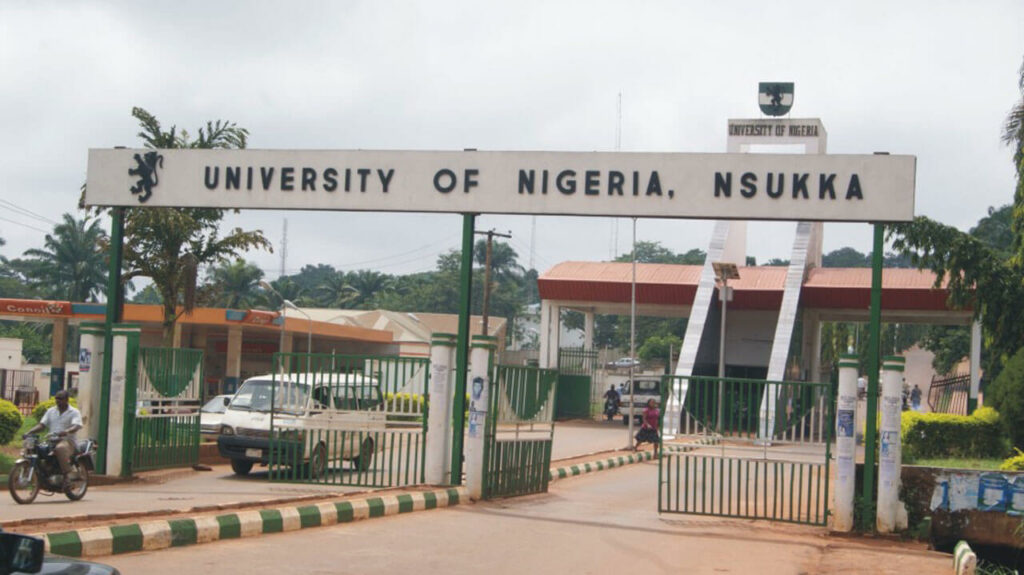
Electricity Restored To UNN After Five Months Of Outtage
Meanwhile, electricity supply was Thursday restored to the University of Nigeria, Nsukka, after over five months of power outage. The restoration of the electricity supply had come while THE WHISTLER was conducting a report on the continued blackout in the university.
Hitherto, students and staff members had endured the pains of heat and added costs in self-maintenance, including pressing their clothes, charging their phones and printing documents with higher charges.
“It was a terrible situation,” declared Emmanuel Ezim of the Faculty of Biological Sciences. “Most of us resorted to charging our phones at beer palours and barbers’ shops. It was a terrible experience.”
A lecturer in the Department of Archaeology, who elected not to be mentioned, said, “It was among the worst moments of this university. We couldn’t stay in offices because of heat. Most lecturers would teach and retire to the Senior Staff Club where we have provisions for solar. Most of the time, spaces to even plug phones to charge would be occupied. It implied that people went there to charge their phones and laptops.”
The worst affected were hostels. “We couldn’t have access to regular water supply,” said a female cleaner, Philomena Eya. “We were carrying buckets of water upstairs to clean the hostels and the terribly messed-up toilets. We are happy that power supply has been restored.”
THE WHISTLER gathered that the managers of electricity distribution in the state, Enugu Electricity Distribution Company, had disconnected the university due to backlogs of unpaid electricity bills running into millions of naira. The acting VC had requested the disconnection of the power supply, and resorted to power supply using generators.
“A lot was spent buying diesel,” John Ogbu, a worker at the Works Unit of the university, said. “Power supply was being rationed among key offices so administration of the institution would not collapse. We are happy that the power supply is eventually restored.”
THE WHISTLER probed into the earlier claims of the university being able to generate electricity using waste materials. A letter written to the VC for explanation was never attended to. However, a source within the VC’s office stated, “That was stated by the Department of Electrical Engineering of the university. It died with the then HOD, I guess.”
Power restoration to the university was announced by UNN’s Public Relations Officer, Dr Okwun Omeaku.
According to him, “The unwavering commitment of the Acting Vice-Chancellor, Prof. Polycarp Emeka Chigbu, to restore electricity supply at Nsukka campus has produced results.
” Electricity from the national grid was reinstated to Nsukka campus yesterday after the VC led a high-powered delegation to meet with the top management of EEDC/Main Power Distribution Company.
“Prof Chigbu expresses gratitude to the UNN’s staff and students, especially those at Nsukka campus, for their patience and understanding during the period when the university struggled to provide limited internal electricity.
“He urged members of the university community to show responsibility in their electricity usage by switching off electrical devices and lights that are not in active use.
“While the university administration will strive to maintain electricity supply for the university community, it is imperative for both staff and students to assist in minimising the institution’s energy consumption to its lowest feasible level.”
Power Sector Intervention Coming, Says FG
Two months ago, the Federal Government announced the approval of a 50 per cent electricity subsidy for all public hospitals and public tertiary institutions; including universities, polytechnics, and colleges of education across the country.
The then Minister of State for Health, Dr. Tunji Alausa, had disclosed that soon, hospitals and the public education system would be enjoying significant reductions in prices as the implementation plans and strategies were being developed by the Minister of Energy.
“President Bola Ahmed Tinubu has magnanimously approved 50 per cent electricity subsidy to all public hospitals and education system; universities, polytechnics and colleges of education. It has been approved,” he announced.
Institutions who spoke with THE WHISTLER appealed to the government to expedite the promised intervention, stressing that its implementation can’t come soon enough to alleviate the crippling electricity burden.
“It will be a welcome development because there are places in the university that need constant power supply.
“Places like the cadaver laboratory where bodies are kept for experiment by medical students need 24 hours of power so that the bodies will not decompose. Also, there are other laboratories which must be in a certain temperature,” Garba, BUK Spokesperson said.
Reporting by Chinedu AROH, Chika MEFOR-NWACHUKWU, Ikenna OMEJE, Nelson OBINNA