
WHO Declares Global Emergency Over Ebola Outbreak In Congo, Uganda
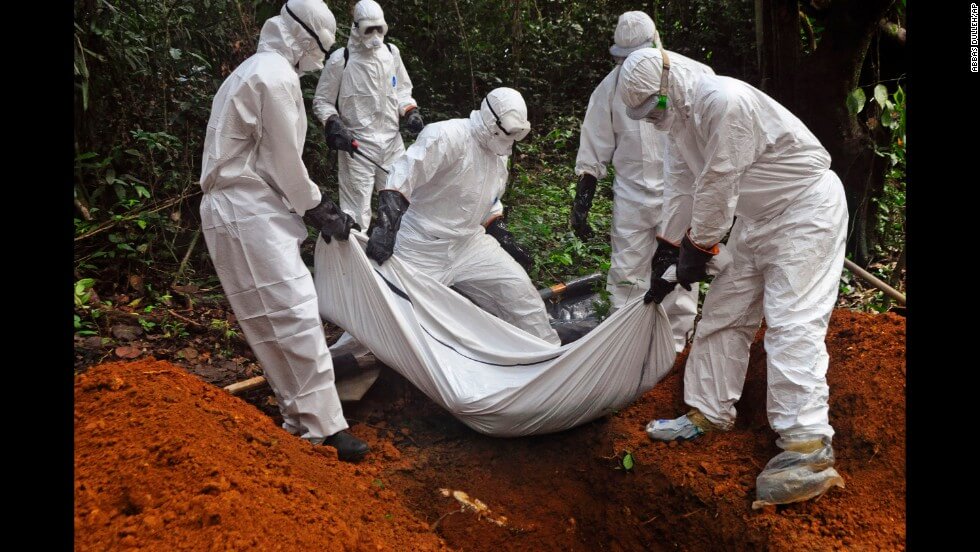
The World Health Organization has declared the Ebola outbreak in the Democratic Republic of Congo and Uganda a Public Health Emergency of International Concern ( PHEIC ), its highest level of alert, following a rapid surge in cases and deaths that has alarmed global health authorities.
WHO Director-General Tedros Adhanom Ghebreyesus announced this on Sunday after more than 336 suspected cases and 88 deaths were recorded.
The outbreak was officially confirmed on Friday.
Tedros said, “There are significant uncertainties to the true number of infected persons and geographic spread associated with this event at the present time.
“In addition, there is limited understanding of the epidemiological links with known or suspected cases.”
The WHO further warned that the high percentage of positive cases among tested samples, the spread to Kampala, and clusters of deaths across Ituri province all “point towards a potentially much larger outbreak than what is currently being detected and reported, with significant local and regional risk of spread.”
Advertisement
Health authorities have confirmed the outbreak was caused by the Bundibugyo virus, a rare variant of Ebola for which there are currently no approved vaccines or treatments.
First identified in Uganda in 2007, the Bundibugyo strain has only been recorded in three outbreaks in history, leaving scientists and health workers with limited experience responding to it.
The DRC accounts for the majority of cases, with the epicentre in the eastern Ituri Province, a high-traffic mining region bordering both Uganda and South Sudan. The suspected index case is a nurse who died at a hospital in Bunia on April 24.
Africa CDC Director-General Dr. Jean Kaseya described how one of the cases crossed into Uganda, saying the man “came from DRC, landed in Uganda, went to hospital. He was sick in this community and he was surrounded by a number of people. He took public transportation to Uganda.”
The patient later died at a Kampala hospital, and his body was transported back to Congo for burial. Kaseya acknowledged that slow detection had given the outbreak critical time to spread.
Advertisement
Two confirmed cases with no apparent links to each other have been reported in Kampala, both involving patients who had travelled from the DRC. A further confirmed case has also emerged in Kinshasa, the DRC’s own capital, roughly 620 miles from the epicentre in Ituri, raising fears that the virus is moving well beyond the original outbreak zone.
The WHO described the overall situation as “extraordinary,” citing the combination of rapid geographic spread, deep uncertainty over the true scale of infections and the heightened risk of amplification in fragile health systems.
Despite the declaration, Tedros stressed the situation “does not meet the criteria of pandemic emergency”. WHO advised strongly against border closures or travel restrictions, saying such measures “have no basis in science” and risk pushing movement into unmonitored routes and making contact tracing harder.
The agency urged governments to activate national emergency mechanisms and strengthen cross-border screening.
Kenya, on Saturday, said it faces only a moderate risk of importation but has already assembled an Ebola preparedness team and reinforced surveillance at all points of entry.