
Fourth Mainland Bridge Stalls Despite N220.7m Spending In 2026
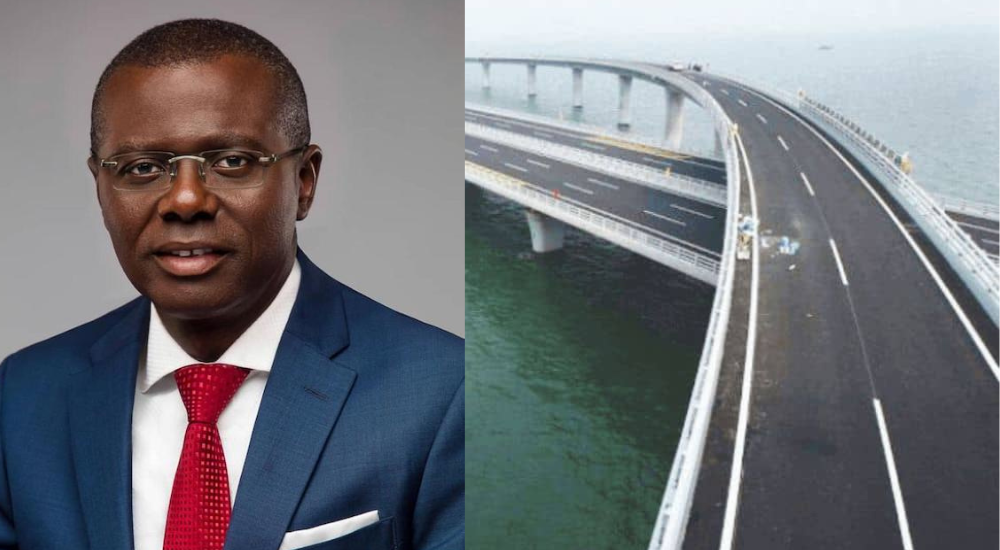
The Lagos State Government has spent N220.73m on the long-delayed Fourth Mainland Bridge project in 2026, even though construction of the project has yet to commence.
The expenditure represents 22.1 per cent of the N1bn budgeted for the project this year, according to the Lagos State Budget Implementation Report for the second quarter of 2026.
The report, under the Office of Infrastructure, shows that while the project recorded zero performance in the second quarter, its year-to-date expenditure stood at N220,730,307.65.
The expenditure leaves a balance of N779.27m against the N1bn original budget for the project.
The Fourth Mainland Bridge, conceived to ease congestion on the Third Mainland Bridge and other major routes including the Carter and Eko bridges, has faced years of delays despite several attempts by successive administrations to commence construction.
The 37-kilometre bridge is designed to connect Abraham Adesanya in Ajah with the northwest axis of Lagos, linking to the Lagos-Ibadan Expressway through Owutu/Isawo in Ikorodu. It is expected to feature three toll plazas, nine interchanges and a 4.5-kilometre crossing of the Lagos Lagoon.
Advertisement
The project was initially scheduled to commence construction in the first quarter of 2024 and be completed by 2027, before the end of Governor Babajide Sanwo-Olu’s tenure.
However, construction has yet to commence.
The project is being pursued under a public-private partnership model, with the private sector expected to finance construction and recover its investment through revenues generated during the concession period.
The Lagos State Government selected a consortium comprising China Civil Engineering Construction Corporation and China Railway Construction Investment Group as the preferred bidder for the project in December 2022.
The bidding process began in November 2019, with 52 responses received, of which 32 were deemed responsive.
Advertisement
Under the proposed PPP arrangement, the concessionaire is expected to operate and maintain the bridge for 40 years to recover its investment.
The project, first proposed in 2006, has undergone several attempts at financing and execution.
In May 2016, former Governor Akinwunmi Ambode signed a Memorandum of Understanding with a consortium comprising the Africa Finance Corporation, Access Bank, Julius Berger Nigeria Plc, Nigerian Westminster Dredging and Marine, J.P. Morgan, Hi-Tech Construction Limited, Eldorado Nigeria Limited and Visible Asset Limited.
The arrangement was cancelled in May 2017 after the Lagos State Government cited delays by the consortium in commencing the project.
The Sanwo-Olu administration later revived the project under a new PPP arrangement.
In 2023, the state government announced that it had secured more than $1.3bn in partnership deals with the African Export-Import Bank and Access Bank for the Fourth Mainland Bridge and related infrastructure, including the second phase of the Blue Line rail from Mile 2 to Okokomaiko.
Advertisement
However, financing challenges have continued to hamper the project.
In January 2025, Sanwo-Olu disclosed that potential financiers were demanding a sovereign guarantee from the Federal Government before committing funds to the bridge.
He said the state government was concerned about the impact of such a commitment on Lagos’ financial sustainability and debt profile, particularly amid fluctuations in the naira exchange rate.
“We have looked at the financial sustainability of Lagos. Any development you want to do at that scale and you are subnational, you need to be able to look at your sustainability ratios,” the governor said during an interview on TVC.
According to Sanwo-Olu, financiers had requested a Federal Government commitment to secure funding for the project, which he said had prevented the state from moving forward.
“Everybody that has raised funding to help us develop that project—that’s a $2bn project—they are asking for a sovereign guarantee.
“They are asking for you to get a commitment from the central government. So, we have not been able to push that,” he said.
The proposed bridge is estimated to cost between $2bn and $2.5bn and, upon completion, is expected to become Africa’s longest bridge.
Its construction is expected to open up new areas of Lagos to development while providing an alternative route for motorists and reducing pressure on existing bridges and major transport corridors.
Despite the N220.73m recorded as year-to-date expenditure in the 2026 budget implementation report, the project remains stalled, with financing and the proposed PPP structure continuing to be central to its long-running execution challenges.
Efforts by THE WHISTLER to get comment from the Commissioner of Information and Strategy, Gbenga Omotoso, proved abortive as he did not respond to his call or text messages sent to him.
THE WHISTLER, in the text messages, asked Omotoso to provide details on what the N220.73m was spent on, considering that the construction of the project has not yet commenced.