
Infantino Tells FIFA Critics To ‘Meditate, Pray Or Watch Football’
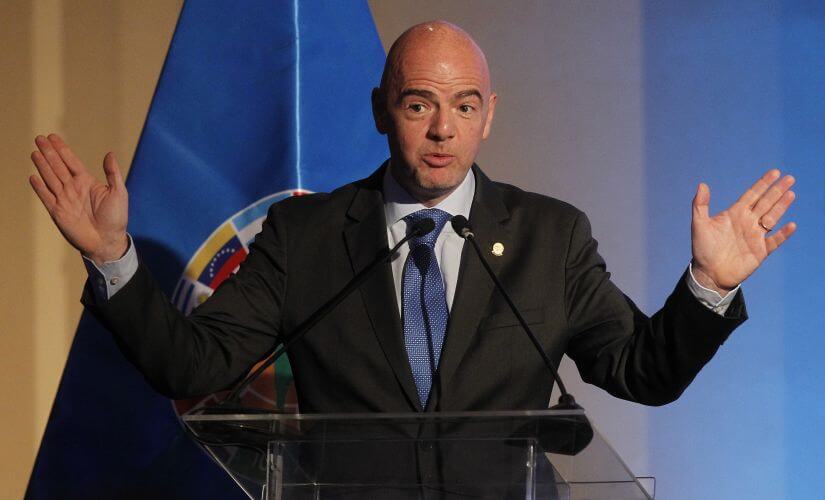
FIFA president Gianni Infantino has responded to critics of his leadership, the organisation and the 2026 World Cup, suggesting they should reflect, pray or simply watch a match rather than what he described as spreading hostility and misinformation.
In a 15-slide post on his personal Instagram account, later shared to FIFA’s official page, Infantino addressed commentators and journalists directly, arguing that while critics focused on negativity, FIFA had delivered what he called the greatest sporting event in the world.
He described the tournament as a celebration of humanity, saying it had passed without safety incidents and had produced only positive emotions.
Infantino also played down several controversies that arose during the tournament. He pointed to Iran’s participation – despite the country’s ongoing conflict with co-host the United States – as evidence of FIFA’s ability to bring together nations in conflict, saying Iran’s entry into the US had gone smoothly.
That characterisation conflicts with comments from Iran’s head coach, Amir Ghalenoei, who described his squad as the most mistreated team at the tournament.
Iran’s campaign was affected by visa delays, the exclusion of key backroom staff from entering the US, and the cancellation of a portion of the team’s ticket allocation.
Advertisement
The squad was also forced to relocate its training base from Arizona to Tijuana, Mexico, ahead of the tournament due to a series of logistical problems, and its movement between matches in Los Angeles and Seattle was later restricted.
Iran was not alone in facing these issues. Supporters from Haiti, Senegal and Ivory Coast were affected by travel restrictions introduced by the Trump administration, and Somali referee Omar Artan was refused entry to the US – despite holding a diplomatic passport and a valid visa – reportedly over alleged links to designated terrorist organisations.
Addressing the visa issue directly, Infantino argued that critics had focused on a small number of denials while ignoring the far larger number of approvals, framing the tournament as proof that football unites people worldwide.
He also reiterated his claim of a violence-free tournament, describing it instead as one defined by joy and unity.
That framing sits alongside separate FIFA investigations opened in the aftermath of the event: one into clashes between Argentine and Spanish players and staff following the final, and another into alleged racist abuse directed at American social media personality IShowSpeed.
Advertisement
Supporters were arrested at several matches, including England’s semi-final meeting with Argentina in Atlanta, and US Immigration and Customs Enforcement officers were present at stadiums throughout the tournament – a move that drew criticism from rights groups.
Infantino further defended FIFA’s handling of an officiating controversy involving the United States. American forward Folarin Balogun had a one-match suspension lifted ahead of the last 16 after intervention from President Donald Trump – a decision that stood in contrast to the outcome for every other player shown a red card at the tournament bar one.
UEFA criticised the ruling as an unacceptable overstep, and Norway’s football federation has said it is considering a formal complaint to FIFA’s ethics committee.
Infantino rejected the criticism, saying such rulings are common practice in several of the world’s leading domestic leagues, and suggested it was notable that nations using similar practices themselves were among those objecting.
Separately, the International Olympic Committee has declined to investigate Infantino over allegations of breaching political neutrality, after human rights group FairSquare filed a complaint. The IOC said the matter fell outside its ethics commission’s jurisdiction.
Closing his post, Infantino called on critics to show more goodwill toward a tournament he said had brought families and fans together across generations, and suggested those focused on criticism had missed the emotion and unity the event generated.
Advertisement
He said he was proud to have played a part, even a small one, in the tournament’s success.