
NDIC Remits N950bn To FG, Reaffirms Depositors’ Fund Protection
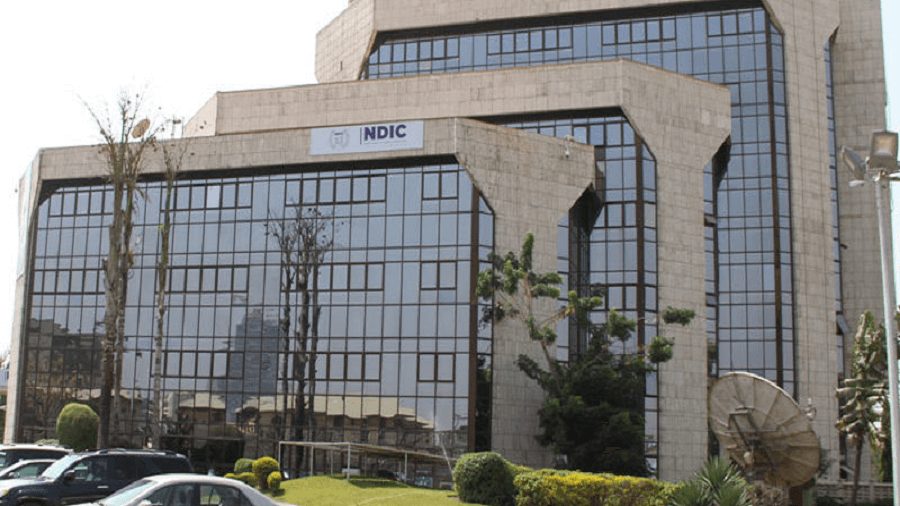
The Nigeria Deposit Insurance Corporation (NDIC) has said it has contributed about N950bn to the Federal Government’s Consolidated Revenue Fund (CRF), while reaffirming its commitment to safeguarding depositors’ funds and strengthening the stability of the country’s financial system.
The Managing Director and Chief Executive of the NDIC, Dr. Thompson Sunday, disclosed this on Monday during the second-quarter Citizens and Stakeholders’ Engagement Session organised by the Federal Ministry of Finance in Abuja.
According to him, the corporation’s contribution to government revenue underscores its growing role in supporting national economic reforms beyond its statutory responsibility of protecting depositors and resolving failed banks.
He stated that the NDIC had contributed approximately N950bn to the Federal Government’s Consolidated Revenue Fund, including about N274bn remitted in the previous year.
Sunday reaffirmed the corporation’s commitment to supporting the Federal Government’s Renewed Hope Agenda through a resilient financial system, stronger deposit protection, enhanced financial inclusion and sustained confidence in the banking sector.
He explained that the NDIC Act 2023 empowers the corporation to provide deposit insurance, supervise insured financial institutions alongside the Central Bank of Nigeria (CBN), resolve distressed banks and liquidate failed financial institutions.
Advertisement
According to him, deposit insurance guarantees customers’ funds whenever a bank’s operating licence is revoked by the CBN, while the corporation also carries out routine on-site examinations and off-site surveillance to ensure financial stability.
Sunday said the 2023 Act significantly strengthened the deposit insurance framework by increasing the maximum insured deposit for deposit money banks from N500,000 to N5m, while coverage for microfinance banks and primary mortgage banks was increased from N200,000 to N2m.
He added that customers of payment service banks and mobile money operators are now also protected up to N5m, with the reforms extending deposit insurance coverage to about 98.98 per cent of deposit money bank customers.
The NDIC boss said the corporation had also reduced the time required to reimburse insured depositors from the statutory 30 days to 72 hours after the revocation of a bank’s licence by leveraging the Bank Verification Number (BVN) and the Nigeria Inter-Bank Settlement System.
He noted that the corporation paid insured depositors of Heritage Bank within four days of the bank’s licence revocation and completed payments to customers of Union Homes and ASO Savings within 72 hours.
Advertisement
Providing further updates, Sunday disclosed that the NDIC currently supervises 914 licensed financial institutions with over 281 million deposit accounts across the country.
He said the corporation had paid N51.04bn as insured deposits to Heritage Bank customers following the bank’s closure and had also disbursed N33.59bn as liquidation dividends to uninsured depositors, while efforts to recover more assets continue.
According to him, the corporation has recovered billions of naira through debt recovery, investments and the disposal of assets belonging to failed financial institutions.
Sunday also revealed that the NDIC conducted on-site examinations of 287 financial institutions in 2025 and resolved about 85 per cent of depositor complaints received during the period.
He maintained that Nigerian banks remain among the country’s most regulated institutions because of their critical role in protecting depositors’ funds and supporting economic stability.
Earlier, the Permanent Secretary, Federal Ministry of Finance, Mr. Raymond Omachi, said continuous engagement with citizens and stakeholders was essential for improving transparency, accountability and public understanding of the Federal Government’s fiscal reforms.
Advertisement
Omachi described the NDIC as a critical component of Nigeria’s financial safety net, noting that its role in protecting depositors and maintaining confidence in the banking system remains indispensable to economic stability.
ENDS