
Rising Fuel Costs Push Petrol Spending To N1.47tn In February
…Soaring Fuel Costs Deepen Pressure On Households, Businesses
… Crude Oil Price Hits $112 Per Barrel
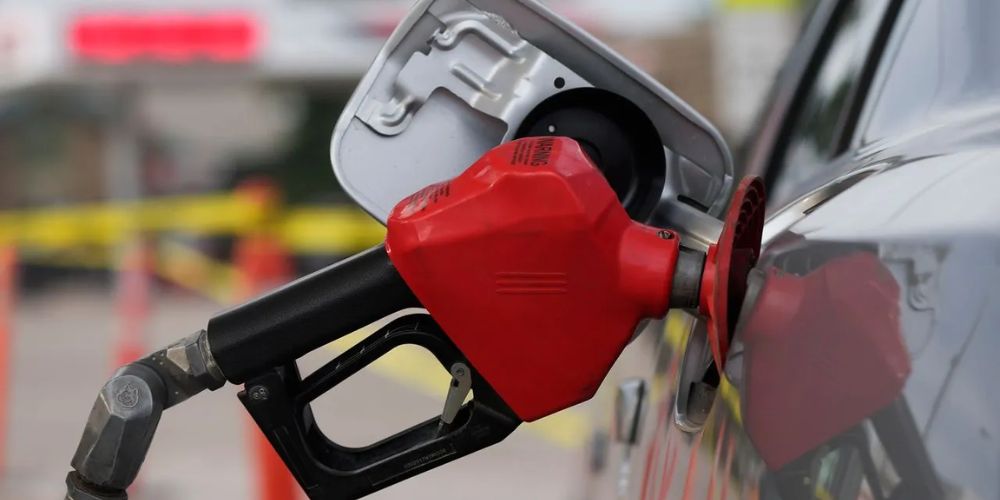
Nigeria’s rising fuel prices continued to weigh heavily on households and businesses in February 2026, with total spending on Premium Motor Spirit (PMS), popularly known as petrol, estimated at N1.47tn for the month alone.
Data obtained by THE WHISTLER from the Nigerian Midstream and Downstream Petroleum Regulatory Authority showed that Nigerians consumed about 1.593 billion litres of petrol in February, highlighting sustained demand despite the higher pump price regime.
At an average price of N920 per litre, the cost of fuel consumption surged significantly, reflecting the growing financial burden on consumers following the removal of petrol subsidy and the shift toward market-driven pricing.
Advertisement
A breakdown of the figures indicates that average daily petrol consumption stood at 56.9 million litres during the 28-day period.
While slightly lower than January levels, the volume remains substantial, underscoring the continued dependence on petrol across key sectors of the economy.
Analysts say the persistent demand reflects structural realities within Nigeria’s energy landscape, where petrol remains a primary source of power for transportation, electricity generation and small-scale business operations.
For many households, the impact has been immediate and severe. Rising transport fares and increased cost of goods and services have compounded the pressure on already stretched incomes, while small and medium-sized enterprises continue to grapple with escalating operating expenses driven by fuel costs.
“The reliance on petrol is still very high, and until there is a reliable alternative, consumers will continue to bear the brunt of rising prices,” the Registrar of the Institute of Finance and Control, Godwin Eohoi said. “What we are seeing is a direct transmission of fuel costs into broader economic hardship.”
Advertisement
Beyond consumption, the February data also points to shifting trends in Nigeria’s domestic fuel supply chain, particularly with the growing role of private refining.
Supply from the Dangote Petroleum Refinery averaged about 36.5 million litres per day during the month, a decline from the previous month’s levels.
Overall domestic petrol supply also dropped significantly to around 39.6 million litres per day, reflecting ongoing adjustments in the market.
Industry observers attribute the decline to a mix of factors, including supply realignments, fluctuating import volumes and pricing dynamics in the downstream sector.
Meanwhile, Nigeria’s state-owned refineries remained inactive in terms of petrol production throughout February. Facilities in Port Harcourt, Kaduna and Warri did not record any petrol output as rehabilitation and upgrade works continued.
The lack of output from these refineries continues to underscore Nigeria’s reliance on private refining capacity and imported petroleum products to meet domestic demand.
Advertisement
Although there was no petrol production, some of the refineries continued to release previously refined diesel stocks into the market at minimal volumes, indicating partial operational activity.
While the government’s ongoing reforms including subsidy removal and increased support for domestic refining are aimed at improving long-term efficiency, the immediate impact has been higher costs for consumers.
They argue that accelerating the rehabilitation of state-owned refineries and scaling up operations at private facilities will be critical to easing supply constraints and stabilizing prices.
Meanwhile,crude oil prices have surged to above $112 per barrel as the Iran-United States-Israel war escalation entered day 22 on Sunday amid a surge in domestic petrol prices in Nigeria.
THE WHISTLER findings showed that Brent crude rose by 3.26 percent on a day-to-day basis to $112.2 per barrel, and West Texas Intermediate crude blend increased by 2.80 percent to $98.23 per barrel as of filing the report.
The crude oil price upsurge comes as the US, Israel, and Iran have not been able to agree on a ceasefire deal.
U.S. President Donald Trump has issued a 48-hour ultimatum demanding that Tehran fully reopen the Strait of Hormuz to unrestricted commercial shipping or face targeted U.S. strikes on its power infrastructure.
In a post shared early Sunday morning on his Truth Social, Trump declared: “If Iran doesn’t fully open, without threat, the Strait of Hormuz, within 48 hours from this exact point in time, the United States of America will hit and obliterate their various power plants starting with the biggest one first.”
The ultimatum comes amid a three-week-long conflict that began on February 28, with Operation Epic Fury, a U.S.-Israeli offensive aimed at dismantling Iran’s nuclear program, ballistic missile capabilities, naval assets, and regional proxy networks.