
Scrap Metal Recycling: Northern Nigeria’s Unregistered Cash Cow
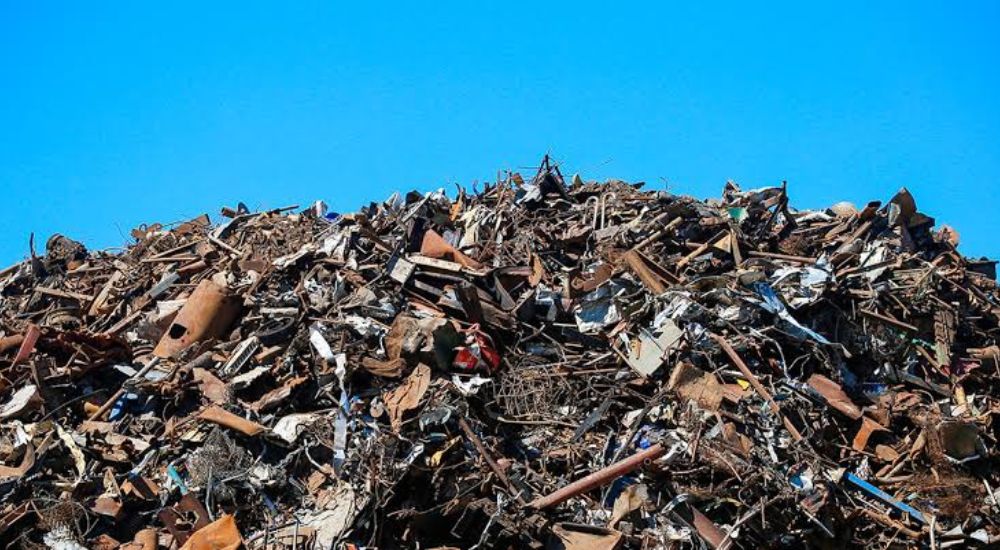
Every morning before Kano awakens to its commerce, Umar Sayyad is already at work.
Threading through back streets, construction sites, and motor parks with a practiced eye, the 38-year-old scrap dealer and his network of collectors accumulate engine blocks, aluminium frames, car spare parts, copper wires, and assorted metals that most Nigerians discard without a second thought.
By month’s end, Sayyad’s trade generates between N8m and N10m in revenue. He pays no income tax.
Across the Kaduna road, in the ancient northwestern city of the same name, Nura Bala runs a larger operation. His monthly haul from scrap metal, a business that has grown steadily as Nigeria’s economic pressures drive more people to sell off machinery, vehicles, and infrastructure which earns him approximately ₦15 million every month. He too has no tax file.
Both Sayyad and Bala have no registered business entities, rather operating in an open space just like a regular business who barely make a N100,000 profit.
Advertisement
Together, these two men alone represent at least ₦276m in untaxed annual income. Under Nigeria’s new tax framework, a conservative estimate of what they owe the state runs to over ₦67m a year, revenue that never reaches the coffers of the Kano or Kaduna state government.
They are not exceptional cases. They are emblematic of an industry operating at industrial scale inside Nigeria’s vast informal economy, generating hundreds of billions of naira annually while remaining almost entirely outside the reach of the country’s tax net.
The Men Behind the Metal
Aminu Hassan, the designated leader overseeing scavengers, scrap dealers, and waste managers in Kano, acknowledges the scale of the sector.
Under his coordination, thousands of operators spread across Kano’s 44 local government areas collect, sort, and resell metals, plastics, paper, and other materials to middlemen and industrial buyers.
Advertisement
Many of them, he admits, have no Tax Identification Number and have never interacted with any revenue authority.
“Most of these people do not even know they are supposed to pay tax,” Hassan told THE WHISTLER.
“They think tax is for people who work in offices or own shops. They do not see themselves as businesspeople.”
What the Law Says They Owe
The scale of what is being lost to the state is significant.
Under the Nigeria Tax Act 2025, which came into force on 1 January 2026, personal income earners are subject to a progressive tax rate ranging from zero percent on the first ₦800,000 annually to 25 percent on income above ₦50m.
Advertisement
THE WHISTLER apply the tax rate framework to Sayyad’s declared earnings of between ₦96m and ₦120m per year, a conservative calculation yields an annual tax liability of approximately ₦24.9m.
For Bala, whose annual income reaches ₦180m, the figure climbs to roughly ₦42.9m.
Between these two individuals alone, the state is forgoing nearly ₦68m every year.
Kano State generated ₦74bn in internally generated revenue in 2024, rising to ₦102bn in 2025, a figure that is impressive, but remains dwarfed by the revenue potential locked inside its informal sector.
Kaduna State, which generated ₦62.48bn in IGR in 2023 and ₦71bn in 2024, has positioned itself as the leading IGR-performing state in northern Nigeria. Yet economists argue that both states are leaving enormous sums uncaptured.
A Sector That Exists Off the Books
Dr. Kabir Musa, an economist and lecturer at Bayero University Kano who has studied the informal sector in the north, said the problem is structural.
“When you look at the density of the scrap and recycling trade in northern Nigeria like Kano, Kaduna, Zamfara, and Katsina, you are looking at billions of naira in monthly transactions that flow completely outside the formal financial system.
“There are no receipts, no bank transfers in most cases, no records. It is as if an entire industry does not exist on paper,” he said.
Nigeria’s scrap metal recycling market has been growing steadily, driven by environmental concerns, government regulations promoting recycling, and the economic benefits of recycling.
However, informal recycling practices and inconsistent supply chains continue to undermine the sector’s potential.
The informality is not incidental, it is structural.
Scavengers and scrap dealers operate largely in cash, with transactions concluded in open-air markets, roadsides, and private depots.
Buyers, including foundries and exporters who purchase aggregated scrap, have historically shown little appetite for the administrative burden of documenting their supply chains.
The Law Has Caught Up, But Has Enforcement?
Nigeria’s 2025 Tax Reform Act introduced presumptive taxation, a simplified method of assessing tax liability in cases where a taxpayer’s actual income cannot be reliably determined due to the absence or inadequacy of financial records. Rather than relying on formal accounting, the tax authority may use indicators such as turnover, business sector, asset base, or location to estimate taxable income.
This provision was designed precisely for operators like Sayyad and Bala, but it requires tax authorities to first identify who those operators are.
The Nigeria Tax Administration Act also requires all taxable individuals to register and obtain a Tax Identification Number, with the requirement designed to capture those in the informal sector and reduce tax evasion.
In practice, however, enforcement in the scrap and waste trade has been minimal, particularly in northern states where revenue authorities are still expanding their reach into informal markets.
Haruna Sule, a tax consultant based in Kano who advises small businesses on compliance, said the new tax laws create a framework for capturing the sector but implementation remains the bottleneck.
“The law is there. Presumptive tax means the revenue service does not need audited accounts.
They can look at your market stall, your vehicle, your monthly purchases, and estimate what you owe. The question is whether the state revenue services have the capacity and the political will to go after this constituency,” he said.
Under Nigeria’s 2025 tax laws, businesses with an annual turnover of ₦100m or less are defined as small businesses and are exempt from corporate income tax. However, business owners in their individual capacity remain chargeable to personal income tax.
This means that a scrap dealer earning ₦180m annually as an individual, like Bala, carries a substantial personal income tax obligation regardless of whether his business is incorporated.
A National Revenue Frontier, Untouched
The revenue implications, if extrapolated nationally, are difficult to overstate. Nigeria’s National Tax Policy recognises the importance of the informal sector and the need to bring it into the tax net, emphasising simplified tax compliance procedures.
A 2025 academic review of informal sector taxation noted that taxing the informal sector could lead to increased revenue generation, improved tax morale, accountability, and better governance, while the sector currently makes no significant contribution to Nigeria’s tax revenues.
At the national level, the stakes are even larger. Nigeria’s non-oil revenue drive has made expanding the tax base a priority for the federal government.
The scrap and recycling trade which operates in every state, every local government, and virtually every urban market in the country represents one of the most accessible and least tapped revenue frontiers available to sub-national governments.
‘Register Us First, Then We Will Pay’
For Aminu Hassan in Kano, the conversation about taxation is welcome in principle, but he wants it to be paired with something the sector has never received: official recognition.
“We want the government to register us, give us an identity, and then we can also pay our dues,” he said.
“But registration must come with benefits. Access to loans. Access to waste collection licences. Protection from harassment. If they formalise us properly, we will not run from tax. We will embrace it.”
Sayyad, for his part, offers a more candid assessment of why the status quo persists.
“Nobody has ever come to ask me to pay tax,” he said from his scrapyard off Zaria Road in Kano, surrounded by towers of sorted aluminium and car chassis awaiting a buyer.
“If they come and explain it to me and show me the fair amount, I will pay. But until they come, I will keep doing my business.”
The government has yet to come. And every month it does not, the millions keep moving untaxed, untracked, and uncounted.