
WHO, UNICEF Alarmed As 13.5 Million Children Miss Lifesaving Vaccines
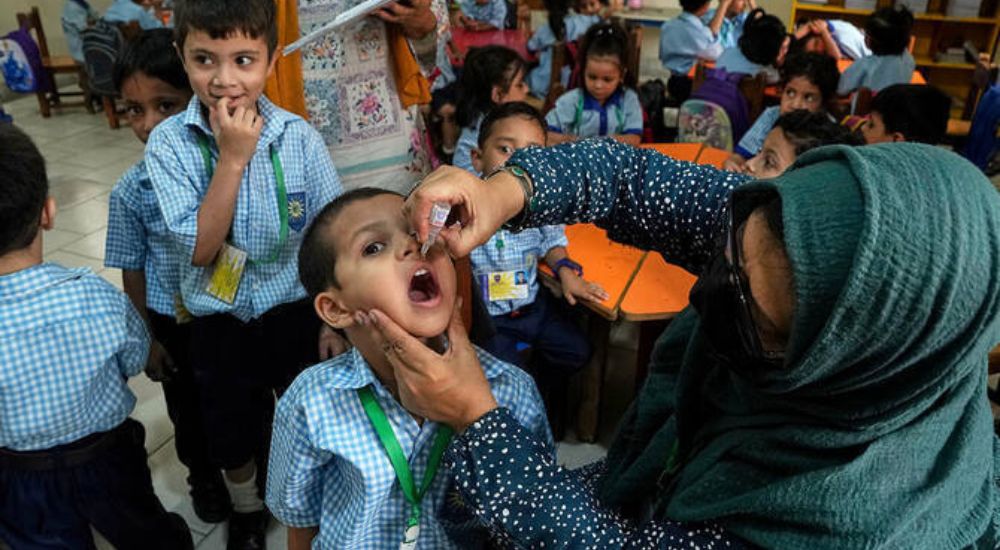
The World Health Organisation (WHO) and the United Nations Children’s Fund (UNICEF) have raised concerns after an estimated 13.5 million children missed all routine vaccinations during their first year of life in 2025, despite a modest recovery in global immunisation coverage after the COVID-19 pandemic.
The agencies said the latest figures show progress has slowed, with millions of children still left unprotected because of conflict, displacement, poverty and weak health systems.
The warning is contained in the 2025 WHO-UNICEF Estimates of National Immunisation Coverage (WUENIC), released on WHO’s X handle on Wednesday.
According to the report, 90 per cent of infants globally, about 116 million children, received at least one dose of the diphtheria, tetanus and pertussis (DTP) vaccine in 2025, while 85 per cent, representing about 110 million children, completed the recommended three-dose series.
“In 2025, 90% of infants globally – or nearly 116 million – received at least one dose of a diphtheria, tetanus and pertussis (DTP) vaccine, and 85% – or 110 million – completed the full three-dose series, according to the annual WHO-UNICEF Estimates of National Immunization Coverage (WUENIC) released today,” the report said.
The agencies said both indicators rose by one percentage point from 2024 but remained below pre-pandemic levels, with global immunisation coverage largely stagnant over the past decade.
Advertisement
The report also showed that the number of “zero-dose” children fell by nearly 750,000 from the previous year. However, millions of children remain unreached because of conflict, displacement, poverty and fragile health systems.
WHO and UNICEF also expressed concern over the growing number of children who begin vaccination but fail to complete the recommended schedule.
According to the report, about 7.3 million infants globally received their first DTP dose but did not receive their first measles vaccine. As a result, measles vaccination coverage remained stalled, with only 84 per cent receiving the first dose and 77 per cent completing the second dose.
The agencies warned that both figures remain well below the 95 per cent coverage needed to prevent outbreaks, noting that 57 countries reported major or disruptive measles outbreaks in 2025.
UNICEF Executive Director, Catherine Russell, said governments and health workers had helped global vaccination rates recover after the sharp decline recorded during the COVID-19 pandemic.
Advertisement
She stated, “But millions of vulnerable children are still being left unprotected due to conflict, displacement, and poverty. We must reach every child, and we must rebuild trust where it is fraying. No child should suffer from a disease that a simple vaccine can prevent.”
According to WHO, the report showed that 100 countries have maintained at least 90 per cent coverage with three doses of the DTP vaccine since 2019, while 65 countries have either stagnated or recorded declining coverage, including 13 affected by conflict or humanitarian crises.
The agencies said more than half of all zero-dose children live in fragile and conflict-affected countries, where immunisation services are frequently disrupted by insecurity, political instability and inadequate funding.
They added that while Sudan recorded one of the biggest improvements in vaccination coverage despite the ongoing conflict, countries such as Syria experienced significant declines. They also reported falling vaccine uptake in some middle- and high-income countries due to growing vaccine hesitancy, structural challenges and declining political commitment.
WHO Director-General, Dr. Tedros Ghebreyesus, stressed the need to sustain investment in immunisation.
He said, “Every child, whether born into wealth or poverty, peace or conflict, deserves the lifegiving protection that vaccines provide. Immunization is one of the most cost-effective, most equitable, and most reliable interventions for protecting children’s health and well-being.
Advertisement
“Our greatest security begins with ensuring that everyone, wherever they may live, is protected from deadly diseases that vaccines have the power to prevent.”
WHO and UNICEF also warned that recent cuts in international health financing could reverse hard-earned gains, saying investments in disease surveillance and immunisation data systems have declined sharply.
The agencies urged governments and development partners to strengthen vaccination programmes in conflict-affected areas, tackle vaccine misinformation, increase funding for immunisation and improve disease surveillance to prevent future outbreaks.