
2026 Budget Faces Funding Test As Economists Propose Monetizing N43tn FG Assets
…Warn Against Funding 2026 Budget With Excessive Borrowing
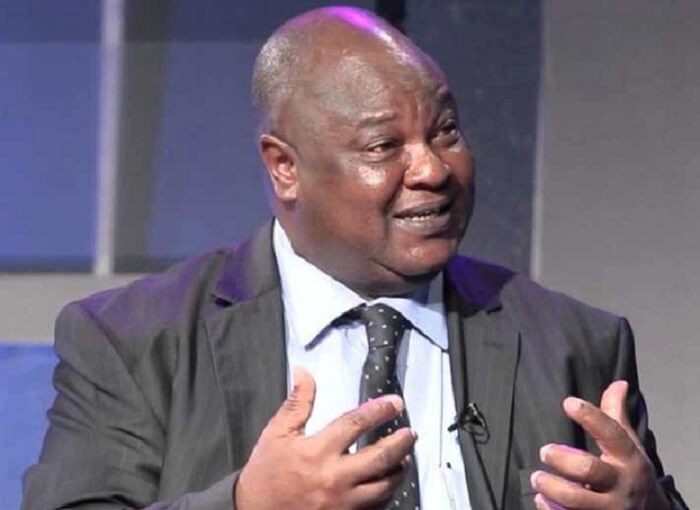
Renowned economist and Chief Executive Officer of Economic Associates, Dr Ayo Teriba, has called on stockbrokers and other capital market operators to take the lead in mobilising funding for the Federal Government’s 2026 budget by unlocking Nigeria’s vast portfolio of idle public assets, warning that continued reliance on borrowing could undermine fiscal sustainability.
Speaking at the Nigerian Economic Review and Recommendations for 2026, organised by the Chartered Institute of Stockbrokers (CIS), Teriba said Nigeria’s 2026 budget, projected at N58.18trn, with capital expenditure of N26.08trn representing about 44 per cent of total spending, presents significant financing challenges if funded largely through debt.
He argued that dormant government assets estimated to be worth over N43trn could be monetised through the capital market to bridge the funding gap without worsening the country’s debt profile.
According to Teriba, stockbrokers are strategically positioned to design and structure innovative investment instruments that can transform government-owned assets into liquid, income-generating vehicles.
He cited examples from countries such as Saudi Arabia, Brazil and India, where infrastructure development and large-scale capital projects are financed through the sale, listing or securitisation of state assets rather than excessive sovereign borrowing.
Advertisement
“Capital projects should not be tied solely to current revenue,” Teriba said. “They should be structured to fund themselves. The capital market provides the framework to convert idle public assets into productive investments that can attract both domestic and foreign capital.”
He further urged the Ministry of Finance Incorporated (MOFI) to publish a comprehensive and transparent register of federal government assets, noting that such disclosure would enable private sector investors to identify viable assets for securitisation and listing on the stock exchange.
Teriba maintained that asset transparency would enhance investor confidence and accelerate private sector participation in public infrastructure financing.
On fiscal policy, the economist advised the government to exercise caution in expanding personal income taxes, stressing that the economy remains in a recovery phase.
While acknowledging the relevance of transaction-based taxes, he warned that excessive tax burdens on individuals could stifle growth and dampen consumer spending.
Advertisement
Also speaking at the forum, Chief Economist at United Capital, Mr Ayodele Akinwunmi, highlighted key sectors expected to drive economic expansion in 2026, including manufacturing, trade, logistics, real estate, telecommunications, banking, mining and solid minerals.
He noted that Nigeria’s debt-to-GDP ratio of about 39 per cent was not immediately alarming but agreed that deeper private sector involvement in government assets was essential to strengthen fiscal resilience.
In his welcome address, President and Chairman of the Chartered Institute of Stockbrokers, Mr Oluropo Dada, said the forum was organised to promote accountability, showcase the institute’s institutional achievements and align its strategic objectives with Nigeria’s broader economic priorities for 2026.
Dada disclosed that throughout 2025, the institute hosted a series of high-impact economic, professional and policy-focused engagements aimed at deepening the capital market ecosystem and positioning it as a key driver of sustainable economic growth in Nigeria.
The Federal Government had projected a total revenue of N34.33tn and projected total expenditure of N58.18tn, including N15.52 trillion for debt servicing in the 2024 budget.
In the 2026 appropriation, the government projected recurrent (non‑debt) expenditure to be N15.25tn, while capital expenditure is N26.08tn.
Advertisement
It also projected a budget deficit of N23.85tn, representing 4.28 percent of GDP.
Oil benchmark was pegged at $64.85 per barrel, while
crude oil production of was fixed at 1.84 million barrels per day and exchange rate at N1,400 to the US Dollar for the 2026 fiscal year.