
How Off-Pitch Controversies Overshadowed Morocco’s AFCON Brilliance
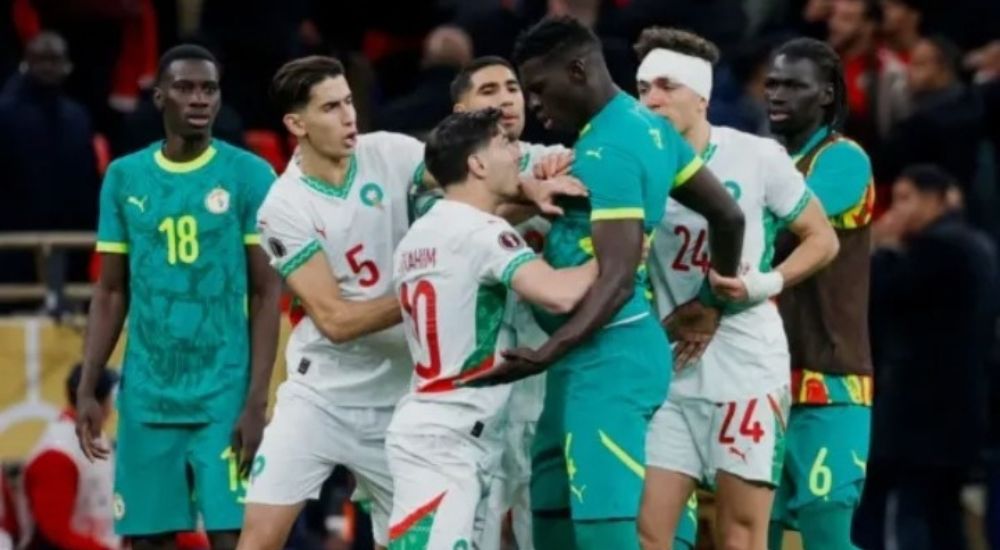
There are moments in football when the beautiful game becomes tainted not by what happens on the pitch, but by everything surrounding it.
Morocco’s journey through AFCON 2025 represents one such moment, a cautionary tale of how excess ambition and overzealous home advantage can overshadow genuine sporting excellence.
As the final whistle echoed through the Prince Moulay Abdellah Stadium in Rabat and Senegal celebrated its 1-0 victory, the overwhelming emotion was not a celebration but reflection on what could have been.
Before we examine what went wrong, we must acknowledge what went right. Moroccan football has experienced a transformation so profound over the past decade that it has become a blueprint for African nations seeking to elevate their footballing stature. The evidence is staggering and spans every level of the game.
The senior men’s team reached the semi-finals of the 2022 FIFA World Cup in Qatar, becoming the first African nation to do so. That historic run captured hearts worldwide and demonstrated that African football had arrived on the global stage with genuine competitive strength. The Atlas Lions defeated Belgium, Spain, and Portugal on their remarkable journey, showcasing tactical discipline and explosive counter-attacking football that redefined expectations.
Advertisement
The women’s team, the Atlas Lionesses, mirrored this success. In 2022, Morocco hosted the Women’s Africa Cup of Nations and reached the final, losing narrowly to South Africa.
This achievement propelled them to become the first Arab and North African nation to qualify for the FIFA Women’s World Cup in 2023, where they advanced to the Round of 16 after defeating Colombia and South Korea. They again reached the WAFCON final in 2024, establishing themselves as a consistent continental power.
Morocco’s youth development story is even more remarkable. The U-23 team won the 2023 Africa Cup of Nations and secured a bronze medal at the 2024 Paris Olympics, defeating Argentina in their opening match.
Most spectacularly, the U-20 team won the 2025 FIFA U-20 World Cup in Chile, defeating Argentina 2-0 in the final. The U-17 teams have also reached finals and knockout stages of their respective World Cups, while AS FAR Rabat won the 2022 CAF Women’s Champions League.
This unprecedented success across all age groups and genders stems from a deliberate, comprehensive strategy implemented by the Royal Moroccan Football Federation.
Advertisement
The construction of the $65 million King Mohammed VI Football Academy and National Training Center, featuring state-of-the-art facilities including eight full-size pitches, an Olympic pool, medical facilities, and educational classrooms, has created a conveyor belt of talent.
The federation’s investment increased tenfold to $65 million annually, with women’s football professionalized in 2020 and strategic recruitment of diaspora talent creating a perfect blend of homegrown and internationally-based players.
A Team Primed for Glory
Entering AFCON 2025, Morocco possessed one of the tournament’s strongest squads. Led by coach Walid Regragui and featuring Real Madrid’s Brahim Diaz, Paris Saint-Germain’s Achraf Hakimi, and goalkeeper Yassine “Bono” Bounou, the Atlas Lions had quality throughout their lineup.
Diaz would finish as the tournament’s top scorer with five goals, while Bounou conceded just two goals en route to the final and earned the Golden Glove award.
The team demonstrated genuine quality in their performances. They topped their group, defeated Tanzania in the Round of 16, and showed tactical sophistication and attacking flair that suggested they could win the tournament purely on merit. Their first-half performance against Cameroon in the quarterfinals was described as one of the best of the entire competition.
Advertisement
This was a team capable of becoming African champions through their talent, preparation, and determination alone.
Yet somewhere between potential and realization, Morocco’s campaign became mired in controversy. What should have been a celebration of footballing excellence became overshadowed by accusations of systematic gamesmanship that eroded goodwill across the continent.
The most bizarre manifestation was the “towel war”, a series of deliberate attempts to disrupt opposing goalkeepers by removing their equipment.
During the semi-final against Nigeria, stadium stewards repeatedly ran onto the pitch to steal Super Eagles goalkeeper Stanley Nwabali’s towel, an essential item for maintaining grip on the ball.
Video evidence showed that each time Nwabali placed his towel beside the goal, someone would take it away. Objects, including a banana, were reportedly thrown at him from the stands.
This pattern continued in the final against Senegal. Ball boys and stewards repeatedly targeted goalkeeper Édouard Mendy’s towel, with footage showing Mendy’s backup goalkeeper physically wrestling the towel away from four Moroccan pitch-side adolescents.
Even Achraf Hakimi was captured on camera, appearing to throw away Mendy’s towel during the match. These were not isolated incidents but part of a systematic pattern that suggested orchestration rather than coincidence.
The Shadow of Questionable Officiating
Beyond the towel controversies, Morocco’s path through the tournament was marked by persistent questions about refereeing decisions. Against Cameroon in the quarterfinals, the Indomitable Lions felt aggrieved by two potential penalties that were not awarded, both involving Moroccan defender Adam Masina.
One incident appeared to show Masina catching Bryan Mbeumo’s boot after missing the ball. In contrast, another showed him striking Etta Eyong in the head with his elbow in the penalty area.
Neither was reviewed by VAR, prompting Cameroon Football Federation president Samuel Eto’o to publicly express his displeasure, leading to a four-match suspension and a $20,000 fine.
The semi-final against Nigeria featured similar controversies. The match finished goalless after extra time and went to penalties, with Bounou saving two Nigerian spot-kicks to send Morocco through.
However, the game featured multiple disputed decisions that appeared to favor the hosts, adding to the growing frustration among opposing teams and neutral observers.
The final against Senegal crystallized all these tensions. Late in regulation time, Senegal thought they had scored when Habib Sarr headed home, sparking wild celebrations. However, referee Jean-Jacques Ndala disallowed the goal for a perceived foul by Sarr on Hakimi in the build-up.
Television replays showed minimal contact; both players had equal hand swings at each other, with Hakimi appearing to fall, yet no VAR review was conducted despite Senegalese protests.
Minutes later, after a VAR check, Morocco was rightly awarded a penalty when Diaz went down under a challenge from Senegal full-back El Hadji Malick Diouf while defending a corner kick.
However, the timing, in the 98th minute after having a goal disallowed, proved too much for Senegal. Coach Pape Bouna Thiaw ordered his players off the pitch in protest, sparking 14 minutes of chaos as officials, players, and staff jostled to persuade Senegal to return. It was captain Sadio Mané who ultimately convinced his teammates to resume play.
When Diaz stepped up to take the penalty that could have won Morocco their first AFCON title in 50 years, he attempted an audacious panenka that floated gently into Mendy’s arms. Whether affected by the psychological impact of the walkout, the weight of expectation, or simply poor execution, the miss proved catastrophic. Senegal scored through Pape Gueye in extra time to claim their second continental title.
The most damning indictment came when CAF awarded Morocco the Fair Play Trophy despite all the controversies. The decision triggered immediate backlash across social media, with fans sarcastically coining nicknames like “The Towel d’Or” and “Fair Play for Stealing Towels.” Critics argued that CAF’s narrow metric of yellow and red cards failed to capture persistent unsportsmanlike behavior that went largely unpunished by match officials.
A Team Robbed of Its Shine
But my opinion remains that the team was undermined by their own handlers and sabotaged from within. Morocco had a genuinely excellent team that could have won AFCON 2025 on merit. Their players possessed the quality, their tactical organization was sound, and their home support was passionate.
Brahim Diaz’s five goals, Bounou’s goalkeeping excellence, and the team’s overall performances deserved to be the narrative of this tournament.
Instead, the antics of fans and stewards, and the apparent complicity of match organizers, robbed these players of the recognition they deserved. Every Moroccan victory became tainted by questions about fairness.
Every win was met with skepticism rather than admiration. Social media exploded with accusations of favoritism, with comparisons drawn to Argentina’s manipulation of the 1978 World Cup.
Nigerian goalkeeper Stanley Nwabali couldn’t resist posting a message after Morocco’s final defeat, telling them to use the “stolen towels” to dry their tears.
Former Super Eagles players Bright Osayi-Samuel and Akor Adams expressed satisfaction at Morocco’s loss on social media. These reactions, while petty, reflected the widespread resentment that had built throughout the tournament.
The narrative that developed was not of Morocco’s football excellence but of systematic efforts to gain every possible advantage through unsportsmanlike means.
Morocco’s AFCON 2025 journey offers profound lessons about the nature of home advantage and the responsibilities of hosts. Passionate support is football’s lifeblood; the energy from 65,000 fans can inspire teams to extraordinary heights. But when that support crosses into interference, when organizational advantages become systematic manipulation, the sport loses its integrity.
The Moroccan football establishment must reflect on how its pursuit of victory at all costs undermined its players’ legitimate achievements.
They must recognize that true footballing greatness requires not just winning but winning with dignity. The legacy of champions is built not only on trophies but on the respect earned through fair competition.
For a nation that has invested so heavily and achieved so much, this should have been a moment of pure celebration.
Instead, it became a cautionary tale about the corrosive effects of excessive ambition, whether directly influenced or not.
Morocco’s football revolution is real and deserves acclaim. Their next chapter should be written with the same excellence that built their success, but with the wisdom to let their players’ quality speak for itself, without the gimmicks, without the controversies, without the shadows that diminished what should have been their finest hour.
Abass Suara is a sports and strategy professional with over a decade of experience offering insight, outlook, and expert opinion on global sports, media, and enterprise growth strategies.