
NACCIMA Seeks Stronger PPPs To Bridge $2.3tn Infrastructure Gap
The Nigerian Association of Chambers of Commerce, Industry, Mines and Agriculture (NACCIMA) has called for stronger public-private partnerships (PPPs), policy reforms and innovative financing to bridge Nigeria’s estimated $2.3tn infrastructure financing gap, saying private capital will be critical to achieving the country’s ambition of becoming a $1tn economy by 2030.
The call came at the launch of the maiden edition of the Nigeria Infrastructure Conference (INFRACON 2026), held at the Afreximbank African Trade Centre (AATC) in Abuja.
The two-day conference brought together ministers, diplomats, development finance institutions, investors, policymakers, industry leaders and private sector operators to explore practical strategies for accelerating infrastructure delivery and mobilising long-term investment into critical sectors of the economy.
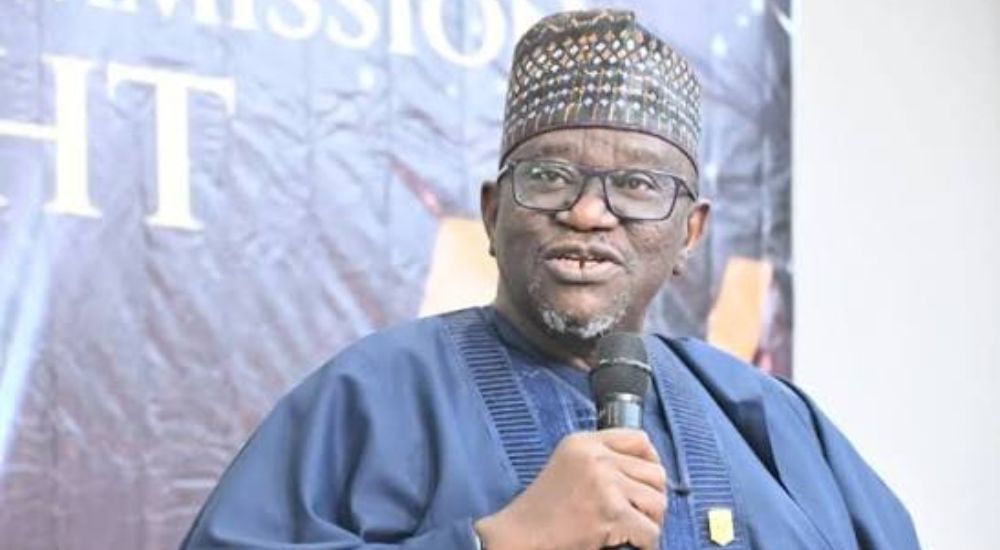
Declaring the conference open, NACCIMA National President, Engr. Jani Ibrahim, said the initiative was conceived after consultations with businesses across the country, which consistently identified poor infrastructure as one of the greatest obstacles to competitiveness, industrialisation and economic growth.
He said manufacturers continue to bear the cost of self-generated electricity, exporters struggle with congested ports and logistics bottlenecks, while technology firms require reliable broadband infrastructure and world-class data centres.
He added that micro, small and medium enterprises (MSMEs) also face high transportation costs and inadequate digital infrastructure.
Advertisement
“Infrastructure is not merely about roads, bridges and airports. Infrastructure is productivity, competitiveness, investment, jobs, exports and economic growth,” Ibrahim said.
According to him, Nigeria cannot become globally competitive while businesses continue to provide infrastructure that should ordinarily be supplied through public investment.
He noted that the Reviewed National Integrated Infrastructure Master Plan (NIIMP 2020–2043) estimates that Nigeria requires more than $2.3tn in infrastructure investment across transport, energy, housing, water resources, agriculture and information and communications technology over the next two decades.
Ibrahim stressed that government revenues alone cannot finance the country’s infrastructure needs, making it imperative to mobilise domestic and international private capital, including pension funds, insurance firms, sovereign wealth funds, infrastructure funds, private equity investors and multilateral finance institutions.
He identified the Infrastructure Corporation of Nigeria (InfraCorp) and InfraCredit as key institutions that would help originate, structure and de-risk bankable infrastructure projects capable of attracting institutional investors.
Advertisement
According to him, NACCIMA will collaborate with both institutions to ensure that investment-ready projects emerging from INFRACON receive credible financing and implementation support.
He also emphasised that the conference was designed as an execution platform rather than another policy dialogue.
“INFRACON is not a talk shop. Success will not be measured by the number of speeches delivered but by the number of projects financed, the amount of private capital mobilised, the jobs created, improvements in logistics, megawatts added to the national grid and improvements in Nigeria’s competitiveness,” he said.
Participants identified electricity, maritime infrastructure and the blue economy, digital infrastructure, industrialisation and export infrastructure as priority sectors capable of delivering the highest economic multiplier effects.
Ibrahim warned that Nigeria risks falling behind in the global digital economy without significant investment in electricity, fibre connectivity and modern data centres.
Citing projections by the International Energy Agency, he said electricity demand from data centres is expected to more than double by 2030 as artificial intelligence adoption accelerates globally.
Advertisement
He argued that reliable electricity and secure digital infrastructure have become strategic national economic assets essential for attracting investment and safeguarding data sovereignty.
Also speaking, the Minister of Industry, Trade and Investment said Nigeria must move beyond financing isolated infrastructure projects and instead develop investment-ready economic corridors capable of attracting long-term private capital and achieving financial closure.
The minister said with Nigeria’s infrastructure financing requirement projected at about $2.3tn by 2043, the country must focus on preparing bankable economic corridors that can attract institutional investors and development finance institutions.
He assured participants that the ministry would continue to provide policy clarity, regulatory certainty and investment promotion to encourage greater private investment in strategic sectors.
The conference also highlighted the Lekki Economic Zone as a successful example of public-private collaboration, with participants pointing to projects such as the Lekki Deep Seaport, the Lagos-Calabar Coastal Highway, industrial parks and the Dangote Refinery and Petrochemical Complex as evidence of how strategic infrastructure can stimulate manufacturing, logistics and regional trade.
State governments were urged to replicate the Lekki model by developing industrial corridors, agro-processing hubs and logistics clusters aligned with their comparative advantages.
On digital infrastructure, participants called for the expansion of Nigeria’s fibre optic network from about 30,000 kilometres to 120,000 kilometres to improve broadband penetration and support digital innovation.
The conference also emphasised investments in engineering education, technical skills development and technology transfer, while unveiling a proposed Russia-Nigeria climate exchange programme to facilitate engineering training and knowledge sharing.