
National Grid Collapsed 26 Times In Five Years, Nine In 2024 — Report
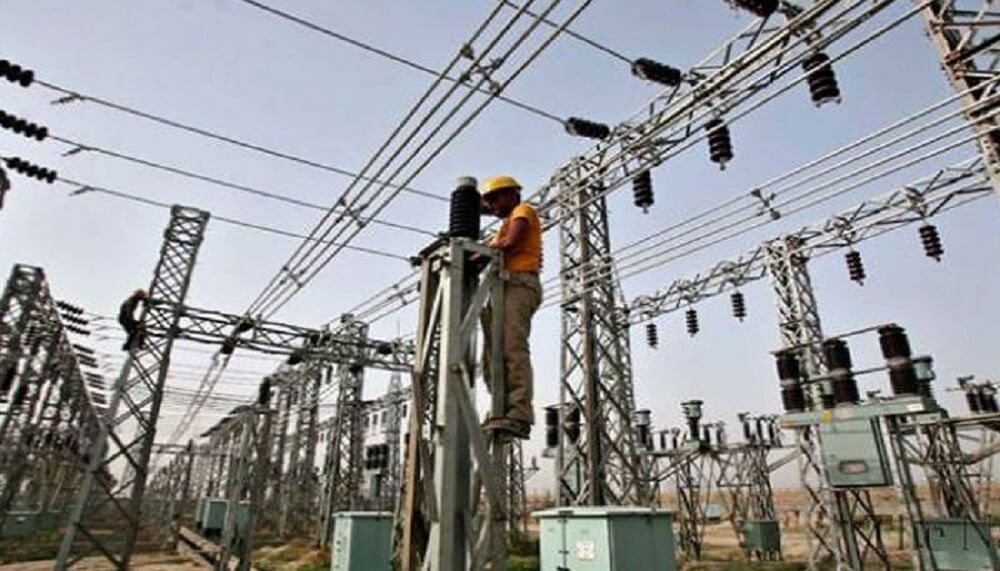
The national electricity grid suffered 26 system collapses in the last five years, with 2024 alone accounting for nine of those incidents, the 2024 annual report of the Nigerian Electricity Regulatory Commission (NERC) has revealed.
The report detailed that the grid collapsed four times in 2020 and 2021, respectively, rose to six in 2022, declined to three in 2023, but surged to nine in 2024.
Of these, NERC clarified that nine were partial collapses, five of which occurred in 2024, making it the worst year for grid instability within the review period.
In addition to grid performance, the report shed light on the financial burden borne by the federal government.
It revealed that the gross electricity subsidy obligation in 2024 amounted to ₦1.95tn, reflecting the cost of covering the gap between allowed tariffs and cost-reflective tariffs across the Nigerian Electricity Supply Industry (NESI).
According to the Commission, the average daily available generation capacity from grid-connected power plants stood at 4,853.69 megawatts (MW), with an overall availability factor of 37.43 per cent.
Advertisement
The Commission stated that more than 62 per cent of Nigeria’s installed generation capacity was unavailable in 2024.
“Total power generation for the year was 37,093.70 gigawatt-hours (GWh), averaging 4,222.87 megawatt-hours per hour (MWh/h). Hydropower plants contributed 11,469.85GWh, representing 30.92 per cent of total electricity generated during the year”, the report stated.
On regulatory activities, NERC said it issued a total of 168 licenses, permits, and certifications in 2024 after satisfactorily evaluating applications from stakeholders in the power sector.
During the year under review, NERC stated that its Customer Complaints Unit (NERC-CCU) received 16,882 complaints, out of which 4,858 were resolved.
This, it added, reflected a resolution rate of 28.78 per cent.
Advertisement
A breakdown of the issues revealed that metering, billing, service interruptions, and customer band categorisation accounted for 89.62 per cent (15,130) of the total complaints.
Also, across the various electricity distribution companies (DisCos), 1,183,198 complaints were logged in 2024, with 72.33 per cent (855,757) centred on metering, billing, and service interruption.
The Commission stated further that its Forum Offices across the country received a total of 8,351 active appeals, comprising 7,575 new and 776 pending cases.
Out of these, 6,936 were resolved during 308 sittings, reflecting an 83.06 per cent resolution rate. Billing and metering topped the list of issues addressed, accounting for 52.81 per cent and 29.77 per cent of the total appeals, respectively.
THE WHISTLER recalls that in October 2024, the federal government announced plans to establish a super grid to tackle the rising cases of grid collapses in the country.
The Minister of Power, Adebayo Adelabu, while speaking at a press briefing in Abuja, said President Bola Tinubu, has given a nod to the establishment of a super grid to tackle the rising cases of grid collapses.
Advertisement
The minister, who admitted that the existing grid is weak and obsolete, said the memo for the establishment of the new super grid is before the president.
He said the super grid, if established, would serve as a backup to the existing grid, adding that their investors are on the ground to finance the project.
“There is a memo with the President now, who is giving us full support about the establishment of the western and eastern super grid. Given the weakness, the dilapidation, and the obsolescence of the existing grid, we believe that we need a backup grid that will serve as a failover option to the existing grid.
“If anything happens to the existing grid, there will be a backup option. There will be a failover option, which is an alternative route of transmitting power. This is likened to having an expressway, just a single line leading to a particular destination”, Adelabu had said.
Also, THE WHISTLER had previously reported that in November 2025, the Federal Government announced that it had spent about N8.8bn to repair and put into functional use transmission towers vandalised across the country.
A statement from the Federal Ministry of Power quoted the Managing Director and Chief Executive Officer of the Transition Company of Nigeria (TCN), Engr. Suleiman Ahmed Abdulaziz, to have disclosed this while speaking at the Quarterly Power Sector Working Group meeting in Abuja.
Abdulaziz, who was represented by the Executive Director, Transmission Service Provider (TSO) of TCN, Engr. Olugbenga Emmanuel Ajiboye said between January 13, 2024, and now, 128 transmission towers have been destroyed, either by vandals or bandits, across the country.
He lamented that when the vandals were apprehended and handed over to police for prosecution, they were bailed and they would return and continue with the vandalism.
“As I talk to you today, 128 of our towers have been destroyed by either vandals or bandits. To date, we have spent about N8.8bn, by our estimation, to put them back to full and functional use.
“It is so sad that each time the vandals were caught and taken to the police for prosecution, the police would take the incident for theft instead of vandalism, and they would be bailed.
“If they are charged for vandalism, they cannot be bailed, but this is where we are. So many of them have been arrested, but each time they will be bailed because police often take their cases as that of theft”, he said.
However, in April this year, the Federal Government formally inaugurated the board and management of the Nigerian Independent System Operator, NISO, marking the official unbundling of the Transmission Company of Nigeria, TCN, into two separate entities.
Under the new structure, the Transmission Service Provider, TSP, will oversee TCN’s physical infrastructure, including transmission towers, power lines, and substations