
Keffe D: From ‘Gang Shot Caller’ To Convicted Murderer Of Tupac
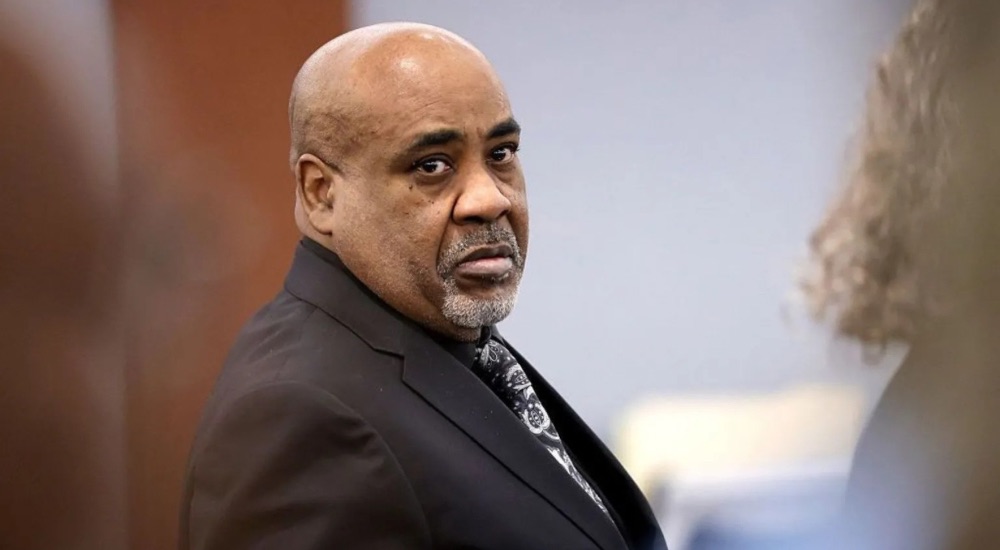
Nearly 30 years after Tupac Shakur was fatally shot in Las Vegas, Duane “Keffe D” Davis has become the first person convicted in connection with the murder of the legendary rapper.
A Las Vegas jury found the 63-year-old former South Side Compton Crips leader guilty of first-degree murder on August 31, 2026, after less than three hours of deliberation.
Davis was not accused of pulling the trigger. Prosecutors argued that he organised the attack, supplied the firearm and directed the retaliation that followed an earlier confrontation involving his nephew, Orlando “Baby Lane” Anderson, and Shakur’s entourage.
The conviction marked a major breakthrough in a case that had remained unresolved for nearly three decades.
But who exactly is the man at the centre of the Tupac murder case?
- He Was Born Duane Keith Davis In 1963
Advertisement
Davis is widely known by his street name, “Keffe D,” but his full name is Duane Keith Davis.
Multiple biographical accounts give his date of birth as June 14, 1963, making him 63 years old at the time of his conviction.
He was born in California and grew up in Compton, a city that later became closely associated with his gang activities and his links to prominent figures in the Los Angeles hip-hop scene.
Davis has described growing up in a family that moved from Watts to Compton during his childhood.
According to an account published by CBS News, his father was a Marine from Virginia while his mother was from Texas. Davis wrote that his family moved to Compton in the 1960s after his father won a large sum of money betting on horses.
Advertisement
- He Rose To Become A South Side Compton Crips ‘Shot Caller’
Davis was not portrayed by prosecutors as an ordinary gang member.
He rose through the South Side Compton Crips and became what gang investigators described as a senior figure or “shot caller” — someone with authority to make decisions within the organisation.
During the trial, former Compton police gang detective Robert Ladd testified about Davis’ position within the gang and his influence over younger members.
Prosecutors used that history to support their argument that Davis had the authority to organise the retaliation against Shakur.
Davis himself also described his rise within the gang in his memoir, Compton Street Legend.
Advertisement
- He Was Orlando “Baby Lane” Anderson’s Uncle
One of the most important relationships in the case was Davis’ connection to Orlando “Baby Lane” Anderson.
Anderson was Davis’ nephew and a member of the South Side Compton Crips.
Hours before Shakur was shot, Anderson was involved in a physical confrontation with Shakur and members of his entourage at the MGM Grand in Las Vegas.
Prosecutors argued that the confrontation became the motive for the subsequent attack.
Davis later identified Anderson as the person who fired the shots from the Cadillac.
Anderson denied involvement in Shakur’s killing and was never charged. He died in an unrelated shooting in 1998.
His death left Davis as the only surviving person from the group prosecutors linked to the Cadillac.
- He Was In The Cadillac When Tupac Was Shot
Davis’ own accounts placed him inside the white Cadillac involved in the shooting.
In a 2008 interview with investigators, he described being in the vehicle when it pulled alongside the BMW carrying Shakur and Death Row Records boss Marion “Suge” Knight.
According to Davis’ account, a gun was passed to a person in the back seat.
Shots were then fired into Shakur’s vehicle, striking the rapper several times.
Knight survived the attack, but Shakur died six days later, on September 13, 1996, at the age of 25.
Davis’ presence inside the Cadillac became central to the prosecution’s theory of the case.
- Prosecutors Said He Supplied The Gun And Organised The Attack
Davis was never accused of being the person who physically fired the fatal shots.
Instead, prosecutors portrayed him as the “shot caller” behind the retaliation.
They argued that Davis helped organise the attack after the confrontation involving Anderson and Shakur at the MGM Grand.
Prosecutors said Davis supplied the firearm that was passed to the gunman and helped direct the men who travelled in the Cadillac.
During closing arguments, Chief Deputy District Attorney Binu Palal portrayed Davis and his associates as having “went hunting” for Shakur after the earlier confrontation.
The prosecution’s case therefore rested on the argument that Davis could be held responsible for the killing even though he was not the person who pulled the trigger.
- His Own Words Became Key Evidence
The prosecution’s case relied heavily on Davis’ own statements over the years.
In a 2008 interview conducted during an investigation into the murder of The Notorious B.I.G., Davis described being inside the Cadillac and handing a gun to men in the back seat.
He identified Anderson as the person who took the weapon and opened fire on Shakur’s vehicle.
Davis subsequently repeated versions of the account in interviews, documentaries and recorded conversations.
Prosecutors argued that the consistency of his admissions showed that he knew what happened and had played a role in organising the attack.
The defence, however, attacked those statements as exaggerated accounts that Davis had used to generate publicity and money.
A former Las Vegas homicide detective testified that he believed Davis during a 2009 interview but that investigators could not independently verify his claims.
- His Memoir Became Evidence Against Him
In 2019, Davis published Compton Street Legend, a memoir written with co-author Yusuf Jah.
The book became a significant piece of evidence in the murder case.
Davis used the memoir to recount his life, his gang background and his version of events surrounding Shakur’s death.
Prosecutors argued that the book contained admissions about Davis’ role in organising the attack.
A Las Vegas judge ruled before trial that the memoir could be used as evidence, rejecting the defence’s attempt to exclude it.
Davis later distanced himself from parts of the book.
In a 2025 jailhouse interview with ABC News, he said he had never read the memoir and claimed his co-author had taken artistic liberties with the material he provided.
The defence used that position to challenge the reliability of the book and Davis’ previous accounts.
- He Was Arrested 27 Years After Tupac’s Death
Davis was arrested on September 29, 2023, nearly 27 years after Shakur was killed.
He became the first and only person charged in connection with the murder.
Months before his arrest, Las Vegas police searched a Henderson property linked to Davis.
Investigators seized computers, electronic devices, photographs, ammunition and a copy of Davis’ memoir during the search.
The arrest transformed a decades-old murder mystery into an active criminal case and eventually led to the trial that ended with Davis’ conviction.
- He Is Married To Paula Clemons
Davis is married to Paula Clemons.
Property records reviewed during the investigation showed that a Henderson, Nevada, home searched by police in July 2023 belonged to Clemons, who was identified as Davis’ wife.
Records cited during the investigation also showed that the couple married in Clark County, Nevada, in 2005.
The property became significant after Las Vegas police obtained a search warrant connected to the Tupac investigation.
The search produced several items that prosecutors later used as part of the broader investigation.
Although his net worth is unknown, Davis himself described his past drug operation in Compton Street Legend. in the memoir, he said he had risen to “shot caller” and was running a multimillion-dollar nationwide drug empire.
- He Is Now A Convicted Murderer Facing Possible Life Imprisonment
Davis’ status changed on August 31, 2026, when a Las Vegas jury found him guilty of first-degree murder with a deadly weapon in connection with Shakur’s death.
The trial lasted 11 days, with prosecutors calling more than two dozen witnesses and presenting hours of recordings involving Davis.
The prosecution argued that Davis organised the shooting in retaliation for the confrontation involving Anderson.
The defence countered that prosecutors had no physical evidence directly linking Davis to the shooting and argued that his previous statements were exaggerated stories intended to generate money and publicity.
The jury nevertheless found the prosecution’s case sufficient to convict.
Davis faces a possible life sentence, with sentencing scheduled for October 13, 2026.
He has indicated that he intends to appeal the conviction.